 Pin It
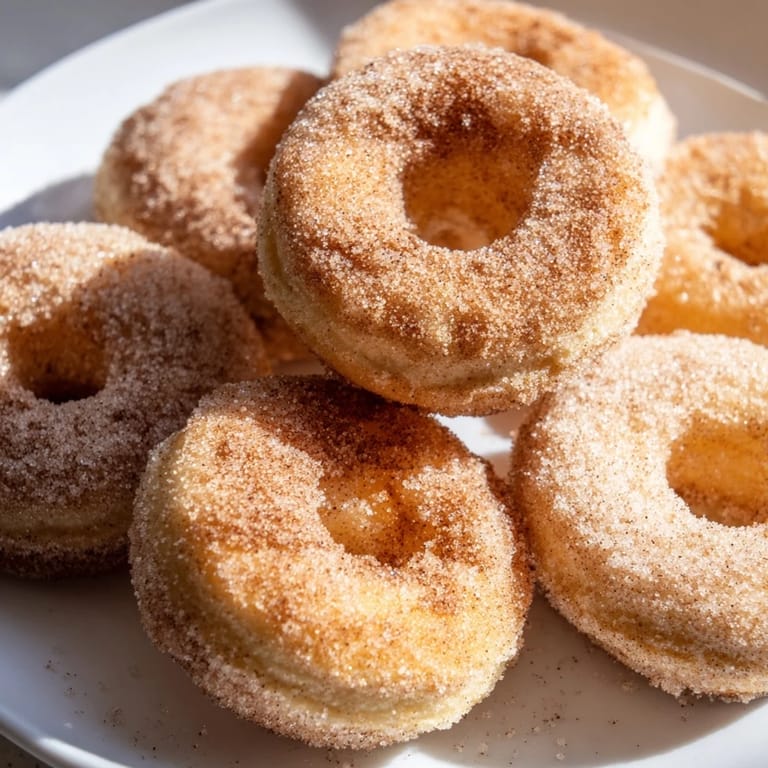
 There's something about the smell of cinnamon and sugar toasting in the oven that stops me mid-morning and makes me want to abandon my plans. A friend brought me a box of these baked donuts years ago, and I remember biting into one at her kitchen counter—it was warm, impossibly soft, and coated in that perfect cinnamon-sugar shell that clung to my fingers. I went home determined to figure out how she made them, and after a few batches, I realized the secret wasn't complicated at all. Now, whenever I need something that feels both indulgent and achievable, these are the first thing I reach for.
I made these for my daughter's school bake sale, and I showed up with a box of warm donuts on a chilly October morning. Parents were asking for the recipe before I'd even set them down, and one teacher came back later asking if I could make them for every fundraiser. That moment made me realize these weren't just donuts—they were the kind of small comfort food that reminds people why homemade matters.
Ingredients
- All-purpose flour (2 cups): The foundation—use the spoon-and-level method rather than scooping directly from the bag, which can pack too much flour and make donuts dense.
- Granulated sugar (3/4 cup for batter): Sweetness goes into the dough itself, so these taste like a treat, not a neutral base.
- Baking powder and baking soda (2 tsp and 1/2 tsp): This combination gives you that rise and tender crumb without waiting for yeast to do the work.
- Salt and ground cinnamon (1/2 tsp and 1 tsp): Salt brings out the sweetness, and cinnamon starts the flavor story even before you coat them.
- Buttermilk (3/4 cup): The acid in buttermilk reacts with the baking soda and keeps the donuts tender—if you don't have it, milk mixed with a teaspoon of vinegar works just as well and honestly no one can tell the difference.
- Eggs and vanilla extract (2 large eggs and 1 tsp): Eggs bind everything together and add richness, while vanilla makes the whole thing taste a little more like something someone cared about making.
- Unsalted butter, melted (5 tbsp total): 2 tablespoons in the batter adds moisture, and 3 more for coating means the cinnamon-sugar actually sticks instead of sliding off.
- Cinnamon-sugar coating (1/2 cup sugar and 1 1/2 tsp cinnamon): This is where the magic lives—the melted butter makes the coating adhere while the cinnamon infuses every bite.
Tired of Takeout? 🥡
Get 10 meals you can make faster than delivery arrives. Seriously.
One email. No spam. Unsubscribe anytime.
Instructions
- Heat your oven and prep your pan:
- Set the oven to 375°F and grease your donut pan well—I use a pastry brush with melted butter and reach into every crevice. A greased pan means donuts that slide out without sticking to those delicate edges.
- Combine all the dry things:
- In a large mixing bowl, whisk together flour, sugar, baking powder, baking soda, salt, and cinnamon until everything looks even. This step aerates the flour and distributes the leavening agents so you get consistent rise across all 12 donuts.
- Whisk the wet ingredients separately:
- In another bowl, whisk buttermilk, eggs, melted butter, and vanilla extract until the mixture is smooth and homogeneous. This prevents lumps from the eggs and makes sure the butter doesn't pool anywhere.
- Bring it all together gently:
- Pour the wet ingredients into the dry and stir just until combined—this is the moment where patience pays off. Overmixing develops gluten and makes donuts tough, so stop as soon as you don't see streaks of flour.
- Fill the pan:
- Use a spoon or piping bag to fill each cavity about 3/4 full, which gives the batter room to rise without overflowing into the pan's center hole. A piping bag keeps things neater and prevents you from getting batter under your fingernails.
- Bake until they spring back:
- Bake for 10 to 12 minutes, checking around the 10-minute mark by gently pressing the side of a donut—if it springs back, they're done. The donuts should be golden but not dark, and the aroma will be unmistakable.
- Cool briefly, then unmold:
- Let them sit in the pan for 3 minutes so they set slightly, then transfer them to a wire rack. Trying to move them too early means they might break, but waiting too long makes them stick as they cool.
- Coat while warm:
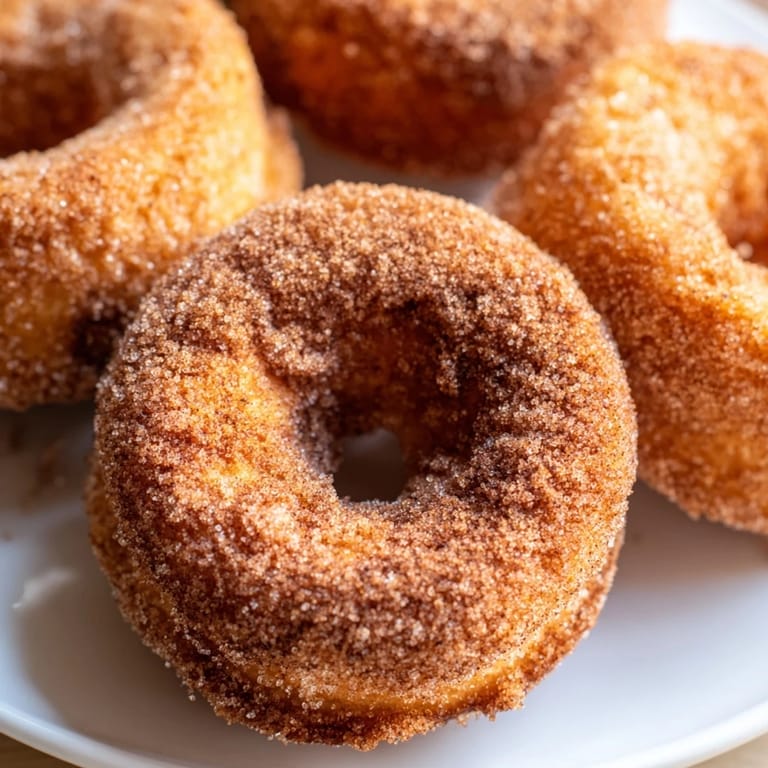
- Mix sugar and cinnamon in a shallow bowl, then brush each warm donut with melted butter and immediately dip it into the cinnamon-sugar mixture, turning to coat all sides. The warmth of the donut helps the sugar adhere, and the butter acts like glue.
 Pin It
 My neighbor tasted one of these fresh from the oven and told me it was the first time in years she'd felt happy about eating something without guilt, because it was homemade and she could see every ingredient. That's when I understood—it wasn't about the recipe being complicated or special, but about the care that showed in the result.
Why Baked Donuts Work
Baked donuts don't require hot oil, a deep fryer, or the constant attention that fried versions demand. You're not standing over a stove monitoring temperature and fishing them out at exactly the right moment. Instead, you prep a pan, slide it into the oven, and let heat do the work evenly from all sides. The result is a donut that's somehow lighter and less greasy than you'd expect, while still tasting indulgent and soft. This method also means you can make them on a weeknight without the smell of hot oil clinging to your kitchen for days.
The Cinnamon-Sugar Coating
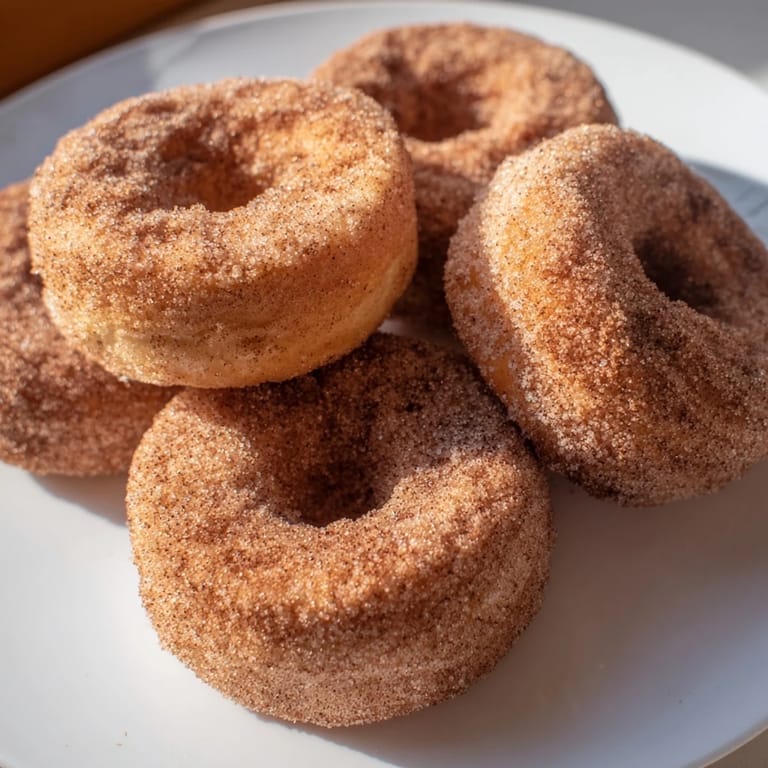
The coating is where baked donuts show their strength, because there's no comparison to a fried donut's crispy exterior when you're using dry heat. Instead, the melted butter creates a sticky surface that makes the cinnamon-sugar adhere like it was meant to be there, and then the heat from the warm donut starts to caramelize the sugar ever so slightly. This gives you a delicate crunch that lasts through the first few bites before melting into the soft crumb underneath. It's the textural contrast that makes each bite feel complete.
Storage and Make-Ahead
These donuts are best the same day you make them, while the coating is still crisp and the interior is at its softest. But real life happens, and sometimes you're baking the night before or in the morning for an afternoon event. If you must store them, keep them in an airtight container at room temperature for up to two days—they'll stay soft inside, though the coating will lose some of its snap. You can also freeze the baked, uncoated donuts for up to a month, then thaw them and coat them fresh whenever you need them.
- Reheat cooled donuts in a 300°F oven for about 5 minutes to restore some softness and warmth.
- If you're adding nutmeg or other spice variations, mix them into the cinnamon-sugar rather than the batter so the flavor stays bright.
- Make a double batch and freeze extras, because mornings are better when you can pull a warm donut from the freezer and have it ready in minutes.
 Pin It
 These cinnamon-sugar baked donuts have become my answer to the question of what to bring to someone's door when I want to show up with something that says I was thinking about them. They're proof that simple ingredients and a little attention can create something that feels far more luxurious than the time it takes to make.
Recipe FAQs
- → What ingredients create the soft texture in these donuts?
The combination of buttermilk, eggs, and baking powder helps create a tender and fluffy texture in these baked donuts.
- → How is the cinnamon sugar coating applied?
After baking, each donut is brushed with melted butter and then dipped into a cinnamon and sugar mixture for a fragrant, sweet finish.
- → Can these donuts be made dairy-free?
Yes, by substituting buttermilk with plant-based milk and using margarine instead of butter, you can make these dairy-free.
- → What baking equipment is required?
A standard donut pan is essential for shaping the donuts, along with mixing bowls, a whisk, a pastry brush, and a wire rack for cooling.
- → How should leftovers be stored?
Store cooled donuts in an airtight container for up to two days to maintain freshness and softness.