 Pin It
 My hands were shaking the first time I untied the string on that puff pastry box. Not from fear, exactly, but from the weight of expectation—Beef Wellington had always seemed like something only chefs in tall white hats could pull off. But there I was, standing in my cramped kitchen with a beautiful piece of beef and a stubborn determination to prove I could do this. The smell of searing meat filled the room, and suddenly, I wasn't nervous anymore. I was just cooking.
I made this for my parents' anniversary once, and my dad—who never says much about food—actually put his fork down and stared at his plate. My mom laughed and said it was like something out of a restaurant, which made me glow for the rest of the night. That's when I realized this dish isn't just about the food. It's about the pause it creates, the way people stop talking and just experience what's in front of them.
Ingredients
- Beef tenderloin: This is the star, so buy the best you can afford and make sure it's trimmed of any silverskin—it won't render and will make slicing difficult.
- Cremini mushrooms: Chop them as finely as you can manage, almost to a paste, because any large chunks will create gaps in the duxelles and mess with the structure.
- Shallots and garlic: These add a quiet sweetness that balances the earthiness of the mushrooms without overpowering the beef.
- Prosciutto: Acts like edible glue, keeping the duxelles from soaking into the pastry and making everything soggy.
- Dijon mustard: A thin layer adds sharpness and helps the prosciutto stick to the beef.
- Puff pastry: Thaw it overnight in the fridge, not on the counter, so it stays cold and workable when you need it.
- Egg wash: One beaten egg with a splash of water gives that glossy, bakery-perfect finish.
Tired of Takeout? 🥡
Get 10 meals you can make faster than delivery arrives. Seriously.
One email. No spam. Unsubscribe anytime.
Instructions
- Sear the beef:
- Season generously with salt and pepper, then sear it hard and fast in smoking-hot oil until every side is deeply browned. This isn't about cooking it through, it's about building flavor and creating a crust that will hold up under all those layers.
- Make the duxelles:
- Cook the mushrooms low and slow until they release all their moisture and turn dark and paste-like—this can take a full ten minutes, and it's worth every second. If there's any liquid left, keep going.
- Layer the prosciutto:
- Lay the slices on plastic wrap so they overlap slightly, creating a solid sheet with no gaps. Spread the cooled duxelles evenly across the top, edge to edge.
- Wrap the beef:
- Brush the cooled, seared beef with mustard, then use the plastic wrap to roll the prosciutto tightly around it like a blanket. Twist the ends and chill for at least 20 minutes so everything firms up.
- Encase in pastry:
- Roll the puff pastry into a rectangle large enough to wrap around the beef log with a little overlap. Place the unwrapped beef in the center, fold the pastry over, trim the excess, and seal the edges by pressing with a fork or your fingers.
- Egg wash and bake:
- Brush the entire surface with beaten egg, then bake at 425°F until the pastry is deeply golden and the internal temperature hits your target. Let it rest before slicing so the juices settle back into the meat.
 Pin It
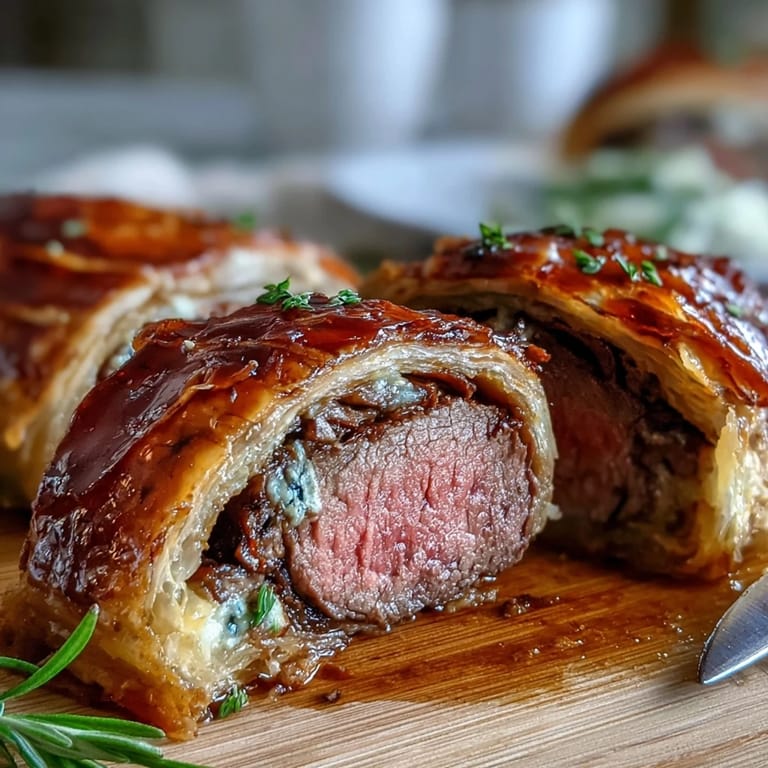
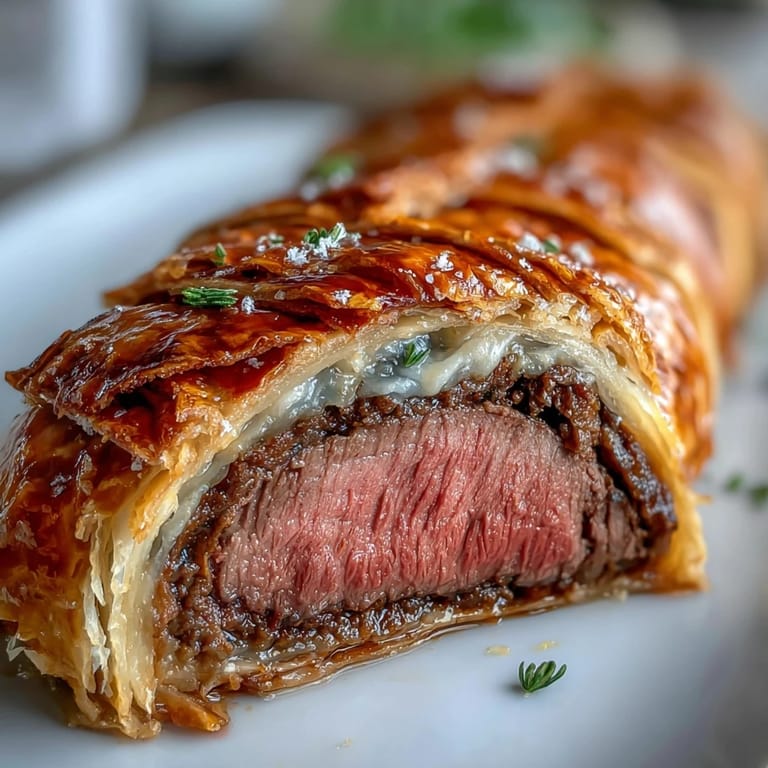
 The first time I sliced into a Wellington I'd made, I held my breath. When I saw that perfect pink center surrounded by dark mushrooms and golden pastry, I actually laughed out loud. My friend across the table said it looked like a painting, and I realized that all the fuss, all the steps, all the chilling and wrapping—it was worth it just for that one moment.
What to Serve Alongside
I usually go simple: roasted asparagus with lemon, creamy mashed potatoes, or a bright arugula salad with shaved parmesan. The Wellington is rich enough on its own, so anything too heavy will compete. A red wine reduction or quick pan jus made from the beef drippings ties everything together without much effort.
Making It Ahead
You can wrap the beef in prosciutto and duxelles, then refrigerate it for up to a day before encasing it in pastry. I've even frozen the whole thing (before baking) and pulled it out a few hours early to thaw in the fridge. Just add five or ten minutes to the baking time if it's still a little cold in the center.
Getting the Temperature Right
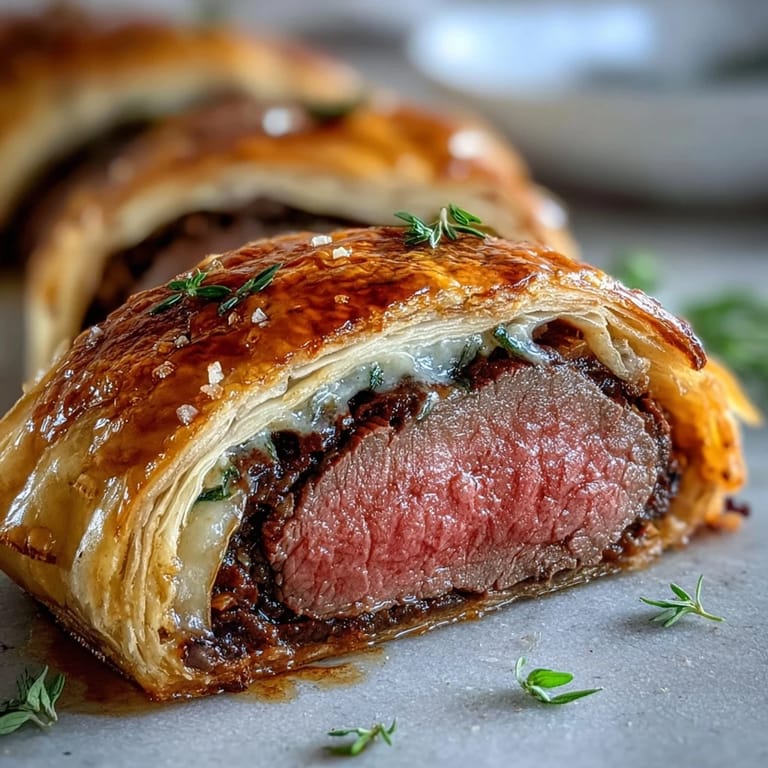
An instant-read thermometer is your best friend here. Pull it out at 120°F for rare, 130°F for medium-rare—it will climb another five degrees while it rests. I learned this the hard way after overcooking my second attempt and ending up with beef that was more gray than pink.
- Insert the thermometer through the end of the Wellington, not the top, so you don't ruin the presentation.
- If the pastry is browning too fast, tent it loosely with foil for the last ten minutes.
- Always rest the Wellington for at least ten minutes before slicing, or all those beautiful juices will run out onto the cutting board.
 Pin It
 This dish taught me that fancy doesn't have to mean impossible. It just means taking your time, trusting the process, and not being afraid to make something beautiful.
Recipe FAQs
- → Can I prepare Beef Wellington ahead of time?
Yes, you can assemble it completely and refrigerate up to 24 hours before baking. Apply the egg wash just before placing it in the oven for the best golden finish.
- → What temperature should the beef be cooked to?
For rare, aim for 120°F (49°C); for medium-rare, 130°F (54°C). The beef will continue cooking slightly as it rests, so remove it from the oven just before reaching your desired temperature.
- → How do I prevent soggy pastry?
Ensure the mushroom duxelles is completely dry with no moisture remaining, and let the seared beef cool completely before wrapping. The prosciutto layer also acts as a barrier against moisture.
- → Can I use a different cut of beef?
Beef tenderloin is ideal for its tenderness and uniform shape, but you can use a well-trimmed beef fillet or center-cut filet mignon portion for smaller servings.
- → What should I serve with Beef Wellington?
Classic accompaniments include roasted vegetables, creamy mashed potatoes, green beans, or a simple arugula salad. A rich red wine sauce or béarnaise complements the dish beautifully.
- → Why is my Beef Wellington undercooked or overcooked?
Using an instant-read thermometer is essential for accuracy. Oven temperatures vary, so check the internal temperature starting at 35 minutes and adjust baking time accordingly.