 Pin It
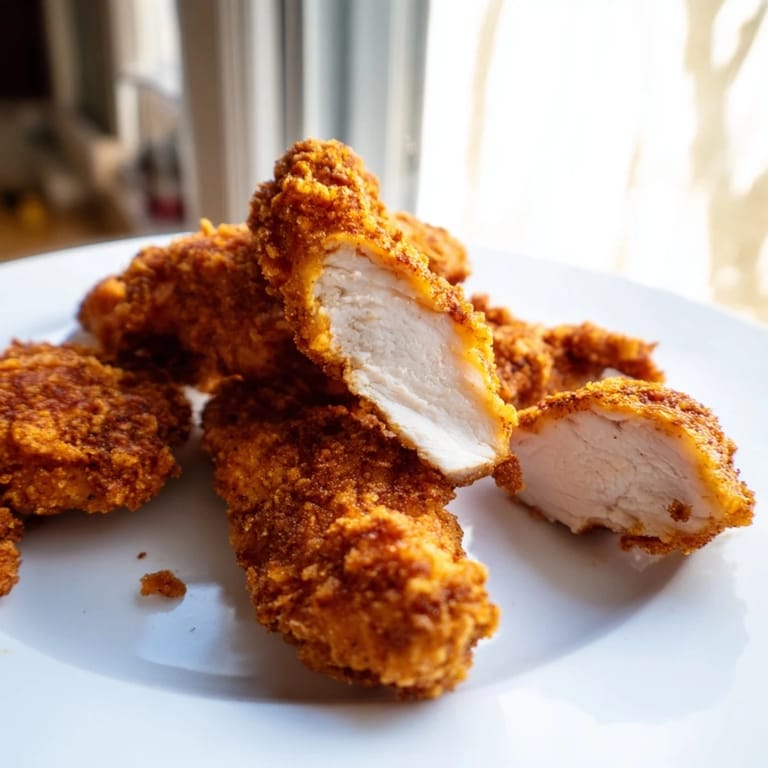
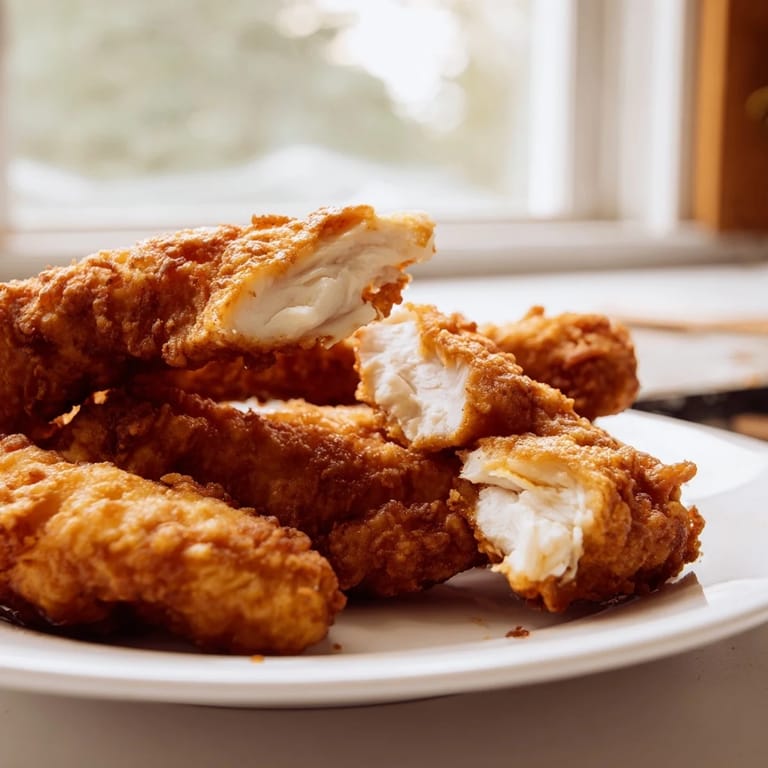
 My neighbor handed me a plate of golden fried chicken tenders through her kitchen window one summer evening, and I've been chasing that exact crispness ever since. There's something about that perfect shattering crunch followed by impossibly juicy meat that makes people forget their manners. After years of trial and error—too soggy, too dry, too bland—I finally cracked the code with a buttermilk bath and a double-dip flour trick. These tenders became the thing I make when I want to impress without breaking a sweat. Now they're the first thing my family requests when I ask what's for dinner.
I made these for my son's soccer team fundraiser, and watching kids choose these over the store-bought frozen ones felt like winning an award. One parent asked for the recipe right there in the parking lot, and I realized this wasn't just food—it was something that made people slow down and actually taste what they were eating.
Ingredients
- Chicken tenders (500 g): Use fresh, never-frozen if possible; they cook more evenly and stay juicier throughout the frying process.
- Buttermilk (240 ml): This is the secret weapon that tenderizes and adds subtle tanginess—don't skip it or substitute with regular milk.
- All-purpose flour (180 g): The foundation of your crust; sifting it first creates a lighter, airier coating that crisps better.
- Paprika (1.5 tsp): Adds color and a gentle smoky warmth that reminds everyone why homemade tastes different.
- Baking powder (1 tsp): Creates those beautiful tiny air pockets in the crust that make it extra crispy and light.
- Cayenne pepper (optional): A half teaspoon adds just enough heat to make people wonder what makes it taste so special.
- Vegetable oil (500 ml): Choose neutral oils like canola or vegetable; olive oil will burn and taste bitter at frying temperature.
- Salt, black pepper, garlic powder, onion powder: The aromatics that make each bite taste like it came from someone who actually cares.
Tired of Takeout? 🥡
Get 10 meals you can make faster than delivery arrives. Seriously.
One email. No spam. Unsubscribe anytime.
Instructions
- Build your marinade with intention:
- Whisk buttermilk with salt, pepper, garlic powder, and onion powder in a bowl large enough to hold the chicken tenders without crowding. The seasoning should taste almost salty at this stage—trust it, the chicken will absorb and balance these flavors as it sits.
- Let the chicken soak and soften:
- Submerge all the tenders in the buttermilk mixture, cover with plastic wrap, and refrigerate for at least 1 hour. Overnight is even better if you can plan ahead; the longer soak makes the meat impossibly tender and infuses it with flavor all the way through.
- Mix the flour coating with precision:
- In a shallow dish, combine flour, paprika, salt, pepper, cayenne if using, and baking powder. Stir well so the seasonings distribute evenly throughout the flour mixture.
- Get your oil to the perfect temperature:
- Heat vegetable oil in a deep skillet or Dutch oven over medium-high heat until it reaches 175°C (350°F). Use a cooking thermometer if you have one—this temperature is crucial because too hot burns the outside while the inside stays raw, and too cool makes soggy tenders.
- Dredge each tender with care:
- Remove chicken from the marinade, letting excess buttermilk drip back into the bowl. Press each tender firmly into the flour mixture on both sides so the coating adheres and creates those craggy edges everyone loves.
- Fry in batches without rushing:
- Carefully lay tenders into the hot oil without overcrowding the pan; they should have room to move freely. Fry for 4 to 5 minutes per side until deep golden brown and cooked through to an internal temperature of 75°C (165°F).
- Rest and drain for the final touch:
- Transfer finished tenders to a paper towel-lined plate and let them rest for 2 minutes. This moment matters—it allows the residual heat to complete the cooking while the exterior stays crisp.
 Pin It
 My daughter used to refuse chicken until I made these, and now she eats them without ketchup or sauce, just enjoying the pure flavor and texture. That's when I knew this recipe wasn't just about technique—it was about creating a moment when people actually pay attention to what they're eating.
The Double-Dip Secret
I discovered this trick by accident when I was clumsy with a tender and it fell back into the buttermilk after I'd already floured it. Instead of starting over, I dredged it again and fried it anyway—and it emerged with the most incredible crispy exterior I'd ever achieved. Now I do it intentionally every time, and it's become the signature move that makes people ask why my version tastes so much better than anyone else's.
Serving and Pairing Ideas
These tenders are forgiving enough to pair with almost anything—creamy ranch, tangy honey mustard, spicy hot sauce, or even just a squeeze of fresh lemon. I've served them alongside simple greens and roasted potatoes, in sandwiches with pickles, or straight as finger food at parties where they disappear faster than I can fry them. The beauty is that the chicken itself is flavorful enough to stand alone, but it also plays well with others.
Timing and Make-Ahead Tips
The entire process from start to finish takes about an hour and 35 minutes, but most of that is hands-off marinating time. You can marinate the chicken overnight if that helps your schedule, and honestly the flavor only improves with extra time in the buttermilk. The frying itself is quick—just 15 minutes total—so save this recipe for nights when you want something impressive but don't want to spend hours in the kitchen.
- Prepare the marinade in the morning and let the chicken soak all day for maximum tenderness and flavor absorption.
- Mix your dry coating ingredients the night before and store them in a sealed container so you're truly ready to fry.
- Serve these warm and fresh for the best texture; they're best enjoyed within 30 minutes of coming out of the oil.
 Pin It
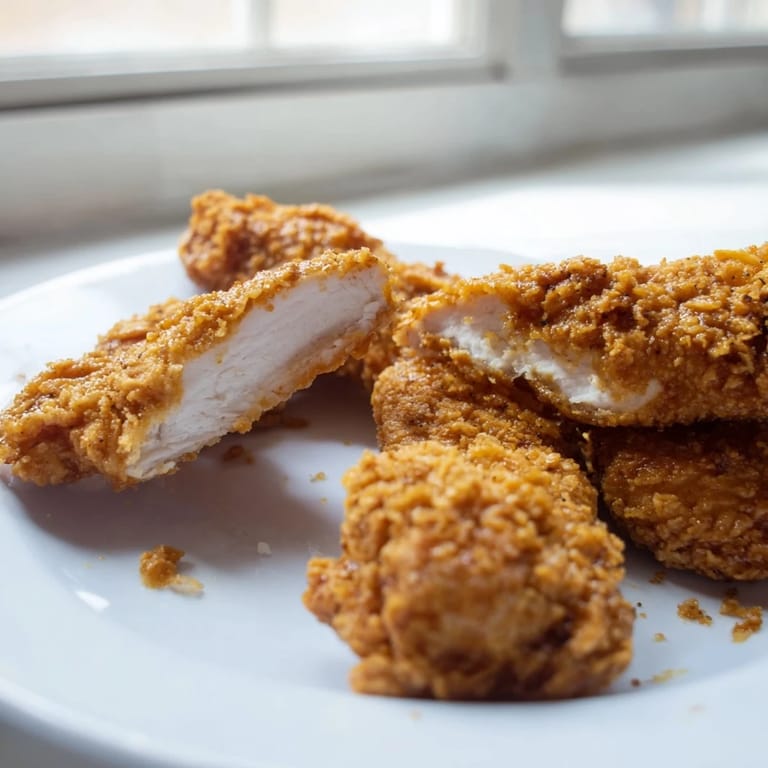
 These crispy fried chicken tenders have become my comfort recipe, the one I reach for when I want to nourish people and make them happy in one simple meal. There's real magic in feeding people something that tastes like it came from somewhere special.
Recipe FAQs
- → How long should I marinate the chicken tenders?
Marinate for at least 1 hour in the refrigerator. For deeper flavor, you can marinate overnight. The buttermilk tenderizes the meat while the seasonings infuse throughout.
- → What's the best way to achieve maximum crispness?
Double-dip the tenders for extra crunch: coat with flour, dip back into buttermilk, then coat again with the seasoned flour mixture. This creates multiple layers for a crunchier exterior.
- → How do I know when the chicken is fully cooked?
Use a cooking thermometer to ensure the internal temperature reaches 75°C (165°F). The coating should be golden brown and the meat should be opaque throughout, which typically takes 4-5 minutes per side.
- → Can I make this gluten-free?
Yes, simply substitute the all-purpose flour with a gluten-free flour blend. Ensure the baking powder and other seasonings are certified gluten-free if needed.
- → What's the ideal oil temperature and type?
Heat vegetable oil to 175°C (350°F) in a deep skillet or Dutch oven. Vegetable oil works best for frying as it has a high smoke point and neutral flavor that won't overpower the chicken.
- → Why does the chicken need to rest after frying?
Resting for 2 minutes on paper towels allows excess oil to drain while the residual heat finishes cooking the interior. This keeps the chicken juicy and the coating crispy.