 Pin It
 The first time I tasted dukkah-spiced eggs, I was sitting in a cramped Cairo kitchen at sunrise, watching my friend's grandmother crack eggs into simmering water with the ease of someone who'd done it ten thousand times. She moved with such certainty—no timer, no fussing—just the quiet knowledge of heat and time. When she pulled those golden halves onto a platter and scattered that nutty, crunchy spice mix across them, something clicked. It wasn't fancy, just eggs and spices, but it felt like discovering the simplest luxury.
I made this for my sister on a Wednesday when she was going through one of those rough patches where even mornings felt heavy. She sat at my kitchen counter, and while the eggs were cooling, the kitchen filled with the smell of that toasted dukkah I'd made the night before—hazelnuts and sesame and something warm I couldn't name. When she tasted it, she actually smiled, really smiled, and asked if I could make it again next week.
Ingredients
- Eggs: Eight large ones, room temperature if you have time (they crack less when the water temperature change is gradual).
- Dukkah spice mix: This is the star—three tablespoons of that fragrant, nutty Egyptian blend that tastes like a whole spice market in a jar.
- Fresh parsley, cilantro, and mint: Two tablespoons each, finely chopped, because fresh herbs turn this from good to alive.
- Extra virgin olive oil: Two tablespoons of good quality, the kind that tastes like olives and warmth.
- Sea salt and black pepper: To taste, because the dukkah is salty but you'll want to adjust for your preference.
- Crusty bread or pita: Optional but really, don't skip it.
Tired of Takeout? 🥡
Get 10 meals you can make faster than delivery arrives. Seriously.
One email. No spam. Unsubscribe anytime.
Instructions
- Boil the eggs just right:
- Bring a medium saucepan of water to a gentle boil—not a rolling chaos, but a steady, quiet simmer. Carefully lower in the eggs using a spoon and let them sit there for seven minutes if you want jammy golden yolks, or nine if you prefer them firmer. You'll know it's right when the white is set but the yolk has some give.
- Cool them down:
- Fish them out with a slotted spoon and drop them into a bowl of ice water. This stops the cooking instantly and makes peeling so much easier. Give them two to three minutes to chill completely.
- Peel with patience:
- Gently roll each egg to crack the shell, then peel under cool running water if you need to—the water helps separate the membrane from the white. Slice each egg in half lengthwise, trying to get a clean cut that shows off that beautiful yolk.
- Assemble on the platter:
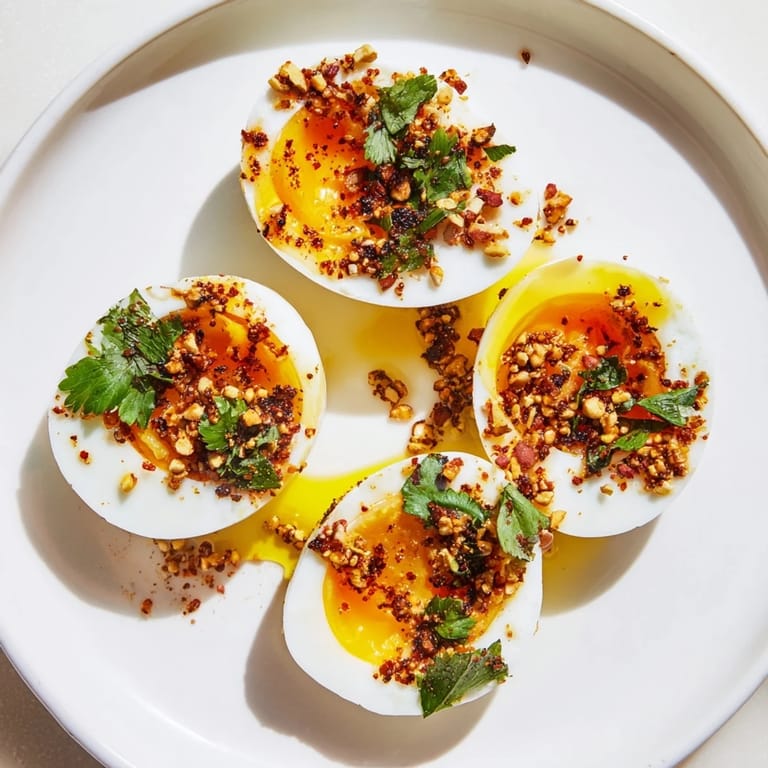
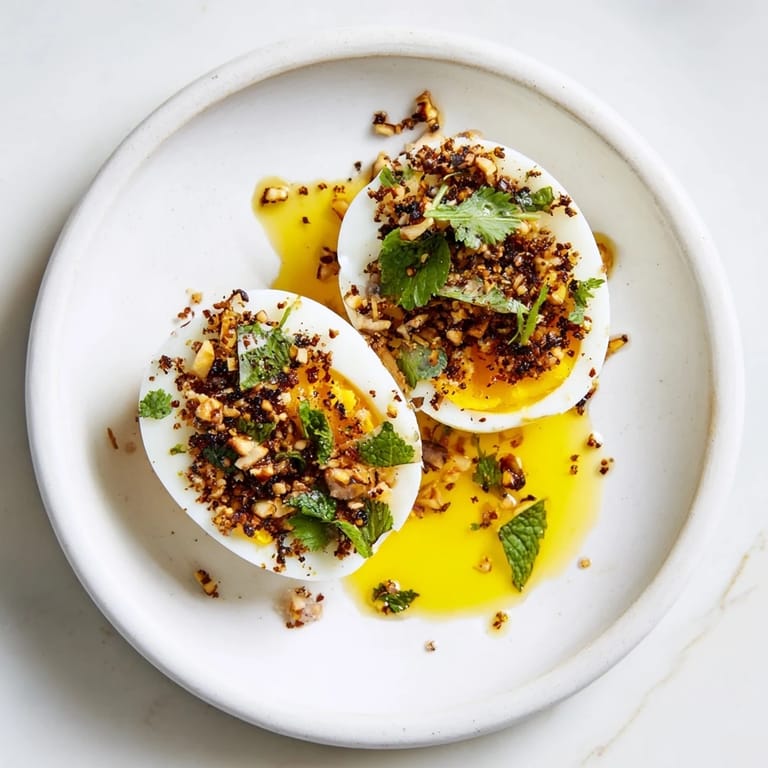
- Arrange those golden halves cut-side up on whatever beautiful surface you're using. Drizzle generously with olive oil, letting it pool slightly around each egg.
- Layer the flavors:
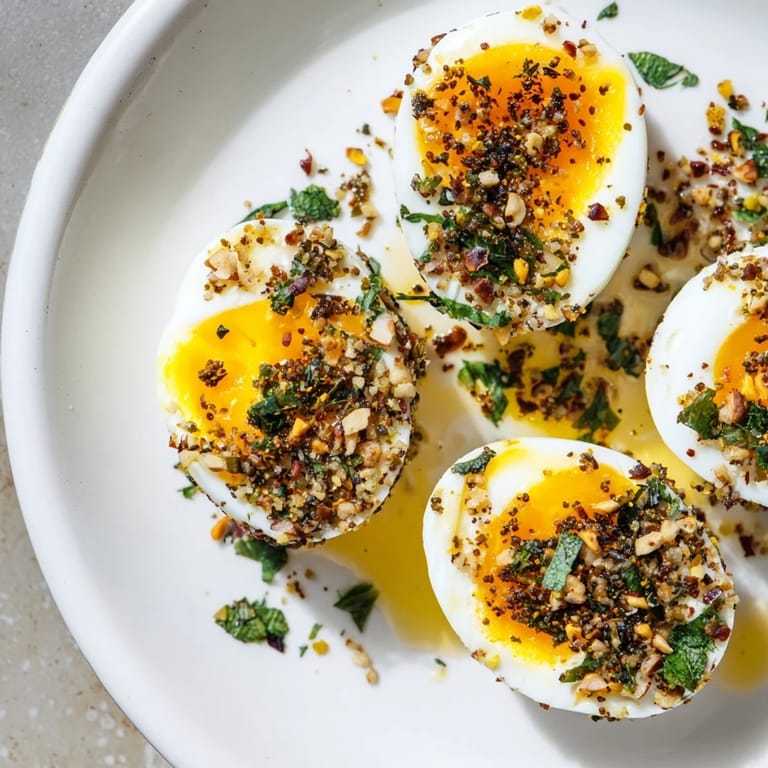
- Sprinkle that dukkah mix across each egg half with a generous hand—this is where the magic happens, where texture meets toasted spice. Scatter the fresh herbs over top like confetti, letting some of the green show.
- Season and serve:
- Taste a bite and adjust with salt and pepper, though remember the dukkah already brings salt to the party. Serve immediately while everything is still warm and the herbs are still bright.
 Pin It
 There's something about eating eggs this way that makes you slow down. Maybe it's the ritual of peeling, or the way the dukkah crunches between your teeth, or just how something so simple can taste so intentional. It became our Sunday thing, this dish—not because it's complicated, but because it feels like saying 'I'm taking care of us this morning.'
Making Your Own Dukkah
Buying dukkah is fine, honestly, but making it is where this recipe gets personal. Toast the hazelnuts, sesame seeds, coriander and cumin seeds, peppercorns, and fennel seeds in a dry pan over medium heat until the whole kitchen smells like a spice bazaar. The moment you start smelling it clearly, you're close to done—maybe thirty seconds more. Let it cool completely, then pulse it in a food processor until it's coarse and chunky, not a powder. This keeps it crunchy, which is the whole point.
Variations Worth Trying
Once you master the basic version, you can play. Soft-boiled eggs with the yolk still flowing are incredible with dukkah—you cut into them and that warm yolk becomes the sauce. Hard-boiled versions hold their shape beautifully for meal prep. Poached eggs work too if you're feeling fancy, and they soak up the olive oil differently. Each version tastes like a slightly different morning.
Serving Ideas and Pairings
Serve this with something to soak up the olive oil and dukkah—crusty bread, warm pita, or even toasted sourdough. A squeeze of fresh lemon juice just before eating brightens everything and cuts through the richness. Coffee or tea on the side, taken slowly, because this is the kind of meal that deserves attention.
- Try serving it on a bed of labneh or Greek yogurt for tang and creaminess.
- A simple tomato salad alongside adds freshness and saves you from needing much else.
- Leftovers stay good for a day in the fridge, but they're best eaten the same day while the dukkah is still crispy.
 Pin It
 This breakfast tastes like care, even when you're making it just for yourself. It's become my quiet Monday ritual, that moment before the day takes over.
Recipe FAQs
- → What is dukkah?
Dukkah is an Egyptian blend of toasted nuts, seeds, and spices that adds crunch and aromatic flavor to dishes.
- → How should the eggs be cooked?
Simmer eggs gently for 7 minutes for soft yolks or 9 minutes for firmer yolks, then cool in ice water before peeling.
- → Can I use homemade dukkah?
Yes, homemade dukkah is made by toasting hazelnuts, sesame, coriander, cumin seeds, and spices, then grinding them coarsely.
- → What herbs complement dukkah eggs?
Fresh parsley, cilantro, and mint provide bright, fresh notes that balance the rich spices.
- → What serving suggestions work best?
Serve with crusty bread or warm pita to enjoy the crunchy topping and soak up olive oil and spice flavors.
- → Are there variations to the eggs cooking method?
Soft-boiled, hard-boiled, or poached eggs all pair well with dukkah and herbs for varied texture.