 Pin It
 The first time I bit into a proper falafel pita, I was standing in a tiny shop in the old city, surrounded by the sound of sizzling oil and the smell of fresh herbs hitting hot spices. My friend laughed because I got tahini sauce all over my sleeve, but that moment—crispy on the outside, impossibly fluffy inside, with all those fresh vegetables catching the warmth—made me determined to recreate it at home. Turns out, homemade falafel isn't complicated; it just needs decent dried chickpeas and a little patience.
I made this for a group of friends one weeknight, and someone asked if I'd learned to cook in Lebanon. I hadn't, but the compliment stuck with me—there's something about homemade falafel that makes people feel cared for, like you've gone to real trouble for them, even though the real work is just forward planning the night before.
Ingredients
- Dried chickpeas (1 ½ cups, soaked overnight): This is the non-negotiable foundation; canned chickpeas release too much moisture and your falafel will fall apart in the oil. The overnight soak wakes them up without cooking them, which is the whole trick.
- Fresh onion and garlic (½ small onion, 3 cloves): These get pulsed raw into the mixture, giving falafel its characteristic brightness that keeps it from tasting heavy.
- Fresh parsley and cilantro (½ cup each): Don't skip the fresh herbs or use dried; they're not just flavor—they're what make falafel green inside and keep it from being one-dimensional.
- Ground cumin and coriander (1 tsp each): These warm spices are the backbone, but they work quietly; let them blend with the herbs rather than dominate.
- Cayenne or chili flakes (½ tsp, optional): A whisper of heat rounds out the flavor if you want it; I usually include it because it adds complexity without making you cough.
- Salt and baking powder (1 tsp salt, ½ tsp baking powder): Salt brings everything together, and baking powder gives that crucial lift so your falafel is airy rather than dense.
- All-purpose flour (2 tbsp): Just enough to help the mixture hold its shape without making it gluey or heavy.
- Vegetable oil for frying: You need depth here for proper frying; shallow oil means greasy falafel, and nobody wants that.
- Tahini, lemon juice, garlic, water (for sauce): The tahini becomes silky when you whisk in cold water gradually; rushing this step leaves you with something thick and unusable.
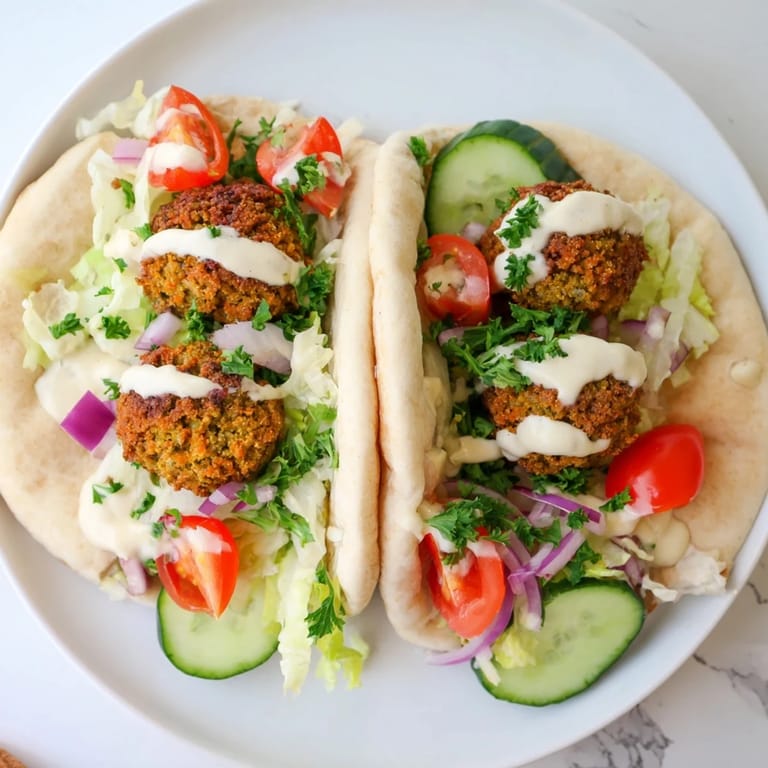
- Pita bread, fresh vegetables (lettuce, tomatoes, cucumber, red onion): Assemble these right before eating so the pita stays warm and the vegetables stay crisp.
Tired of Takeout? 🥡
Get 10 meals you can make faster than delivery arrives. Seriously.
One email. No spam. Unsubscribe anytime.
Instructions
- Pulse the base:
- Drain and pat your soaked chickpeas completely dry, then pulse them in a food processor with the onion, garlic, parsley, and cilantro until the mixture looks coarse and sandy but holds together when you squeeze it. You're not making a paste; you want texture.
- Add the binding ingredients:
- Transfer everything to a bowl and stir in the baking powder and flour until just combined. If you have time, cover and chill for 30 minutes—it makes forming the falafel easier and helps them hold their shape in the oil.
- Heat the oil:
- Pour about 2 inches of oil into a deep skillet and heat it to 350°F. If you don't have a thermometer, drop a tiny piece of mixture into the oil; it should sizzle immediately and float up in a few seconds.
- Shape and fry:
- Wet your hands or use a falafel scoop to form the mixture into balls about 1 ½ inches wide. Working in batches so you don't crowd the pan, fry each batch for 2 to 3 minutes per side until they're deep golden brown and crisp. The outside should sound hollow when you tap it.
- Make the tahini sauce:
- Whisk tahini, lemon juice, minced garlic, and salt together in a separate bowl. Slowly drizzle in cold water while whisking until you reach a pourable consistency—too thick and it won't coat the filling, too thin and it slides right out of the pita.
- Assemble and serve:
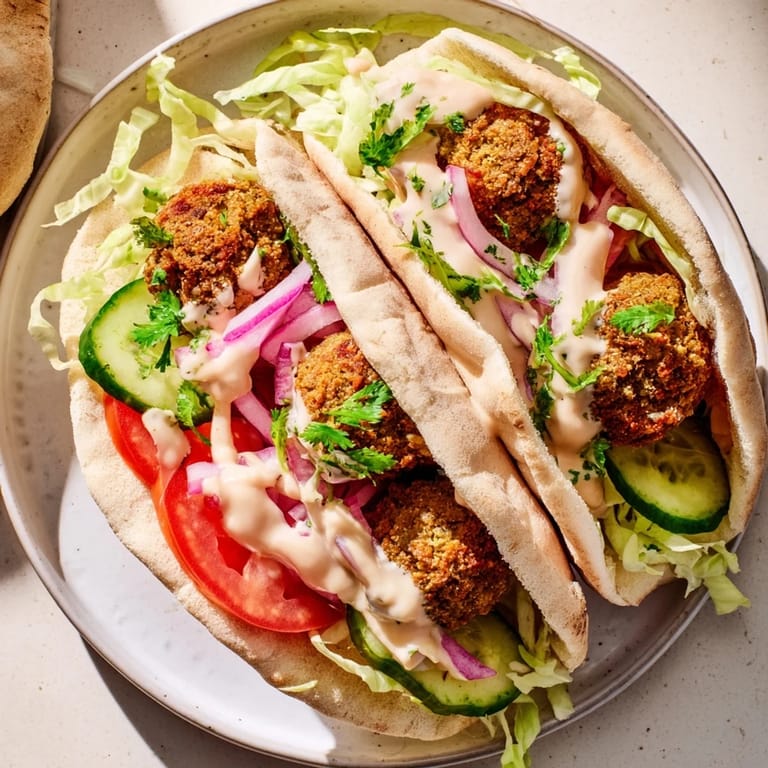
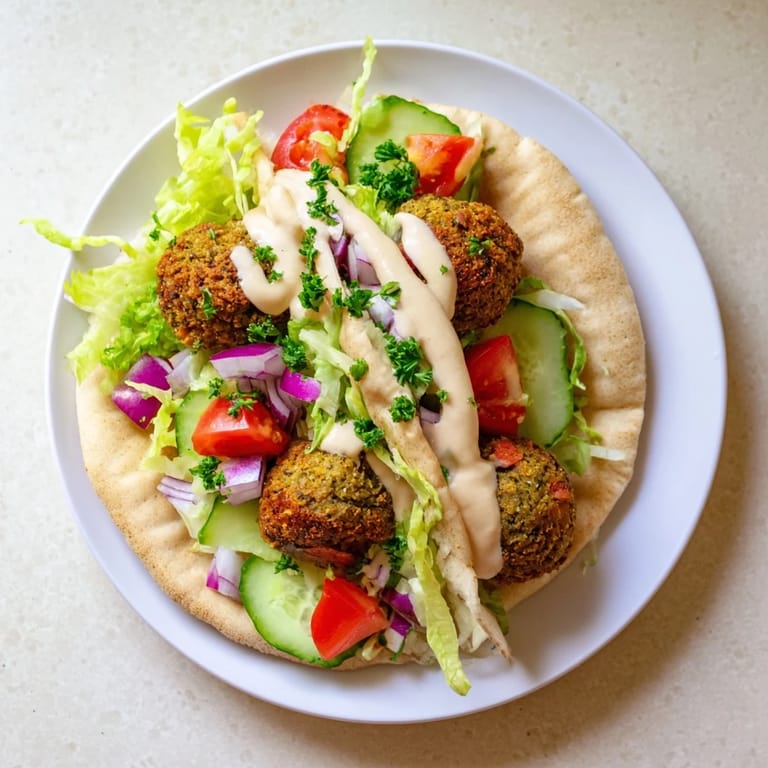
- Cut your warm pitas in half to form pockets, then layer in lettuce, tomato, cucumber, and red onion. Add 3 or 4 falafel pieces to each pocket, then drizzle generously with tahini sauce and top with fresh parsley. Eat immediately while everything is still warm.
 Pin It
 What I love most is the moment someone breaks open their falafel pita and steam rises up, and they realize the inside is still warm and almost fluffy. That's when you know you've nailed it—that contrast between the crispy shell and the tender center is worth every bit of the setup.
Why Crispy Matters
The whole appeal of falafel is that textural contrast, and it's easy to miss if you're not deliberate about it. Oil temperature matters more than technique here; if it's not hot enough when you drop the falafel in, it spends too long absorbing oil and becomes dense. I learned this the hard way, standing over a skillet with what amounted to greasy chickpea balls. Now I always test the oil with a tiny pinch of mixture first, and it makes all the difference.
The Tahini Trick
Tahini is fundamentally suspicious—it's thick, separated, and looks like it will never come together. But if you whisk the lemon juice and garlic in first, then add water one tablespoon at a time while whisking constantly, something magical happens. The sesame paste suddenly becomes silky and pourable, and it goes from an ingredient you're wary of to the best part of the whole pita. It's worth taking a moment with.
Making It Your Own
This is where homemade falafel shines—you can adjust the spice level to your taste, add more garlic if you want, or swap cilantro for mint if that's what you have. Some people add a pinch of sumac for brightness, or include some diced red onion right in the mixture for texture. The tahini sauce is flexible too; a dash of hot sauce mixed in changes the whole mood.
- Pickled turnips or sliced radishes add a sharp, tangy crunch that cuts through the richness beautifully.
- For a lighter version, bake the falafel at 400°F for 20 to 25 minutes instead of frying, turning halfway through.
- Serve alongside hot sauce or add a squeeze of fresh lemon juice if you want more brightness than the tahini provides.
 Pin It
 Making falafel at home is one of those small kitchen wins that feels bigger than it is. Once you've done it once, you'll want to do it again, and soon it becomes your go-to when you want something that feels both nourishing and indulgent.
Recipe FAQs
- → What type of chickpeas are best for falafel?
Dried chickpeas soaked overnight yield the best texture and flavor for falafel, ensuring a crisp exterior and moist interior.
- → How do I make the tahini sauce smooth?
Whisk tahini with lemon juice and garlic, then gradually add cold water until the sauce reaches a smooth, pourable consistency.
- → Can falafel be baked instead of fried?
Yes, baking at 400°F (200°C) for 20–25 minutes, turning halfway, produces a lighter falafel that's still flavorful and crispy.
- → What vegetables are ideal for filling pita pockets?
Shredded lettuce, diced tomatoes, sliced cucumbers, and diced red onions add fresh crunch and balance to the falafel pockets.
- → How do I prevent falafel from falling apart during frying?
Allow the mixture to rest in the fridge for at least 30 minutes after adding flour and baking powder, which helps firm them up before frying.