 Pin It
 I discovered this dish at a dinner party where a friend unveiled it with theatrical flair, lifting away breadsticks like curtains to reveal a treasure of cheeses beneath. The gasp from the table told me everything—here was a dish that made people pause mid-conversation just to admire it. What struck me most wasn't the luxury of the ingredients, but how the crispness of homemade breadsticks shattered against creamy Brie, creating this unexpected textural dance. I went home that night determined to recreate that moment, that feeling of turning something edible into an event.
The first time I made this for a work gathering, I was so focused on the dome structure that I forgot to let the breadsticks cool completely, and they bent like wet noodles when I tried to arrange them. My partner laughed and suggested we prop them up with small cheese cubes as scaffolding while they firmed up. It worked perfectly, and honestly, that accident taught me more about engineering this thing than any video could have.
Ingredients
- All-purpose flour: Use unbleached if you want a deeper golden color on your breadsticks—the difference is subtle but real.
- Instant dry yeast: Keep it fresh and stored in the fridge; old yeast won't give you the rise you need for structure.
- Lukewarm water: Test it on your wrist like baby formula—too hot kills yeast, too cold and nothing happens.
- Triple-cream Brie: Buy it a day ahead so it's perfectly creamy but not melting into puddles by serving time.
- Aged Comté: The nuttiness here balances everything; don't skip it for a cheaper alternative.
- Truffled goat cheese: If truffle feels too extravagant, plain fresh goat cheese works, but roll it in crushed pistachios instead.
- Blue cheese: Roquefort is traditional, but a milder blue works if your guests are cheese-timid.
- Parmigiano Reggiano: Shave it thick with a vegetable peeler so people actually taste it.
- Sesame seeds: These make the breadsticks glisten under light—worth the small gesture.
Tired of Takeout? 🥡
Get 10 meals you can make faster than delivery arrives. Seriously.
One email. No spam. Unsubscribe anytime.
Instructions
- Build your dough:
- Mix flour, yeast, sugar, and salt in a bowl, then add water and olive oil. Knead for 8–10 minutes until the dough feels alive under your hands—smooth, elastic, slightly tacky but not sticky. You'll know it's ready when you can stretch a piece thin without it tearing.
- Let it breathe:
- Cover the bowl with a damp cloth and set it somewhere warm for 30 minutes. The dough should roughly double—this isn't a precise science, so don't stress if it's slightly under or over.
- Shape your sticks:
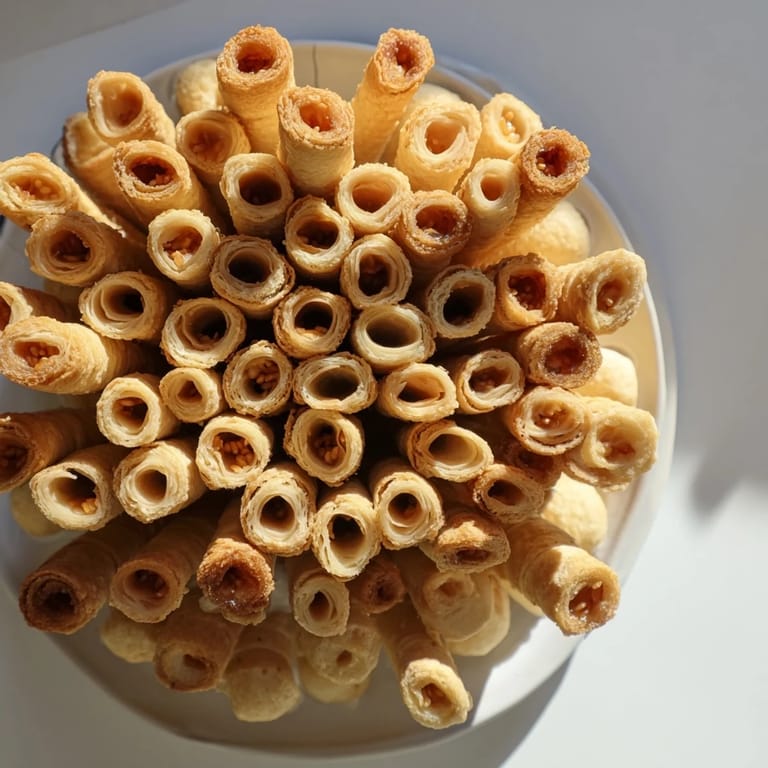
- Divide dough into 18–20 pieces and roll each one into a thin stick about 3 mm thick and 25 cm long. This is meditative work; take your time and don't overthink consistency.
- Glaze and garnish:
- Arrange breadsticks on a parchment-lined tray, brush lightly with egg yolk, and sprinkle sesame seeds if using. The yolk gives them a magazine-worthy sheen.
- Bake until golden:
- Bake at 200°C for 15–18 minutes, turning once halfway through so they brown evenly. They should sound crisp when you tap them and smell like toasted grain and butter.
- Cool and assemble:
- Let breadsticks cool completely on a wire rack. Meanwhile, arrange cheeses in a mound on your serving platter with grapes, honey, and herbs scattered around. Carefully lean breadsticks against the cheese pile in a dome formation, using cheeses as props.
 Pin It
 What surprised me most was how this dish transformed a regular evening into something ceremonial. When guests gathered around to see it, conversations paused, phones came out, and suddenly the cheese board became theater. That's when I understood—this isn't just appetizer, it's a moment.
The Art of Cheese Selection
The magic lives in contrast. You want something creamy (the Brie), something complex and aged (Comté), something delicate (goat cheese), and something bold enough to make people stop chewing (the blue). Think of it like a dinner party guest list—you need personalities that play well together but bring distinct energy. The shaved Parmigiano adds salt and umami, a wake-up call on the palate.
Breadstick Engineering Tips
The breadsticks are stronger than they look, especially once they've cooled. Lean them at angles against the cheese mound, using multiple points of contact so nothing topples. If one cracks or breaks during assembly, don't panic—you made 18–20 for a reason. A slight imperfection reads as rustic charm, not failure. Trust the structure; it's more stable than it appears.
Serving and Pairing
Serve this with a crisp white wine, Champagne, or even a light rosé that won't overpower the delicate cheeses. If you're feeling extra, brush a few breadsticks with edible gold leaf before assembly—it catches light beautifully and makes the whole thing feel like it belongs in a gallery. A small bowl of honey or fig jam on the side lets guests drizzle as they eat, turning simplicity into customization.
- Keep the dome intact until the moment you want to reveal it—the drama of that first glimpse is half the joy.
- Pair breadsticks with any cheese, not just the ones directly beneath it—this is finger food, exploration encouraged.
- Leftovers won't stay crisp, but stale breadsticks are excellent dunked in soup the next day.
 Pin It
 This dish taught me that food isn't just about flavor—it's about the moment you create around it. Every time I make it, I'm recreating that pause at my friend's dinner party, that collective gasp before the tasting begins.
Recipe FAQs
- → What type of flour is best for the breadsticks?
All-purpose flour yields tender yet sturdy breadsticks that hold shape well during baking.
- → How can I make the breadsticks crispier?
Bake the breadsticks until golden and touch for 15–18 minutes, turning once to ensure even crisping.
- → What cheeses are ideal for assembling the dome?
A combination of creamy Brie, aged Comté, truffled goat cheese, and blue cheese creates rich and varied flavors.
- → Can the dome be assembled in advance?
It's best assembled shortly before serving to maintain breadsticks’ crispness and cheese freshness.
- → Are there garnishes that complement this dish?
Fresh herbs like thyme and rosemary, seedless grapes, and a drizzle of honey or fig jam provide bright accents.
- → Is there a way to stabilize the breadstick structure?
Using a small bowl as a mold while assembling can help achieve a stable dome shape.