 Pin It
 There's something about the smell of tahini hitting the food processor that takes me back to a small kitchen in Istanbul where I watched a woman make hummus so silky it seemed to disappear on your tongue. Years later, I started experimenting with what comes after—roasting vegetables until they're charred and smoky, then piling them on top like you're building something worth sharing. This dish became my answer to the question of what to bring when you want people to feel taken care of, without spending hours in the kitchen.
I remember making this for a dinner party when I was supposed to be doing something more elaborate, and honestly, it was the thing people kept coming back to. Someone asked if I'd spent hours on it, and I had to laugh because the whole spread took less time than their commute to my apartment. That's when I realized comfort food doesn't need to be complicated—it just needs to taste like someone cared.
Ingredients
- Canned chickpeas: Already cooked and tender, they save you hours and actually make creamier hummus than you might expect.
- Tahini: This is the whole story—quality matters here because it's the backbone of everything, so don't skimp on a good jar.
- Fresh lemon juice: Bottled will disappoint you; fresh juice cuts through the richness and wakes everything up.
- Garlic: Just one clove keeps this approachable and lets the other flavors breathe instead of being dominated by heat.
- Extra-virgin olive oil: You're using it twice—once to blend, once to drizzle—so this is worth the good bottle.
- Cumin: Ground cumin ties everything to the Mediterranean and adds warmth without shouting about it.
- Red bell pepper: Roasted until the edges blacken, it becomes sweet and almost caramelized, nothing like the raw version.
- Zucchini: Sliced thin enough to cook through but thick enough to get those golden-brown edges.
- Red onion: The slight bitterness mellows into something almost sweet when it hits high heat.
- Eggplant: Cut into cubes so it gets maximum surface area for charring and soaks up the olive oil beautifully.
- Smoked paprika: Just half a teaspoon gives you that whisper of smokiness that makes people ask what you did.
- Pine nuts: They toast fast and go from pale to burnt in about thirty seconds, so watch them like they owe you money.
- Fresh parsley: The bright green against the charred vegetables is as much about what it looks like as what it tastes like.
- Sumac or zaatar: Optional but worth the search—they add a flash of color and a subtle tang that feels like the final word on the whole dish.
Tired of Takeout? 🥡
Get 10 meals you can make faster than delivery arrives. Seriously.
One email. No spam. Unsubscribe anytime.
Instructions
- Heat your oven and prep the vegetables:
- Get the oven to 425°F and cut your vegetables while it preheats—uneven pieces will cook unevenly, so aim for strips and cubes that are roughly the same size. Toss everything with olive oil, smoked paprika, salt, and pepper until each piece is lightly coated and glistening.
- Roast until charred and tender:
- Spread the vegetables on a single layer and roast for 22 to 25 minutes, stirring once halfway through so they brown on multiple sides. You'll know they're done when the edges are dark and blistered and the centers are soft enough to eat with a fork.
- Blend the hummus into silk:
- While the vegetables roast, put the chickpeas, tahini, lemon juice, garlic, olive oil, cumin, and salt into a food processor and blend until it looks like wet sand. Add cold water one tablespoon at a time, blending between additions, until you get something creamy and spreadable that holds a swoosh when you drag a spoon through it.
- Toast the pine nuts:
- Heat a dry skillet over medium heat and add the pine nuts, stirring constantly for about two minutes until they're golden and smell like a forest. They go from perfect to burnt in about ten seconds, so stay close and listen for when the nutty smell shifts.
- Build the plate:
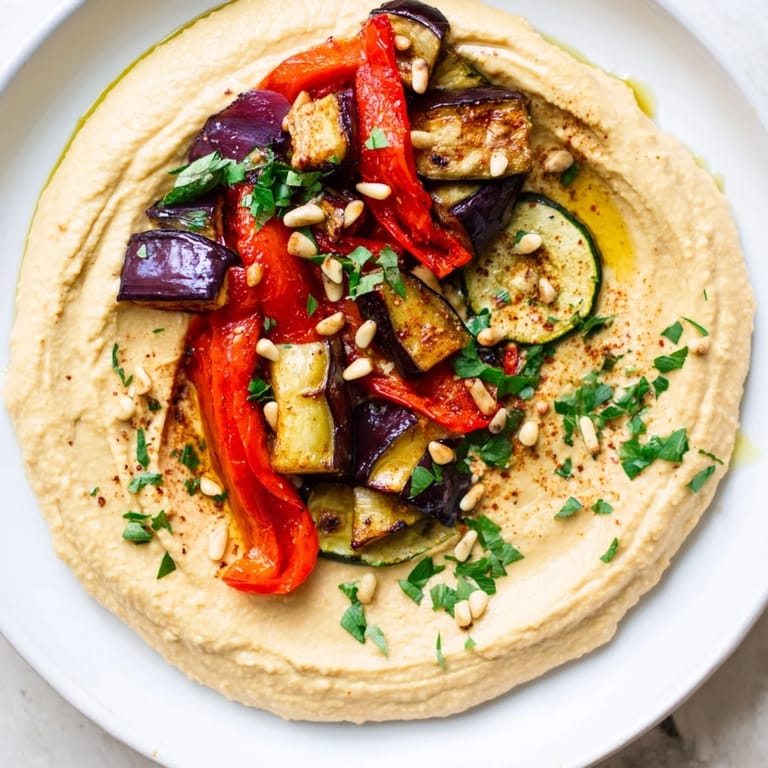
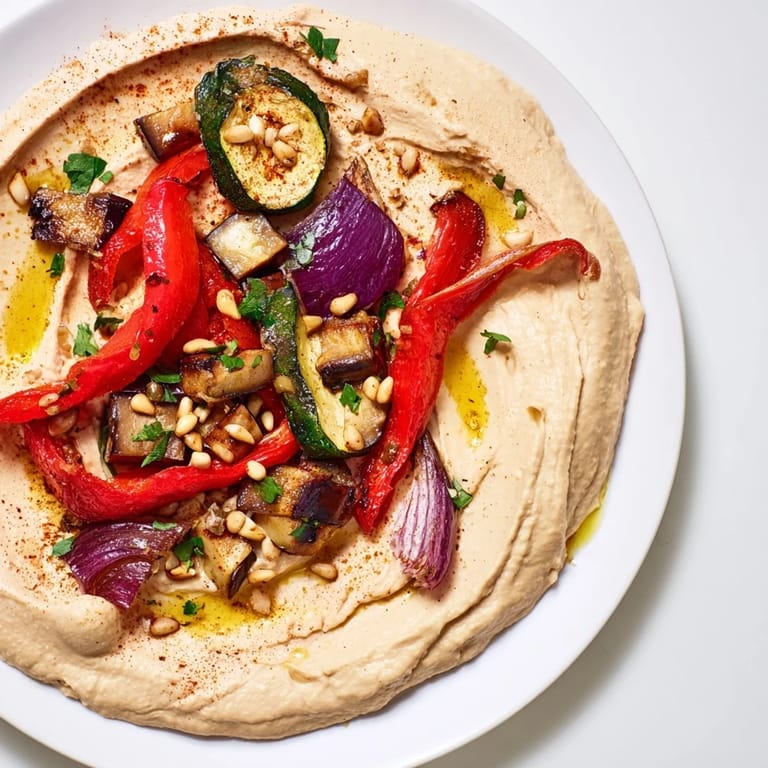
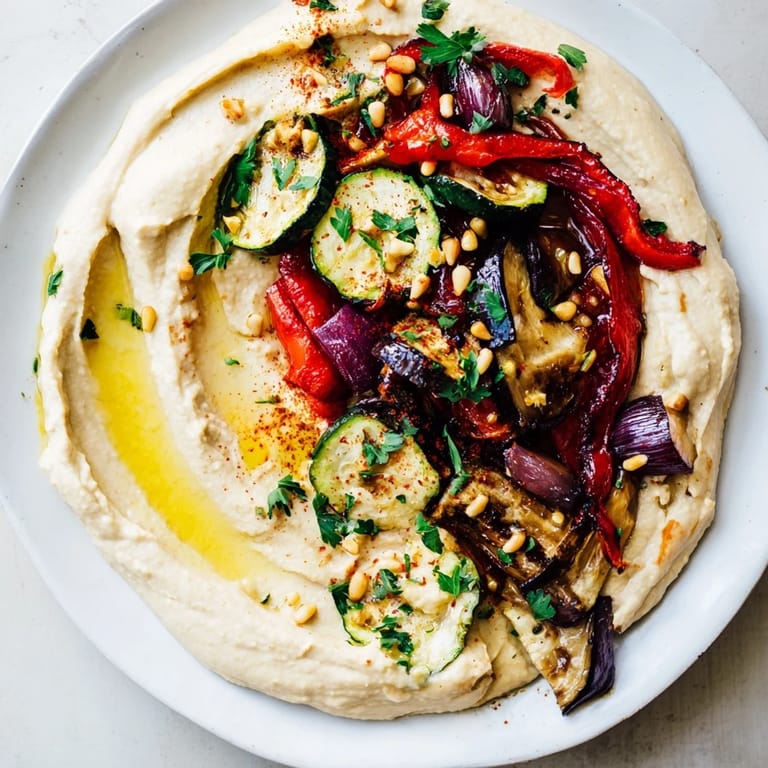
- Spread the hummus on a shallow serving bowl or platter, dragging the back of a spoon to create a little landscape of peaks and valleys. Scatter the warm roasted vegetables over the top, then sprinkle the toasted pine nuts and fresh parsley across everything, finishing with a generous drizzle of olive oil and a light dust of sumac or zaatar if you have it.
 Pin It
 The first time someone asked for the recipe, I realized I'd been making this for so long that I wasn't really following steps anymore—I was just cooking from memory and feel. That moment made me want to write it all down so other people could have that same ease, that sense of moving through the kitchen like you actually know what you're doing.
Why This Dish Works for Everything
This hummus and roasted vegetable plate is quietly flexible in a way that feels almost generous. Serve it as a dip with warm pita or fresh vegetables, use it as a toast topping, or add some grains and call it dinner. The hummus keeps in the fridge for three days, and the roasted vegetables are just as good cold the next day mixed into a salad or scattered over grain bowls.
Seasonal Swaps That Feel Natural
Summer brings the obvious choices—zucchini and bell peppers are at their best—but I've learned that roasting teaches you which vegetables are worth it. Carrots become almost caramelized, mushrooms shrink down and concentrate their flavor, cauliflower gets nutty and sweet, and asparagus gets delicate and charred at the tips. The hummus stays constant, but letting the vegetables follow the seasons keeps this from ever feeling like a formula.
Small Moves That Change Everything
Sometimes the smallest choices make the biggest difference in how a dish lands. A whisper of harissa stirred into the hummus adds heat and depth, while chili flakes scattered over the vegetables give you little pockets of spice. If you want earthiness, a small spoonful of pomegranate molasses folded into the hummus adds complexity that makes people pause and wonder what you did.
- Toast your pine nuts in the same skillet you used for anything else—the fond adds an extra layer of flavor that pure butter or oil can't match.
- Save a little of the chickpea cooking liquid to thin the hummus if it gets too thick, rather than reaching for more water.
- Serve everything at room temperature or barely warm, because that's when the flavors read the clearest instead of being muted by heat.
 Pin It
 This dish has become my quiet answer to the question of how to cook for people you care about when you don't have much time. It's honest, generous, and tastes like you understand something about flavor and care.
Recipe FAQs
- → How do I achieve the creamy texture in the base?
Blend soaked chickpeas with tahini, lemon juice, garlic, olive oil, and a bit of cold water, adding water slowly until smooth and creamy.
- → What vegetables work best for roasting?
Bell pepper, zucchini, red onion, and eggplant each develop a smoky flavor when roasted and complement the creamy base perfectly.
- → Can I prepare the vegetables ahead of time?
Yes, roasted vegetables keep well and can be reheated gently before serving for maximum flavor and texture.
- → How should pine nuts be toasted for best results?
Toast pine nuts in a dry skillet over medium heat, stirring frequently until golden and fragrant, which enhances their nuttiness.
- → What alternatives can be used for seasoning?
Smoked paprika, sumac, or zaatar add layers of smoky and tangy notes, and a touch of chili flakes or harissa can add pleasant heat.