 Pin It
 My first okonomiyaki came from a cramped food stall in Osaka during a rainy afternoon, and I watched the vendor flip those golden pancakes with such casual confidence that I thought there must be some secret I was missing. Years later, standing in my own kitchen with shredded cabbage piling up on the counter, I realized the magic wasn't in technique alone but in how the batter somehow transforms into something both crispy and tender, savory and slightly sweet. That first bite under the neon glow of a street vendor's tent changed what I thought a pancake could be.
I made these for a small dinner party and watched my friend's skeptical expression shift the moment she tasted that first crispy-edged wedge, the bonito flakes still dancing slightly from the warmth. Someone asked for seconds before finishing their first, which felt like the highest compliment. There's something about serving food that's a little unexpected but deeply satisfying that brings people together in an unpretentious way.
Ingredients
- All-purpose flour: The foundation that gives you structure without weighing things down, and using good flour makes a noticeable difference in how tender the final pancake becomes.
- Dashi stock: This is what separates okonomiyaki from just a vegetable pancake—it brings umami depth that makes people pause and ask what that savory note is.
- Eggs: They're your binder and give the batter that slight richness that keeps everything moist through cooking.
- Salt and baking powder: Salt seasons throughout, while baking powder creates those small pockets that make the texture almost cloud-like in the center.
- Finely shredded green cabbage: The heart of the dish, and shredding it yourself means you control the size and keep it fresher than pre-packaged versions.
- Green onions: A bright layer of flavor that adds freshness and a slight sharpness that cuts through the richness beautifully.
- Carrot: Its subtle sweetness and slight chew add textural interest and a pop of color that makes each bite feel intentional.
- Bean sprouts: Optional, but they add a delicate crunch that reminds you of the fresh vegetable market origins of this dish.
- Bacon or pork belly: Crisps up and infuses everything with its smoky richness, though the dish stands perfectly fine without it.
- Okonomiyaki sauce: This tangy-sweet glaze is essential—it's the flavor you're chasing, so don't skip it even if you have to make a quick homemade version.
- Japanese mayonnaise: Creamier and slightly sweeter than American mayo, it mellows the sauce and adds a luxurious mouthfeel.
- Bonito flakes: These paper-thin dried fish curls are magic—they actually warm and wave slightly from the heat of the pancake, and their umami punch is irreplaceable.
- Aonori: This dried seaweed powder adds a briny, slightly sweet mineral note that brings everything into focus.
- Pickled ginger: A small amount of bright, sharp flavor that cuts through and cleanses your palate between bites.
Tired of Takeout? 🥡
Get 10 meals you can make faster than delivery arrives. Seriously.
One email. No spam. Unsubscribe anytime.
Instructions
- Bring the base together:
- Whisk your flour, dashi, eggs, salt, and baking powder in a bowl until you reach a smooth batter—it should pour easily but not be runny. Don't overwork it, or you'll develop gluten and lose that tender texture you're after.
- Build in your vegetables:
- Gently fold your shredded cabbage, green onions, carrot, and bean sprouts into the batter, making sure everything gets coated evenly. If you're using shrimp, add it now and distribute it throughout so you get a piece in every pancake.
- Heat your cooking surface:
- Get your skillet or griddle to medium heat with a light coating of oil—you want it hot enough that a drop of batter sizzles immediately but not so hot that things burn on the outside before cooking through. Testing with a small piece of batter tells you if you're ready.
- Shape your first pancake:
- Pour about a quarter of your batter onto the hot surface and gently shape it into a round disk about half an inch thick using the back of a spatula. If you're adding bacon or pork belly, lay your pieces across the top now and press them in slightly so they stay put.
- Watch for the golden moment:
- Let it cook undisturbed for 4 to 5 minutes until the bottom develops a beautiful golden crust and the edges look set. You'll notice the top starting to look less wet, which is your signal.
- Execute the flip with confidence:
- Slide your spatula underneath and flip in one smooth motion—hesitating halfway will make it stick. The second side cooks another 4 to 5 minutes until it matches the first side's golden color and the inside is heated through.
- Finish with the sauce dance:
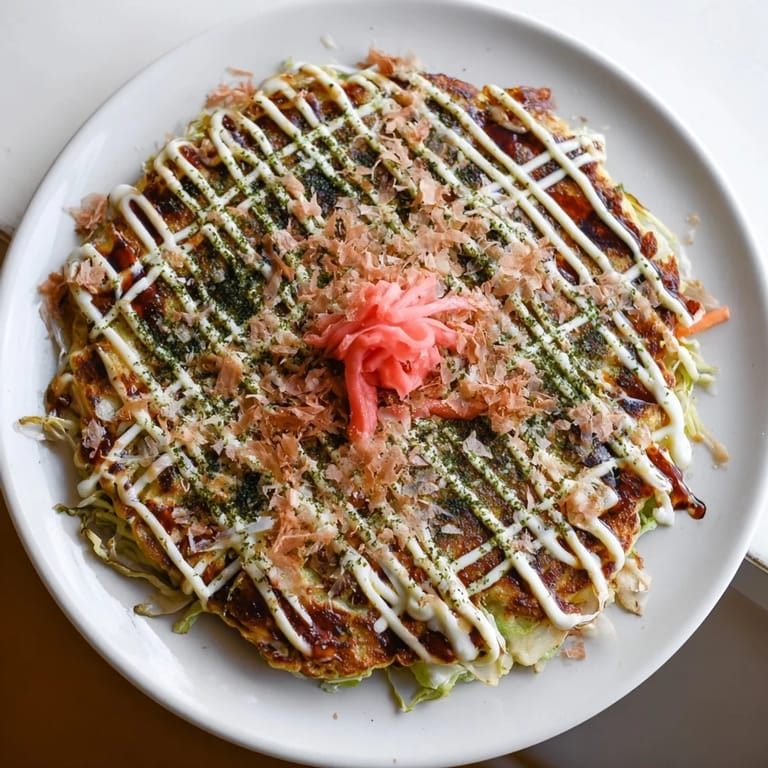
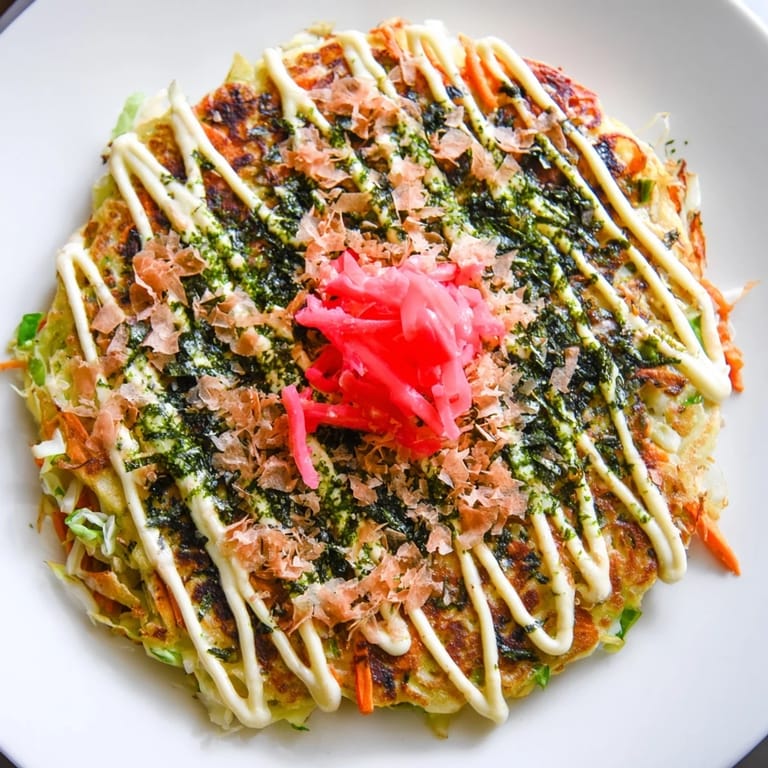
- Transfer your pancake to a plate and while it's still warm, drizzle okonomiyaki sauce and Japanese mayo in loose crisscross patterns. The warmth of the pancake slightly melts and blends these together.
- Crown with garnishes:
- Sprinkle bonito flakes, aonori, and pickled ginger over the top immediately and serve right away. The heat keeps those bonito flakes gently waving, which is part of the experience.
 Pin It
 There's a moment when you first taste okonomiyaki that feels like discovering something you didn't know you were missing—how a savory pancake loaded with vegetables and topped with warm sauce and crispy flakes becomes so much more than the sum of its parts. It's the kind of food that makes you want to go back to that street vendor in Osaka, or better yet, master it in your own kitchen.
The Secret Is in the Sizzle
The most important moment happens in those first few minutes when the batter hits the hot oil and you hear that satisfying sizzle that tells you everything is cooking at the right temperature. Too low and you get a pale, dense pancake that feels undercooked even when it's technically done; too high and the outside browns before the inside cooks through. Learning to listen to your pan is just as important as watching it, because that sound becomes your timer over time.
Building Flavor Layers
What makes okonomiyaki so craveable is how many distinct flavors and textures are happening in every single bite, layered intentionally rather than just thrown together. The dashi in the batter provides a savory backbone that keeps everything grounded, while the vegetables add freshness and textural variety that prevents any bite from feeling monotonous. By the time you add the sauce, mayo, bonito flakes, and aonori, you've created something complex enough to keep your interest through the whole plate.
Making It Your Own
This recipe is actually a launching point rather than a strict formula, and some of my favorite versions came from improvisation in moments when my fridge was running low or I wanted to experiment with what I had on hand. Corn, cheese, mushrooms, or even kimchi work beautifully folded into the batter, and you can skip the proteins entirely without losing anything essential. The structure stays solid as long as you keep the batter ratio balanced and don't overcrowd the pan, which gives you real freedom to play.
- Leftover okonomiyaki tastes wonderful cold the next day, sliced into wedges and dunked in sauce like a savory pizza.
- If your dashi stock isn't available, a combination of soy sauce, mirin, and water creates a surprisingly good substitute.
- Make the batter while your pan preheats so everything comes together smoothly without waiting around.
 Pin It
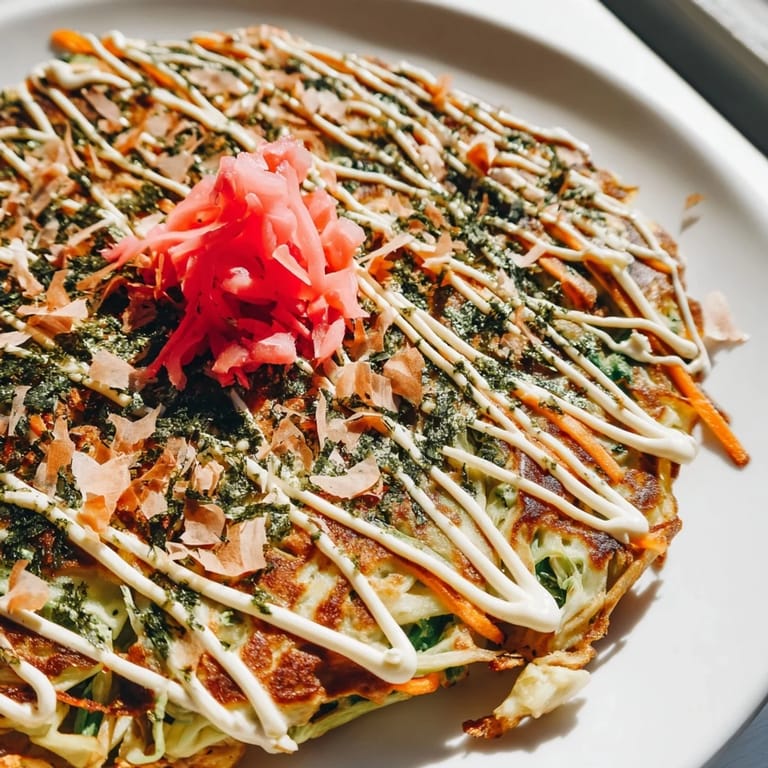
 Okonomiyaki belongs on your table whenever you want something that tastes like celebration without requiring hours in the kitchen. Once you've made these once, you'll find yourself reaching for the recipe again because they're just that satisfying.
Recipe FAQs
- → What is okonomiyaki sauce?
Okonomiyaki sauce is a thick, savory-sweet condiment similar to Worcestershire sauce. You can find it at Asian markets or substitute with a homemade mixture of Worcestershire, ketchup, and soy sauce in equal parts.
- → Can I make these pancakes vegetarian?
Yes! Simply omit the bacon, pork belly, and shrimp. The vegetable-filled batter and toppings remain flavorful and satisfying. All other ingredients work beautifully for a vegetarian version.
- → How do bonito flakes move on the hot pancake?
Bonito flakes (katsuobushi) are thin-shaved and dance due to the residual heat rising from the freshly cooked pancake. This creates a mesmerizing effect and helps distribute their delicate fish flavor throughout the dish.
- → What's the best way to flip these pancakes?
Use a wide, sturdy spatula and flip quickly and confidently in one smooth motion. The pancake should be golden and set on the bottom before flipping. Practice makes perfect, and a nonstick skillet helps tremendously.
- → Can I prepare the batter in advance?
You can prepare the dry ingredients and vegetables separately ahead of time. Mix the batter just before cooking to maintain the fluffiness from the baking powder. This keeps them light and airy.
- → What beverages pair well with okonomiyaki?
Light Japanese beer and sake are traditional pairings that complement the savory, umami-rich flavors. Cold Japanese green tea or a crisp lager also work wonderfully.