 Pin It
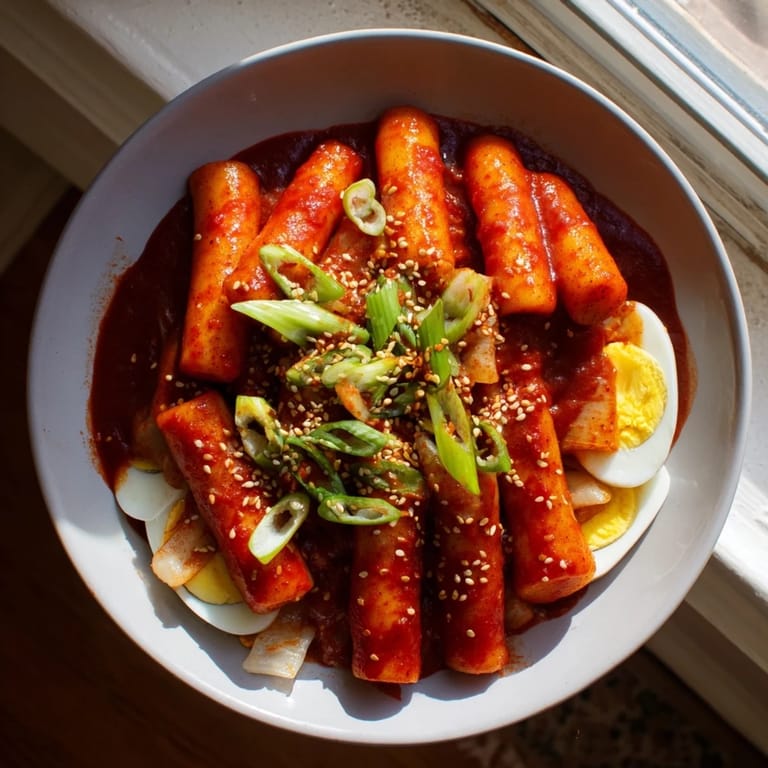
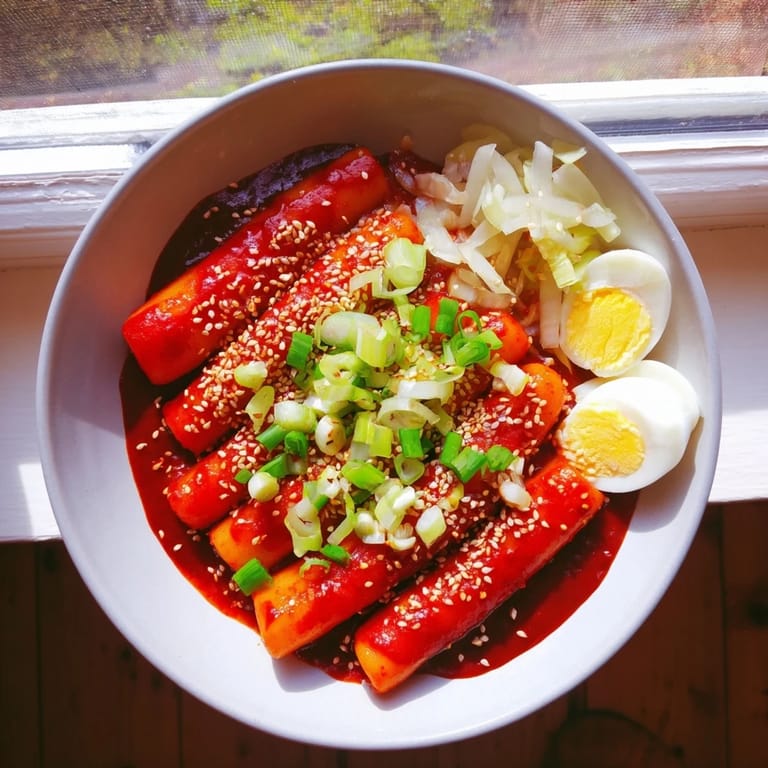
 Korean Tteokbokki is a beloved street food classic, celebrated for its signature chewy rice cakes and vibrant, spicy-sweet sauce. This dish brings a perfect harmony of gochujang-infused heat and savory depth, making it a comforting staple for family-style meals or quick snacks. Garnished with fresh green onions and sesame seeds, it is a visually striking and delicious representation of Korean culinary tradition.
Pin It The secret to this dish lies in the rich gochujang sauce, which thickens as it simmers to coat every rice cake in a glossy, flavorful glaze. Whether you are a fan of spicy food or looking for a hearty vegetarian main dish, this Tteokbokki recipe delivers a bold and authentic experience.
Ingredients
Tired of Takeout? 🥡
Get 10 meals you can make faster than delivery arrives. Seriously.
One email. No spam. Unsubscribe anytime.
- 500 g Korean rice cakes (tteok, cylindrical)
- 1 L water (for soaking)
- 3 tbsp gochujang (Korean chili paste)
- 1 tbsp gochugaru (Korean chili flakes)
- 2 tbsp soy sauce
- 1 tbsp sugar
- 1 tbsp honey (or corn syrup)
- 2 cloves garlic, minced
- 3 cups water (for broth)
- 1 dried kelp (kombu), 8 x 8 cm
- 4 dried anchovies, heads and guts removed (optional)
- 2 green onions, sliced diagonally
- 1 small onion, sliced
- 1/2 cup cabbage, chopped (optional)
- 2 boiled eggs, peeled (optional)
- 1 tbsp sesame seeds
Instructions
- Step 1
- Soak the rice cakes in warm water for 10 minutes if they are hard or refrigerated.
- Step 2
- In a medium pot, combine 3 cups water, kelp, and anchovies (if using). Bring to a simmer and cook for 10 minutes. Remove kelp and anchovies, reserving the broth.
- Step 3
- Add gochujang, gochugaru, soy sauce, sugar, honey, and minced garlic to the broth. Stir to dissolve the paste completely.
- Step 4
- Add rice cakes, onion, and cabbage (if using) to the pot. Bring to a gentle boil, stirring occasionally to prevent sticking.
- Step 5
- Simmer for 10–15 minutes, or until the sauce thickens and the rice cakes are soft and chewy.
- Step 6
- Add green onions and boiled eggs (if using) in the last 2 minutes of cooking.
- Step 7
- Transfer to a serving platter. Sprinkle with sesame seeds and serve hot.
Zusatztipps für die Zubereitung
To ensure the best results, always soak cold or hardened rice cakes before cooking to help them soften evenly. You can easily adjust the spiciness of the dish by increasing or decreasing the amount of gochugaru (chili flakes) used in the sauce base.
Varianten und Anpassungen
For extra richness and variety, consider adding fish cakes (eomuk) sliced into strips at the same time as the rice cakes. Adding halved boiled eggs at the end provides a creamy contrast to the heat of the sauce.
Serviervorschläge
Serve your Tteokbokki alongside traditional Korean sides like pickled radish (danmuji) to provide a refreshing crunch. For a more substantial meal, it pairs excellently with steamed dumplings or crispy mandu.
 Pin It
 This recipe yields 4 servings, each containing approximately 320 calories. Please note that this dish contains soy and gluten (unless using gluten-free alternatives); always double-check your packaged ingredients. Enjoy this steaming bowl of comfort as a vibrant main dish or a shared snack.
Recipe FAQs
- → What are Korean rice cakes and where can I find them?
Korean rice cakes (tteok) are cylindrical, chewy cakes made from glutinous rice flour. They're available in most Asian grocery stores, either fresh or refrigerated in vacuum-sealed packages. Look for them in the Korean or Asian section. If unavailable, some Japanese and other Asian markets carry similar products.
- → Can I make this dish vegetarian?
Yes, tteokbokki is naturally vegetarian-friendly. Simply omit the anchovies from the broth and use vegetable stock instead of fish-based broth. All other ingredients, including gochujang and gochugaru, are typically plant-based. Always verify packaging labels for hidden animal products or non-vegan additives.
- → How do I adjust the heat level?
Control spiciness by adjusting gochugaru (dried chili flakes). Start with less than recommended, taste the sauce, then add more if desired. You can also reduce gochujang slightly. Remember that flavors intensify as the dish simmers, so taste progressively throughout cooking rather than adding all spice at once.
- → What's the best way to prevent rice cakes from sticking?
Stir occasionally throughout cooking, especially in the first few minutes. Don't let the pot sit unattended on high heat. Use a wooden spoon to gently move cakes around. Pre-soaking hard or refrigerated rice cakes in warm water for 10 minutes also helps them cook evenly and prevents sticking.
- → Can I prepare components ahead of time?
Yes. Make the broth base up to two days ahead and refrigerate. Prepare vegetables and garnishes several hours in advance, storing them separately. Assemble and cook everything fresh for best texture. Avoid cooking rice cakes in advance, as they become mushy and lose their signature chewy quality.
- → What side dishes pair well with tteokbokki?
Serve with pickled radish (mumuji) for sharp acidity that cuts through richness, steamed dumplings for substance, or fresh vegetables like cucumber slices. Kimchi adds another fermented element. A cold beverage like Korean rice drink (sikhye) or sweet milk complements the spicy heat perfectly.