 Pin It
 The first time I made pistachio gelato, I was standing in a tiny Roman gelateria watching the owner work with an intensity that seemed almost meditative. He caught me staring and handed me a tiny wooden spoon with a sample, and that single taste—creamy, nutty, impossibly smooth—stayed with me for years until I finally decided to recreate it at home. Turns out, the magic isn't some secret ingredient but rather patience and respect for the pistachios themselves, letting them shine without apology.
Last summer, I served this to a friend who grew up in Sicily, and watching her face when she took that first spoonful was worth every minute of the six-hour wait. She closed her eyes and didn't say anything for a moment, which told me everything—it tasted like home to her, which somehow felt like the highest compliment I could receive.
Ingredients
- Shelled unsalted pistachios (120 g): Buy the best quality you can find; their flavor makes or breaks this entire dessert, so skip the bargain bin.
- Whole milk (500 ml): Don't use low-fat milk—the fat content is what gives gelato its signature silky mouthfeel.
- Heavy cream (200 ml): This is your ticket to that luxurious texture that sets gelato apart from regular ice cream.
- Granulated sugar (120 g for gelato, plus 2 tbsp for pistachios): The sugar dissolves into the custard and helps create that smooth, creamy consistency as it freezes.
- Large egg yolks (4): These create the emulsion that makes gelato so velvety; don't skip this step or use substitutes if you can help it.
- Pure vanilla extract (1 tsp): This adds depth without overpowering the pistachio flavor, so use the real stuff.
- Fine sea salt (pinch): A tiny amount amplifies the pistachio flavor in ways you won't expect until you taste it.
Tired of Takeout? 🥡
Get 10 meals you can make faster than delivery arrives. Seriously.
One email. No spam. Unsubscribe anytime.
Instructions
- Roast and skin the pistachios:
- Spread them on a baking tray and roast at 170°C for 8–10 minutes until the kitchen fills with that warm, toasty aroma. Once they've cooled slightly, rub them in a clean kitchen towel—the loose skins will slip off, leaving behind deeper, more concentrated flavor.
- Transform pistachios into paste:
- Pulse the roasted nuts with 2 tablespoons of sugar in your food processor until they break down into a fine, slightly oily paste. You'll notice the moment they shift from powder to paste, and that's exactly when you stop.
- Heat the cream base:
- Combine milk and heavy cream in a saucepan and warm gently until small bubbles form around the edges—you want it steaming, not boiling. This step is about coaxing out flavors, not rushing.
- Create the egg custard foundation:
- Whisk your egg yolks with 120 grams of sugar and a pinch of salt until the mixture turns pale and thick, about 2–3 minutes. This pale color signals that air has been incorporated, which will later contribute to that airy gelato texture.
- Temper the eggs gently:
- Slowly pour the hot milk mixture into the egg yolks while whisking constantly—this prevents scrambling and creates a silky custard. Pour slowly enough that you can actually watch the mixture transform.
- Cook the custard to perfection:
- Return everything to low heat and stir constantly with a wooden spoon until the mixture coats the back of the spoon (around 77–80°C). You'll feel it thicken as you stir, and that moment of realization that it's ready is something you'll recognize every time you make it.
- Fold in the pistachio magic:
- Remove from heat and stir in your pistachio paste and vanilla extract until completely smooth and uniform. The color will deepen to a natural, appetizing green.
- Strain for silky smoothness:
- Pour the entire mixture through a fine-mesh sieve into a fresh bowl to catch any lumps or cooked bits. This extra step guarantees that velvety texture gelato is famous for.
- Chill thoroughly:
- Cover and refrigerate for at least 4 hours, though overnight is honestly better if you can manage it. Cold mixture churns more efficiently and creates smaller ice crystals, meaning smoother gelato.
- Churn and freeze:
- Follow your ice cream maker's instructions—most take about 20–25 minutes to reach soft-serve consistency. Transfer to a freezer-safe container and freeze for at least 2 hours before scooping and serving.
 Pin It
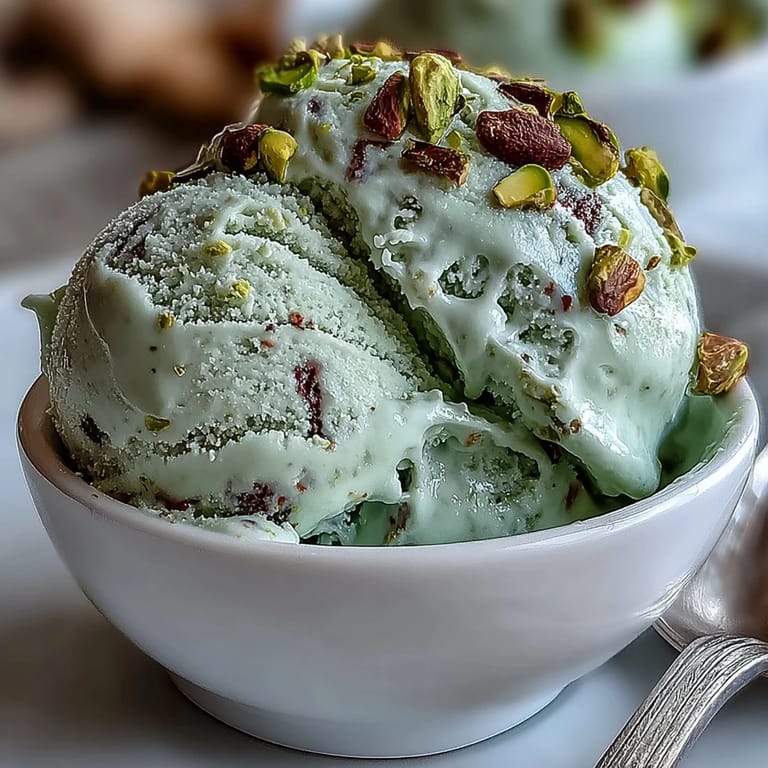
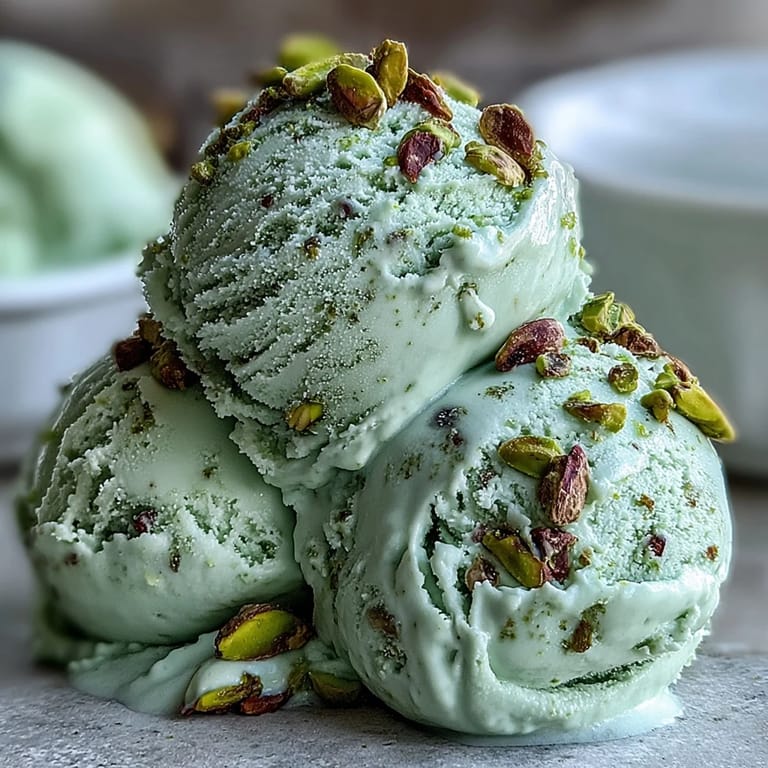
 There's something almost ceremonial about serving homemade gelato in small bowls, topped with crushed pistachios and maybe a drizzle of honey. It transforms an ordinary evening into something that feels intentional and a little bit special.
Sourcing Pistachios That Matter
Not all pistachios are created equal, and the difference becomes obvious the moment you roast them. Look for vibrant green kernels from reputable sources—Bronte pistachios from Sicily are considered the gold standard, though California-grown versions work beautifully too. I learned this the hard way after using a bargain tin and ending up with bland gelato; now I hunt for fresh, fragrant pistachios because they're what carries this entire dish. The roasting process amplifies their natural oils and brings out a deeper, almost chocolatey undertone that makes people ask what the secret ingredient is.
Why Gelato Beats Regular Ice Cream
The first time someone asked me what the actual difference was, I had to think about it beyond just taste. Gelato contains less fat and less air than standard ice cream, which means denser texture and more intense flavor in every spoonful. The churning method is slower, which creates smaller ice crystals and that signature silky mouthfeel that coats your mouth. It's served slightly warmer than ice cream too, which is why you get these waves of flavor rather than a numb palate—the whole experience is engineered to make you taste more, not less.
Troubleshooting and Smart Adaptations
Sometimes gelato doesn't churn quite right, or you forget to chill it long enough, and that's when flexibility saves the day. If you don't have an ice cream maker, the freezer-stirring method works but requires commitment and timing—set phone reminders if you need to. For a dairy-free version, I've experimented with coconut cream and oat milk with surprising success, though the texture shifts slightly toward sorbet territory. The pistachio paste itself is forgiving; if your mixture seems grainy, you can warm it gently and re-strain before the final churn.
- Always taste the pistachio paste before mixing it in so you know exactly what flavor you're working with.
- Keep your ice cream maker bowl in the freezer overnight before churning for best results.
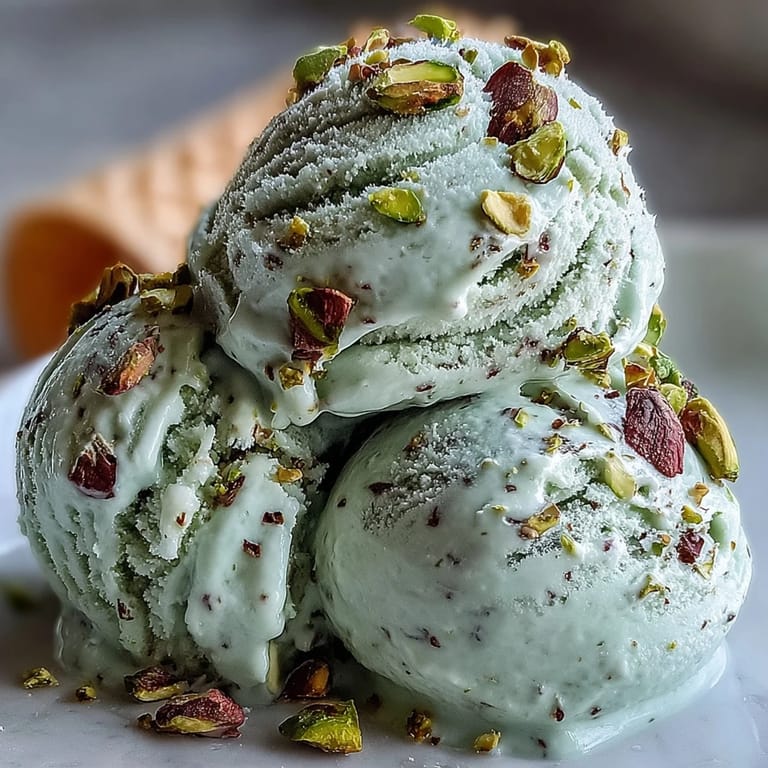
- Gelato is best served within 2–3 days; after that, ice crystals begin to form and texture suffers.
 Pin It
 Making pistachio gelato is one of those projects that feels fancy but teaches you fundamental cooking skills along the way. Every time you make it, you'll understand custards better, appreciate good ingredients more, and gain confidence in the kitchen that ripples out to other dishes.
Recipe FAQs
- → How do roasted pistachios affect flavor?
Roasting pistachios enhances their natural nuttiness and adds depth, resulting in a richer, more aromatic profile.
- → Why is the custard base cooked over low heat?
Cooking slowly prevents curdling and thickens the mixture into a smooth custard with a creamy texture.
- → Can I use an alternative to the ice cream maker?
Yes, freezing in a shallow container and stirring every 30 minutes helps achieve a creamy consistency without a machine.
- → What is the role of sieving the mixture?
Sieving removes lumps or any unblended bits, ensuring a perfectly smooth final texture.
- → How long should the mixture be chilled before churning?
Chilling for at least 4 hours, preferably overnight, allows flavors to meld and improves texture during churning.