 Pin It
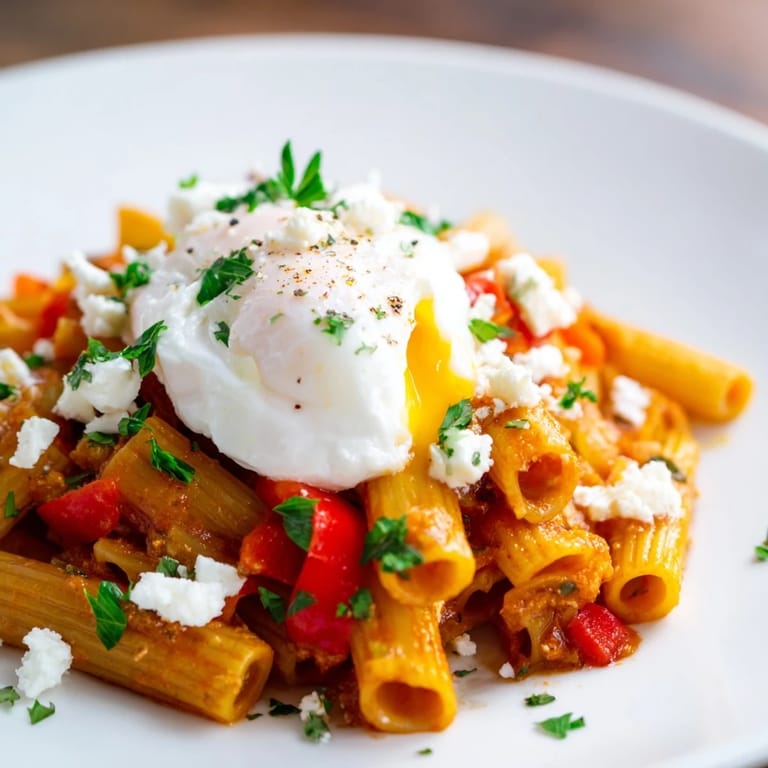
 The first time I made shakshuka, I was standing in a tiny kitchen in Marrakech, watching my friend's mother crack eggs directly into bubbling tomato sauce with such casual grace that it seemed like poetry. Years later, back home, I found myself craving that moment—that warmth, that simplicity—and I wondered what would happen if I combined it with the pasta bakes I grew up with. One rainy evening, I grabbed a box of penne and decided to find out. What emerged from the oven was something between two worlds: crispy-edged pasta swimming in spiced tomato sauce with eggs nestled on top, their yolks gleaming like little promises. It's become the dish I make when I want to feel both comforted and transported.
I remember my sister visiting last winter and wrinkling her nose at the ingredient list—Middle Eastern spices with Italian pasta seemed like I'd lost my mind. Then the first forkful went into her mouth, and suddenly we were both eating straight from the skillet, not even bothering with plates, laughing about how it shouldn't work but absolutely does. That's when I realized this dish has a quiet magic: it doesn't announce itself, but it makes people want to stay at the table longer.
Ingredients
- Short pasta (300 g): Penne, rigatoni, or fusilli all hold the sauce beautifully—choose whatever you have, but cook it just shy of al dente since it'll soften more in the oven.
- Onion and red bell pepper: They're the flavor foundation, so don't skip the sautéing step; those caramelized edges matter.
- Garlic (3 cloves): Mince it fine so it dissolves into the sauce rather than leaving little chunks.
- Olive oil (2 tbsp): Good quality makes a real difference here since it's not hidden behind other flavors.
- Canned diced tomatoes (400 g): They're consistent year-round, but if you have fresh ripe ones in summer, absolutely use them instead.
- Tomato paste (2 tbsp): This is your secret weapon for depth; don't dilute it too much.
- Ground cumin (1 tsp): Warm, earthy, and essential—this is what makes it taste like shakshuka and not just regular pasta sauce.
- Smoked paprika (1 tsp): The smokiness adds complexity without overpowering.
- Ground coriander (½ tsp): A subtle note that rounds out the spice blend.
- Cayenne pepper (¼ tsp): Optional, but if you like heat, this is where it lives.
- Sugar (1 tsp): A small amount balances the acidity of the tomatoes without making anything sweet.
- Salt and black pepper: Taste as you go; you'll need more than you think.
- Mozzarella or feta (100 g): Feta adds tanginess and a creamy note, while mozzarella gets gorgeously melty—pick your mood or use both.
- Eggs (4 large): Cold eggs straight from the fridge work fine; they'll cook as the dish finishes baking.
- Fresh parsley or cilantro: The brightness at the end is non-negotiable.
Tired of Takeout? 🥡
Get 10 meals you can make faster than delivery arrives. Seriously.
One email. No spam. Unsubscribe anytime.
Instructions
- Get everything ready:
- Preheat your oven to 200°C (400°F) and start cooking the pasta in salted boiling water. You want it just barely al dente when you drain it—if it's still got a slight bite to it, that's perfect, because it'll keep cooking in the oven.
- Build the sauce base:
- Heat olive oil in your oven-safe skillet over medium heat and add the onion and bell pepper. Let them soften for about 5 minutes, stirring occasionally; you're looking for them to lose their raw crunch but not brown. Once they're ready, add the minced garlic along with your cumin, paprika, coriander, and cayenne if you're using it, and let the whole thing cook together for just one minute—this releases all those spice oils and fills your kitchen with an incredible smell.
- Deepen the flavor:
- Stir in the tomato paste first and let it cook for a minute, then add the canned tomatoes, sugar, salt, and pepper. Lower the heat and let it simmer for 8–10 minutes; you'll see the sauce thicken slightly and develop a deeper color. Taste it now and adjust the seasoning—this is your only chance to make sure the sauce itself is delicious.
- Bring it together:
- Add your cooked pasta to the sauce along with half the cheese if you're using it, and stir everything so the pasta gets coated. Spread it evenly in your skillet or transfer it to a baking dish if you need to.
- Create the egg nests:
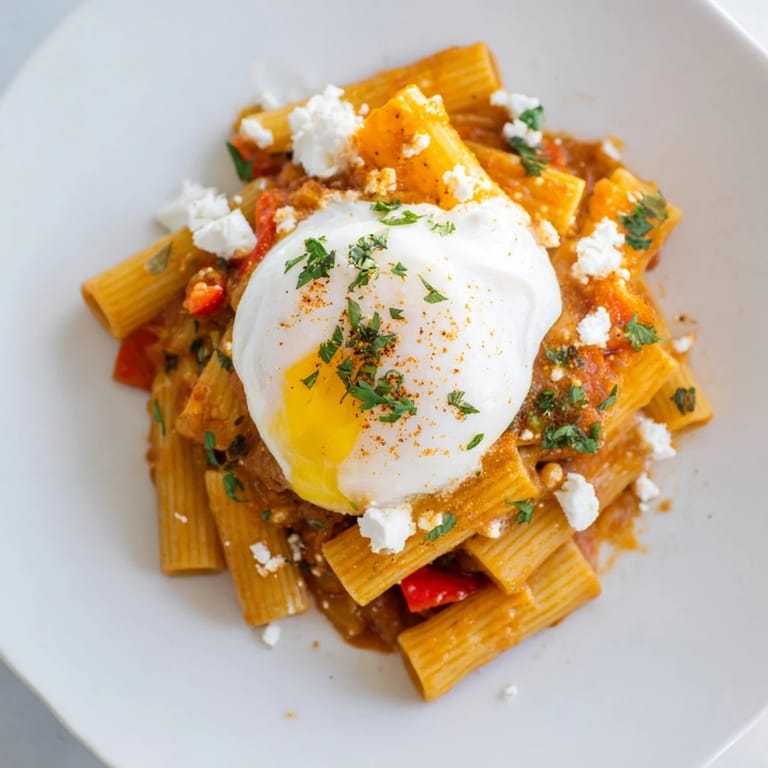
- Using the back of a spoon, make 4 small wells in the surface of the pasta mixture. Crack an egg into each one—try to keep the yolk intact. If you're using the remaining cheese, scatter it around the eggs now.
- Bake to perfection:
- Slide the whole thing into the oven uncovered and bake for 15–18 minutes. The egg whites will set and turn opaque, but if you're gentle with your timing, those yolks will still jiggle when you give the pan a tiny shake. This is what you're aiming for.
- Finish and serve:
- Pull it from the oven, scatter your fresh herbs on top, and bring it straight to the table. Let people serve themselves directly from the skillet—there's something about that that makes it taste even better.
 Pin It
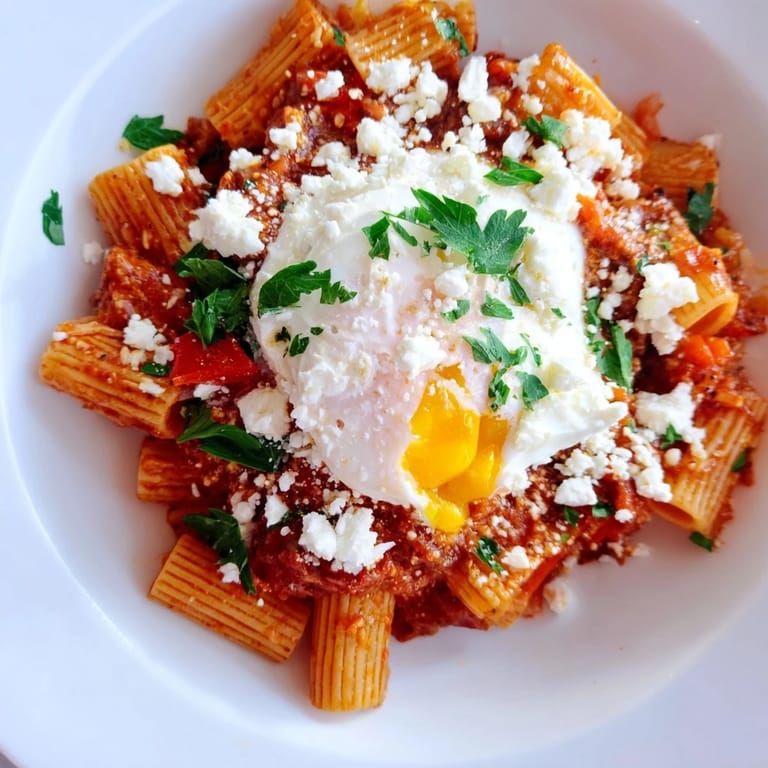
 There's a specific moment that always happens when I serve this: someone breaks a yolk into their sauce, twirls pasta through it, takes a bite, and then looks up with that expression of quiet surprise that tells you everything. That's the moment I made it for—that little revelation that sometimes the best dishes are the ones that feel a little bit unexpected, like you're eating the memory of somewhere far away in your own kitchen.
Why the Spices Work Together
Cumin and paprika are the heart of shakshuka, but when you add coriander and just a whisper of cayenne, something remarkable happens—instead of tasting hot and spicy, the sauce becomes warm and complex, with layers you keep discovering. The tomato paste isn't just a thickener; it's carrying all those spice flavors deeper into the sauce, and that's why cooking it briefly before adding the tomatoes makes such a difference. This combination has been feeding people in North Africa and the Middle East for generations, and it works because it builds heat and richness gradually rather than punching you in the mouth.
The Egg Question
Some versions of shakshuka are gentle and custard-like, with eggs that have fully set yolks. I prefer mine with runny centers because that yolk becomes your sauce, turning everything creamy and rich the moment you break into it. But the beautiful part is that you get to decide—if you prefer fully cooked yolks, just bake it another few minutes. The real trick is watching the oven window carefully after the 15-minute mark because the difference between runny and fully cooked is just a couple of minutes.
Making It Your Own
This recipe is forgiving enough that you can play with it. Some people add a handful of spinach or kale to the sauce for extra color and nutrition, stirring it in before the pasta goes in. Others swear by adding a splash of white wine to the sauce for brightness, or a small pinch of ground cinnamon for warmth. You could even crumble some merguez sausage into the sauce for something meatier, or add chickpeas to make it heartier without any animal protein.
- For a vegan version, skip the eggs and cheese entirely, and add white beans or chickpeas for protein—they soften beautifully in the sauce.
- Serve it with warmed flatbread or crusty sourdough so nobody has to choose between the pasta and the sauce.
- Leftover shakshuka reheats gently in a low oven; just cover it so it doesn't dry out, though honestly, eating it cold straight from the fridge the next morning is not a terrible choice either.
 Pin It
 There's comfort in a dish that brings two kitchens together, that tastes like travel and home at the same time. This one does that, and it does it simply, in under an hour, which might be the most generous thing a recipe can offer.
Recipe FAQs
- → Can I use different types of pasta?
Yes, short pasta like penne, rigatoni, or fusilli works best to hold the sauce and eggs.
- → How do I achieve runny egg yolks?
Bake just until egg whites are set, about 15–18 minutes at 200°C (400°F), to keep yolks soft.
- → What can I add for extra flavor?
Fresh herbs like parsley or cilantro brighten the dish, and a mix of mozzarella and feta adds creamy, tangy notes.
- → Is it possible to make this dish vegan?
Omit eggs and cheese, and consider adding chickpeas for protein and texture instead.
- → Can I prepare this in advance?
You can prepare the sauce and pasta ahead, then assemble and bake just before serving for the best results.