 Pin It
 There was this Tuesday evening when my neighbor stopped by just as I was pulling a sheet pan from the oven, and the smell of teriyaki glaze hitting hot salmon made her pause mid-conversation. She asked what I was making, and I realized I'd stumbled onto something that felt both restaurant-quality and genuinely easy to pull off at home. That moment stuck with me because it proved you don't need complicated techniques to impress yourself or someone else—just good ingredients working together on one pan.
I made this for my partner one rainy autumn Saturday when we were both tired of takeout menus, and something about watching the vegetables soften while the salmon's skin got all caramelized made the kitchen feel warmer. We ate it straight from the pan, passing lime wedges between bites, and didn't even bother setting the table. Those are the meals that stay with you more than the fancy ones.
Ingredients
- Salmon fillets (4, skin-on, 5–6 oz each): Look for fillets that feel firm and smell oceanic, not fishy—that's how you know they're fresh enough to deserve this treatment.
- Broccoli florets (2 cups): Cut them roughly the same size so they roast evenly and get that perfect golden edge.
- Sugar snap peas (2 cups, trimmed): These stay sweet and crunchy if you don't overcrowd the pan, so give them breathing room.
- Red bell pepper, sliced: Optional but worth it for the color and subtle sweetness that balances the teriyaki's richness.
- Low-sodium soy sauce (1/4 cup): The backbone of your sauce, and low-sodium means you control the salt level instead of the bottle controlling it for you.
- Honey or maple syrup (3 tbsp): This is what makes the glaze sticky and caramelize—use whichever you have, the flavor difference is minimal but both work beautifully.
- Rice vinegar (1 tbsp): Just enough acidity to keep the sauce from being one-note and heavy.
- Sesame oil (1 tbsp): A small amount goes far here; too much and it overwhelms, but the right amount is liquid gold.
- Garlic and ginger (2 cloves and 1 tsp): Fresh is non-negotiable—minced garlic and grated ginger wake up the entire sauce with brightness and heat.
- Cornstarch slurry (1 tsp cornstarch mixed with 2 tsp water): This thickens the sauce so it clings to the salmon and vegetables instead of pooling at the bottom of the pan.
- Sesame seeds and scallions: These aren't just garnish—they add texture and freshness that finishes the dish properly.
Tired of Takeout? 🥡
Get 10 meals you can make faster than delivery arrives. Seriously.
One email. No spam. Unsubscribe anytime.
Instructions
- Get your oven ready and line your pan:
- Preheat to 400°F and cover a large sheet pan with parchment paper or foil. This step feels small but it's the difference between sticky cleanup and five minutes at the sink.
- Build your teriyaki sauce:
- In a small saucepan over medium heat, combine soy sauce, honey, rice vinegar, sesame oil, garlic, and ginger. Let it simmer gently until it becomes fragrant, then whisk in your cornstarch slurry and watch it thicken right before your eyes—about a minute is all you need.
- Arrange and glaze the salmon:
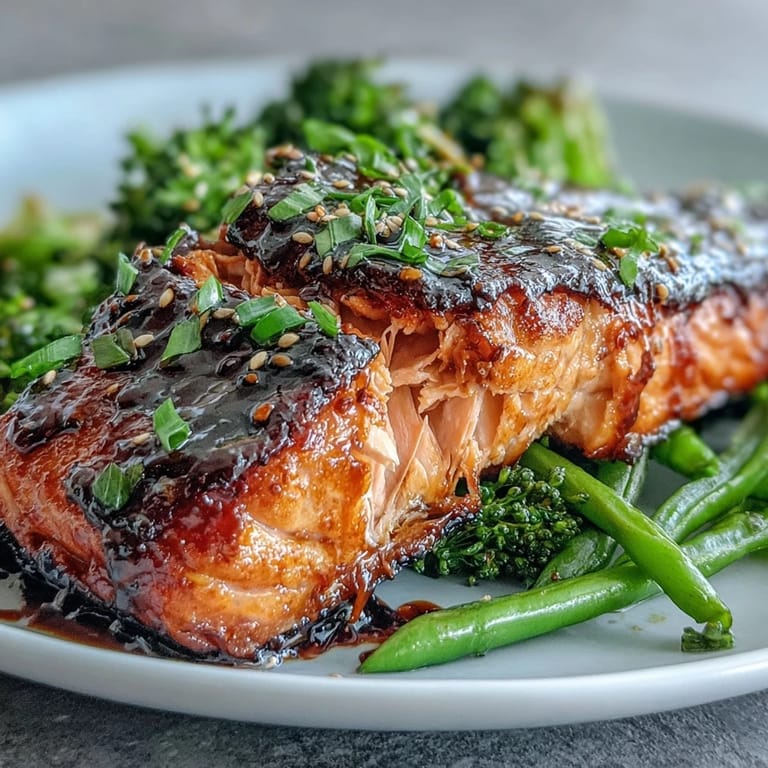
- Place salmon fillets on one side of the sheet pan, skin-side down. Brush each one generously with teriyaki sauce, using more than you think you need because it'll reduce and caramelize.
- Prepare the vegetables:
- In a bowl, toss broccoli, snap peas, and bell pepper with a drizzle of olive oil and a tablespoon of that reserved teriyaki sauce. Spread them in a single layer beside the salmon, giving them space so they roast instead of steam.
- Roast everything together:
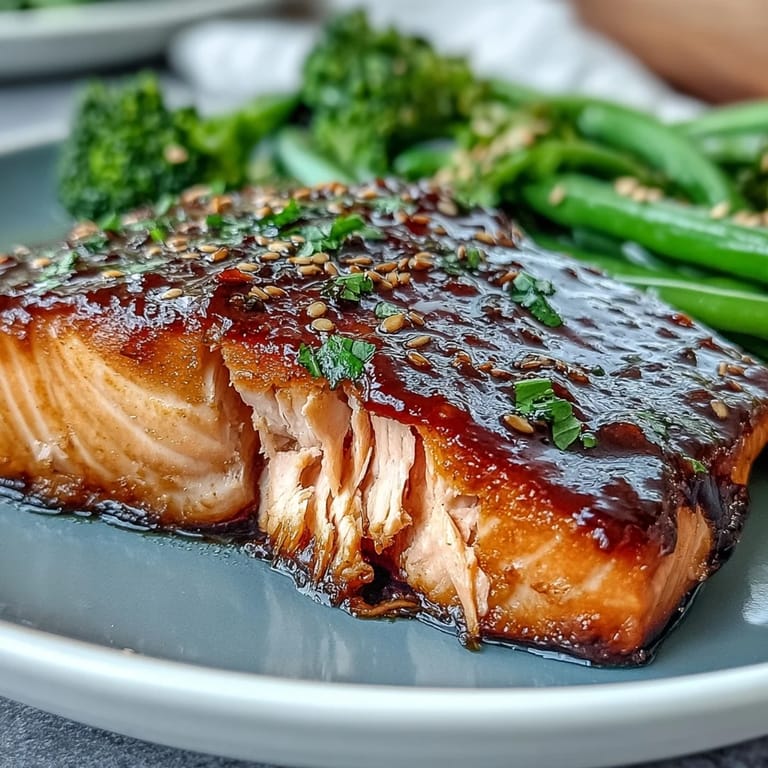
- Slide the pan into your preheated oven for 15–18 minutes. You're looking for salmon that flakes easily when you press it gently with a fork, and vegetables with just a bit of char on the edges.
- Optional broiler boost:
- If you want extra caramelization and a touch of char, broil for 1–2 minutes at the end. Watch it closely because this step goes from perfect to overdone in seconds.
- Finish and serve:
- Drizzle remaining teriyaki sauce over everything, scatter sesame seeds and sliced scallions across the top, and squeeze lime wedges over it all. Serve straight from the pan if you're feeling casual, or plate it up for something prettier.
 Pin It
 There's something about shared meals that don't require apologies or explanations that feels like honesty. This dish does that—it shows up on the table looking restaurant-polished but without any fuss or pretense, which somehow makes it more memorable than dishes that took twice as long.
The Truth About Sheet Pan Cooking
Sheet pan meals get dismissed as lazy, but they're actually the opposite. Everything on that pan has to cook at the same temperature and timing, which means you're problem-solving while you're cooking. Place salmon on one side where it won't release too much liquid onto the vegetables, space out the broccoli so hot air circulates, keep the snap peas from touching the pan's edge where they'd burn. It's a small puzzle that teaches you something about how heat moves.
Why Teriyaki Works Here
Teriyaki is glossy, it's balanced between salt and sweetness, and it bridges the gap between the richness of salmon and the brightness you need to eat an entire pan of vegetables without getting tired of them. Homemade is worth the five minutes it takes because store-bought versions often taste one-dimensional or overly thick.
Make It Your Own
This recipe is flexible enough to shift with what's in your fridge and what you're craving. The structure stays the same, but the vegetables can change completely depending on the season or what you have on hand. Think of this as a blueprint instead of a strict instruction manual, because that's when recipes become part of your regular rotation instead of something you make once.
- Swap snap peas for green beans, asparagus, or even sliced zucchini and the timing stays almost identical.
- Use tamari instead of soy sauce if you're cooking for someone with gluten sensitivity, and no one will taste the difference.
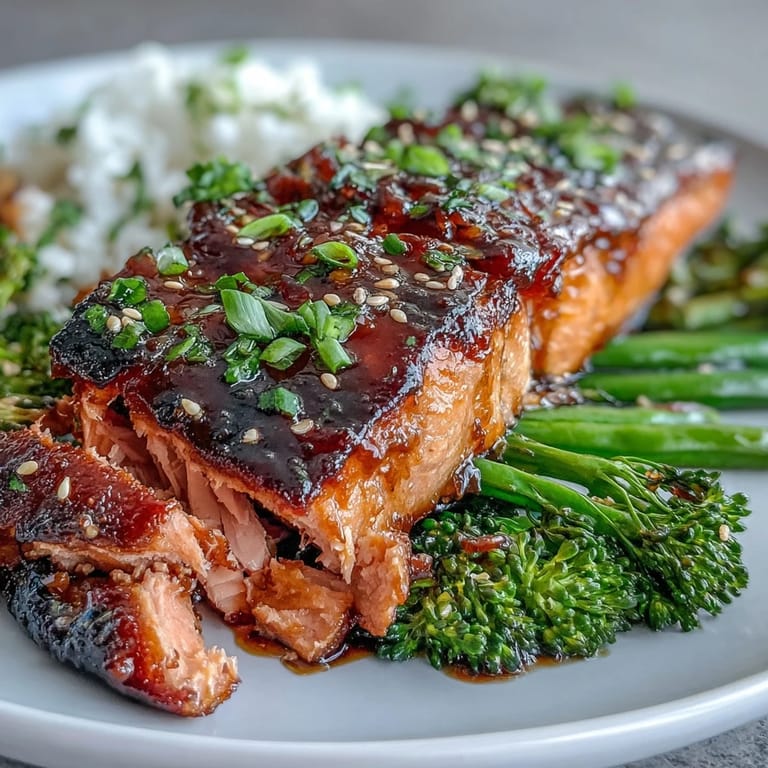
- Serve over jasmine rice, brown rice, or cauliflower rice depending on whether you want comfort or lighter eating.
 Pin It
 This meal has become the one I make when I want to feel capable in the kitchen without stress, and when I want to feed someone something that tastes intentional. That's a good enough reason to make it again tonight.
Recipe FAQs
- → How do I make the teriyaki glaze?
Combine soy sauce, honey or maple syrup, rice vinegar, sesame oil, garlic, and grated ginger in a saucepan. Simmer gently, then thicken with a cornstarch slurry until glossy.
- → Can I substitute the vegetables?
Yes, snap peas can be swapped for green beans or asparagus, and bell pepper is optional for added color and sweetness.
- → What is the best way to cook salmon evenly?
Place skin-on salmon fillets on a lined sheet pan, glaze with teriyaki sauce, and roast until the fish flakes easily, typically 15-18 minutes at 400°F.
- → How do I achieve caramelization on the salmon and vegetables?
After roasting, broil the pan for 1-2 minutes to develop a caramelized finish and deepen the flavors.
- → What are good serving suggestions?
Pair with steamed jasmine or brown rice to round out the meal and soak up extra glaze for a satisfying plate.
- → Is this dish suitable for gluten-free diets?
Use tamari instead of soy sauce to make the dish gluten-free without compromising flavor.