 Pin It
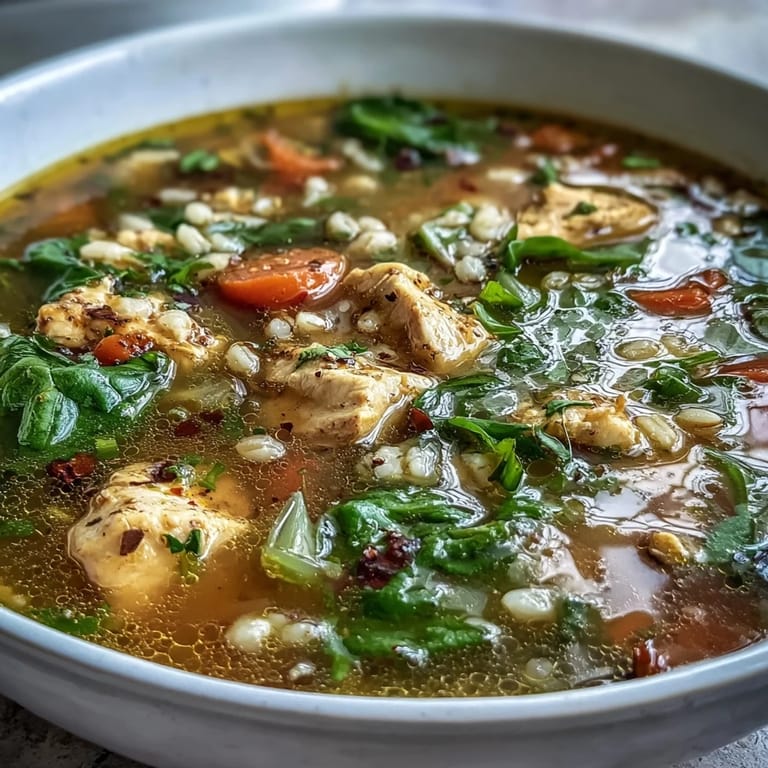
 There's a particular afternoon I can't shake—one of those days when the kitchen felt like the only warm place in the world, and I was standing there, unsure what my body actually needed. A friend had mentioned turmeric casually over tea, talking about how her grandmother swore by golden broths when anyone felt off. That conversation stuck with me, and before I knew it, I was chopping vegetables with intention, watching the oil shimmer as I toasted spices, the steam rising up carrying this unmistakable earthy warmth.
I made this for my partner the first time they came home from a stressful week looking absolutely depleted. No theatrics, no trying too hard—just soup, golden and steaming, with that particular smell of turmeric that somehow says 'I'm taking care of you' without words. They had a second bowl before saying anything, and that silence meant everything.
Ingredients
- Boneless, skinless chicken breasts: Two breasts, diced into bite-sized pieces so they cook quickly and stay tender—I learned to cut them when they're still cold, which makes the knife work cleaner.
- Pearl barley: This grain has a gentle, almost buttery texture when cooked long enough, and it takes on flavors beautifully without disappearing into mush like rice sometimes does.
- Carrots and celery: The backbone of everything, building flavor while they soften into almost-silky pieces that add natural sweetness.
- Onion and garlic: Mince them fine—garlic especially should be small enough that it melts into the broth rather than announcing itself in sharp chunks.
- Zucchini: Added later so it keeps its shape and doesn't turn into a sad pulp, which happened to me exactly once and taught me timing matters.
- Baby spinach: Fresh greens that wilt in seconds, bringing brightness to all that golden warmth.
- Chicken broth: Low-sodium matters here because you're controlling the salt, not the manufacturer—this gives you real control over the final taste.
- Olive oil: Just enough to start the sauté, not so much that the soup feels slick.
- Ground turmeric: The star, earthy and slightly peppery, this is what makes people ask 'what is that?' in the best way.
- Ground cumin and coriander: These spices complete the warm spice profile, adding depth without heat—cumin especially brings a slight sweetness that surprised me the first time.
- Black pepper and bay leaf: The pepper adds bite, the bay leaf whispers subtle complexity that you might not identify but would absolutely notice if it were gone.
- Lemon juice: The final brightness that wakes everything up, cutting through the richness with a gentle hand.
- Fresh parsley: Scattered on top, it's the promise that this soup is alive and finished, not just functional.
Tired of Takeout? 🥡
Get 10 meals you can make faster than delivery arrives. Seriously.
One email. No spam. Unsubscribe anytime.
Instructions
- Build your aromatic base:
- Heat olive oil in your pot over medium heat, then add onion, carrots, and celery—give them about five minutes of gentle sautéing until they soften and start to smell like home. You'll notice the edges of the vegetables becoming translucent, which means they're ready for what comes next.
- Toast your spices:
- Add minced garlic, turmeric, cumin, coriander, and black pepper to the pot and let them cook for just one minute—this is crucial because it wakes up the essential oils in the spices and prevents them from tasting dusty. The whole kitchen will smell like a warm embrace.
- Sear the chicken:
- Add diced chicken and stir it around for about three minutes until the pieces are lightly browned on the edges—you're not cooking it through yet, just giving it color and developing flavor. This step feels quick but changes everything about the final depth.
- Bring it together:
- Pour in your broth, add pearl barley and the bay leaf, then bring everything to a boil before immediately reducing the heat to low. Let it simmer uncovered for thirty-five minutes, during which time you can actually step away and the barley will slowly become tender.
- Add the final vegetables:
- About ten minutes before the barley is done, add your diced zucchini and let it cook gently until it's tender but not falling apart. This timing means zucchini stays slightly firm and interesting rather than becoming invisible.
- Finish with greens and brightness:
- Stir in the spinach and watch it wilt in real time—it takes maybe two minutes—then remove your bay leaf and add lemon juice and salt to taste. This is where the soup transforms from warm and comforting to alive and balanced.
 Pin It
 This soup has become my version of calling someone when I can't find the right words. There's something about offering someone a warm bowl that says more than any explanation could—it's permission to pause, to let something nourish you quietly, without performance or pressure.
When to Make This
I reach for this recipe whenever the seasons shift or when someone needs grounding. It's not heavy enough for summer but warm enough for any other time, and it's the kind of meal that invites you to stay at the table a little longer than usual. The timing is flexible too—you can prepare ingredients in the morning and let it all come together in under an hour once you're ready to eat.
Making It Your Own
The beauty of this soup is how it accepts small changes without losing its soul. I've swapped barley for brown rice when someone mentioned gluten concerns, added a tiny pinch of chili flakes when I wanted gentle heat, and once threw in a handful of kale instead of spinach because that's what was in the crisper drawer. Each time it worked, just slightly different, which means you can trust your instincts here.
Serving and Storage
Serve this hot, straight from the pot, with crusty bread for dipping if you want something to do with your hands while you eat. The soup actually improves if you make it a day ahead—the flavors settle and become more unified, which is one of those kitchen discoveries that makes you plan better next time.
- Store in an airtight container in the refrigerator for up to four days, or freeze for up to three months.
- Reheat gently on the stovetop with a splash of water or broth if it's thickened too much.
- Add fresh lemon juice and parsley again after reheating to bring back the brightness.
 Pin It
 This soup has taught me that sometimes the most nourishing things are the simplest ones, and that showing up in a kitchen with intention for someone else is its own kind of love. Make it when you need it, for whoever needs it—they'll taste the care in every spoonful.
Recipe FAQs
- → What makes turmeric beneficial in soups?
Turmeric contains curcumin, a compound with powerful anti-inflammatory and antioxidant properties. When paired with black pepper as in this soup, its absorption increases significantly, making it both flavorful and nutritious.
- → Do I need to cook pearl barley before adding it?
No, pearl barley goes directly into the soup and cooks in the broth. It simmers for about 45 minutes total, becoming tender and naturally thickening the soup while absorbing all the aromatic flavors.
- → Can I make this soup ahead of time?
Absolutely. This soup actually tastes better the next day as flavors meld. Store in an airtight container for up to 4 days. The barley will continue absorbing liquid, so add more broth when reheating if needed.
- → What can I substitute for pearl barley?
Farro, brown rice, or quinoa work well as alternatives. Note that cooking times may vary—quinoa cooks faster (15-20 minutes) while brown rice may take longer. Adjust liquid and timing accordingly.
- → Is this suitable for freezing?
Yes, freeze for up to 3 months. The barley may soften slightly upon thawing, but flavor remains excellent. Cool completely before freezing in portion-sized containers for easy reheating.
- → How can I add more protein?
Stir in rinsed chickpeas during the last 10 minutes, or add shredded rotisserie chicken at the end. For a vegetarian version, double the chickpeas and use vegetable broth instead of chicken.