 Pin It
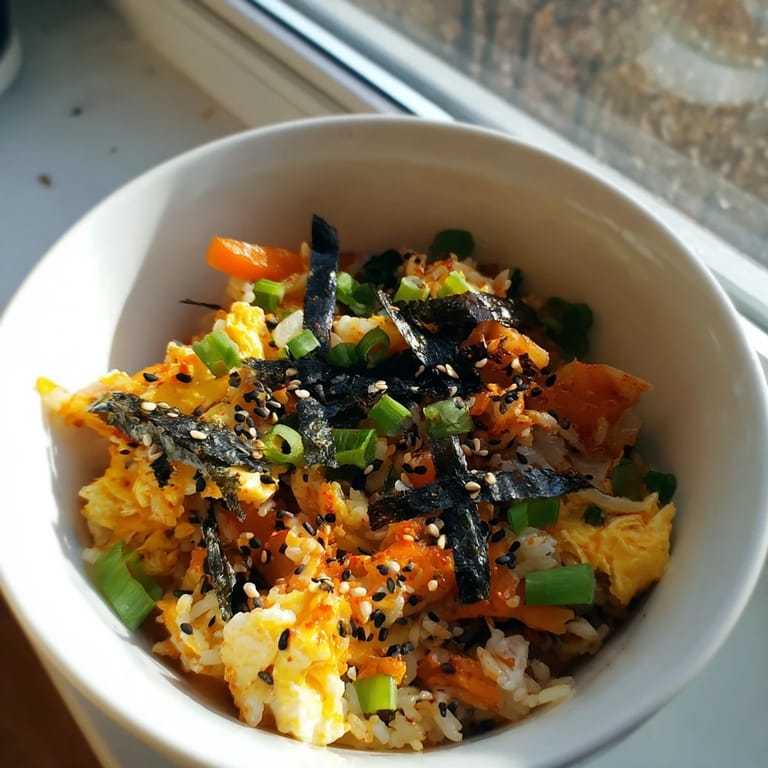
 My roommate burst through the kitchen door at 11 PM on a Tuesday, starving and completely spent from work, muttering something about needing to eat in five minutes or fainting. I opened the fridge, saw a container of kimchi my mom had sent, some leftover rice from Sunday, and two eggs, and something just clicked. Twenty minutes later, she was halfway through a bowl of this spicy, tangy fried rice, eyes wide, asking me to teach her how to make it because she needed it in her life. That's when I realized this dish wasn't just about using up leftovers—it was about rescue, pure and simple.
I made this for my coworker during a late office lunch and watched her face transform from skeptical to obsessed with each bite. She'd never had kimchi before, and suddenly she was asking detailed questions about where to buy it, whether she could make it at home, if there were other Korean dishes she'd been missing her entire life. That's the magic of this rice—it converts people without trying.
Ingredients
- Cold cooked white rice, 2 cups (preferably day-old): Day-old rice won't turn mushy or clumpy because the grains have had time to firm up and separate, which is everything in fried rice.
- Napa cabbage kimchi, 1 cup chopped, plus 2 tablespoons kimchi juice: Buy the good stuff if you can—the fermented funk is what makes this dish sing, and the juice adds tanginess and depth that you cannot replicate.
- Large eggs, 2: They scramble right into the rice and create pockets of richness that bind everything together.
- Onion, 1/2 small, finely diced: Dicing it small means it softens completely and disappears into the background, sweetening everything subtly.
- Green onions, 2, sliced with green and white parts separated: The white parts cook down and mellow, while the green parts stay fresh and bright at the end.
- Carrot, 1 small, finely diced (optional): It adds sweetness and a little texture, but I skip it when I'm really in a hurry.
- Gochujang, 2 tablespoons: This is non-negotiable—it's the soul of the dish, so use real Korean chili paste and not some watered-down substitute.
- Soy sauce, 1 tablespoon: It adds savory depth and rounds out all the spice.
- Toasted sesame oil, 1 teaspoon: A little goes a long way, and toasted is absolutely essential for that warm, nutty flavor.
- Vegetable oil, 1 tablespoon: High heat without burning is the goal, so choose something neutral.
- Sugar, 1 teaspoon (optional): Just a whisper to balance the funk of the kimchi and the heat of the gochujang.
- Cooked pork belly, Spam, or tofu, 1/2 cup diced (optional): Adds protein and another layer of richness, though the dish stands perfectly on its own.
- Toasted sesame seeds, for garnish: They add nuttiness and a little textural contrast.
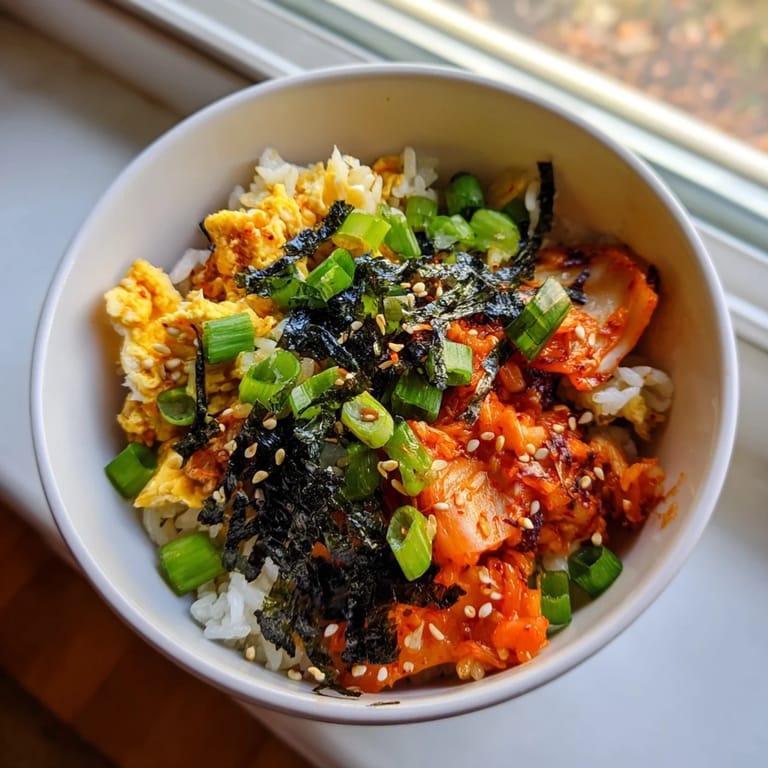
- Roasted seaweed strips (gim), for garnish: The umami boost at the end is worth hunting down in any Asian market.
Tired of Takeout? 🥡
Get 10 meals you can make faster than delivery arrives. Seriously.
One email. No spam. Unsubscribe anytime.
Instructions
- Heat the pan and start with the aromatics:
- Get your skillet or wok screaming hot over medium-high heat, then add the vegetable oil and listen for that sharp sizzle. Toss in the onion, white parts of the green onion, and carrot, and let them cook for 2 to 3 minutes until they start to soften and smell sweet.
- Toast the kimchi:
- Add your chopped kimchi right into the pan and stir-fry for 2 to 3 minutes—you're looking for the edges to caramelize slightly and the whole thing to smell absolutely incredible. This is the smell of flavor happening.
- Build the sauce base:
- Stir in the gochujang, soy sauce, and sugar if you're using it, mixing everything until the paste breaks down and coats all the vegetables. You should see a glossy, brick-red coating forming.
- Scramble the eggs:
- Push all your cooked ingredients to one side of the pan, crack the eggs into the empty space, and scramble them gently until they're just set but still have a little moisture. Don't walk away—this takes less than a minute.
- Introduce the rice:
- Add your cold rice to the pan, using a spoon or spatula to break up any stubborn clumps as you go. This is the moment where everything comes together, so don't be shy about stirring and combining.
- Finish with juice and oil:
- Pour in the kimchi juice and drizzle the sesame oil over top, then stir-fry for 3 to 4 minutes until every grain of rice is heated through and glistening with sauce. The rice should smell savory and slightly sweet at this point.
- Final touches:
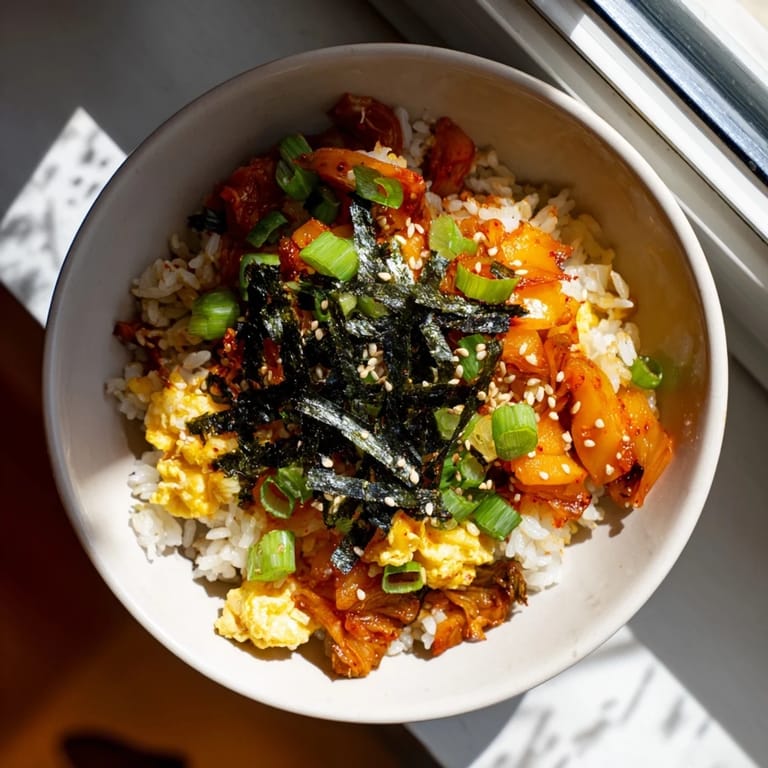
- Fold in the green parts of the green onion and any optional meat or tofu, taste a bite, and adjust the seasoning if you need more soy sauce or gochujang. Serve immediately while it's still hot and steaming.
 Pin It
 I served this to my sister on a random Thursday night when we were both too exhausted to think about cooking properly, and halfway through the bowl, she looked up and said this was the first thing all week that made her feel like herself again. Food doesn't always need to be complicated or impressive to matter—sometimes it just needs to be exactly what you need in that exact moment.
Why Cold Rice Changes Everything
I learned this the hard way after making this dish with fresh, warm rice and ending up with something that looked like porridge. The starch in warm rice keeps the grains clinging to each other, creating clumps and mushiness. Cold rice, by contrast, has firmed up overnight and the grains separate easily, so when you stir-fry them, they actually fry instead of steam and stick together. If you're cooking this on the spot, let your rice cool to room temperature at minimum, though overnight in the fridge is genuinely better.
The Gochujang Question
Not all gochujang is created equal, and I've learned that lesson by buying the cheapest option available and ending up with something grainy and weirdly bitter. Good gochujang should taste like fermented chili and salt and umami, with a smooth texture that melts into the pan. I now hunt for brands that list fermented chili pepper and salt as the main ingredients and skip anything with excessive additives. Start with 2 tablespoons and taste as you go—some brands are much spicier than others, and you can always add more but you can't take it out.
Building Layers of Flavor
The secret to this dish tasting like it took hours is understanding that each component adds something different to the final bowl. The kimchi brings funk and tang, the gochujang adds heat and depth, the soy sauce contributes savory richness, and the sesame oil ties everything together with warmth and nuttiness. Nothing overpowers anything else—they all work together like musicians in a band.
- Don't skip the kimchi juice because it's one of the easiest ways to get more complex flavor into the dish.
- Toasted sesame oil is absolutely essential and the regular kind will taste thin and disappointing in comparison.
- The green parts of the green onion should go in at the very end so they stay fresh and bright instead of cooking into nothing.
 Pin It
 This dish has saved me countless times when I'm hungry, tired, and have nothing in the pantry but rice and kimchi. It's honest food that tastes like someone cares.
Recipe FAQs
- → Can I use fresh rice instead of day-old rice?
Day-old refrigerated rice works best because it's drier and won't clump. If using fresh rice, spread it on a plate to cool completely and dry out before cooking.
- → How do I adjust the spice level?
Start with 1.5 tbsp gochujang and increase to 2 tbsp for more heat. You can also add fresh gochugaru (chili flakes) or reduce the amount of kimchi juice if it's too spicy.
- → What's the best oil for this dish?
Vegetable oil or canola oil works well for cooking. Toasted sesame oil is added at the end for aroma and flavor—never use it for high-heat cooking as it burns easily.
- → Can I make this vegan?
Yes. Omit eggs and use firm tofu cubes instead, pressing them first to remove excess moisture. Verify your kimchi and gochujang are vegan, as some brands contain fish sauce or shrimp paste.
- → What should I serve with this dish?
Pair with a cold Korean lager, crisp green tea, or simple cucumber salad. A fried egg on top or Korean pickled vegetables make excellent accompaniments.
- → How do I store leftovers?
Keep in an airtight container in the refrigerator for up to 3 days. Reheat in a skillet over medium heat with a splash of sesame oil, adding water if needed to restore moisture.