 Pin It
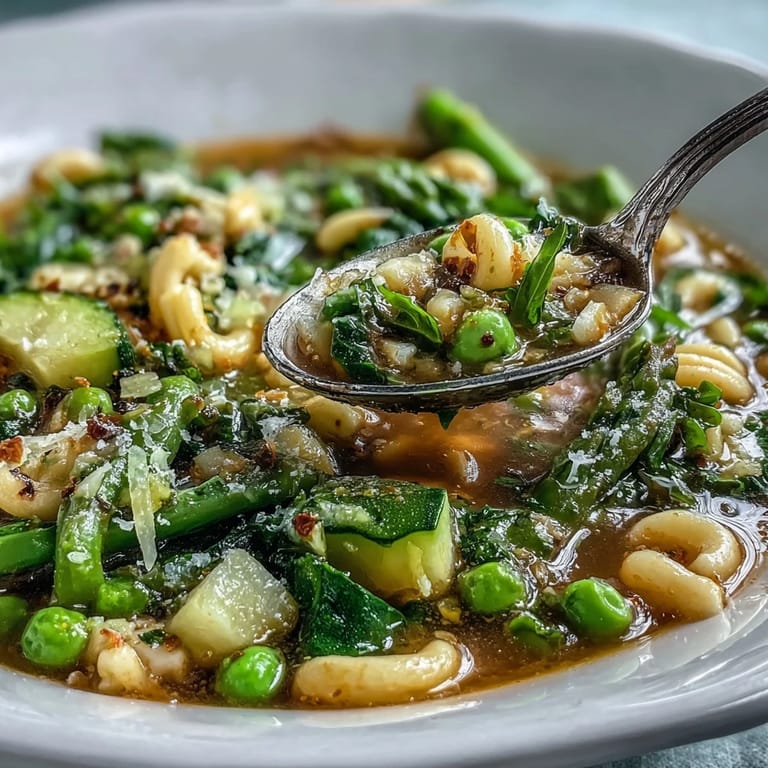
 Every spring, the market’s first bundles of fresh beans and shiny zucchini call out to me, promising simple transformation. One gray morning, I arrived home with muddy carrots in my basket and decided on a whim to let the season itself dictate dinner. As the soup simmered on the stove, its gentle aroma made the kitchen windows feel less like barriers and more like invitations to the garden outside. With each new batch, something inevitably changes—it might be a new herb snipped from the porch or a forgotten vegetable taking center stage. That’s the fun of this Spring Minestrone: it’s never quite the same, and that’s exactly what I love about it.
One crisp April evening, I prepped the veggies for this minestrone while my neighbor rambled on about her unruly tomato vines, both of us chopping and talking in tandem at my kitchen counter. The energy of making something good—together, yet separately—reminded me that cooking can be a social thing even when the recipe is easy. That time, we spilled a little broth, caught it with a laughter, and kept on slicing until everything was ready. Dinner felt like the first real taste of spring, and every bite suggested new possibilities for the next pot. It was the start of making this recipe a small tradition, always with someone at my elbow.
Ingredients
- Olive oil: The base for all flavor—use a grassy extra virgin, if you can, for the best start.
- Onion: Let it slowly turn sweet and aromatic; don’t rush this part or you’ll miss the foundation.
- Garlic: Sizzle just until fragrant; it lifts the whole pot without making it harsh.
- Carrots and celery: These are your soup’s backbone, diced fine so each spoonful has a bit of crunch.
- Zucchini: Wait to add until later—overcooking makes it mushy; keep it vibrant and bright instead.
- Peas (fresh or frozen): Toss in straight from the freezer, no need to thaw—so convenient.
- Baby spinach: Wilts down so quickly; a hearty handful vanishes into silkiness at the end.
- Green beans: Chop into bite-sized pieces for easy eating, and opt for the slender, young ones if you find them.
- Vegetable broth: Go low-sodium if possible so you can control the seasoning and taste as you go.
- Bay leaf: Adds a subtle earthiness; don’t forget to fish it out before serving.
- Small pasta: Ditalini, orzo, or tiny shells work well—cook just until al dente to avoid mushiness.
- Parsley: Fresh is essential here, stirred in for an herby finish right at the end.
- Salt and pepper: Adjust as you taste—spring veggies need a little coaxing to really sing.
- Grated Parmesan (optional): The classic finish: savory and salty, though you can sub in vegan cheese if you like.
- Fresh basil: Tear over bowls for a perfumed hit.
- Extra olive oil: For drizzling just before serving; it makes every spoonful a bit silkier.
Tired of Takeout? 🥡
Get 10 meals you can make faster than delivery arrives. Seriously.
One email. No spam. Unsubscribe anytime.
Instructions
- Sauté the base:
- Warm your olive oil in a big pot and listen for the first sizzle as onions go in—cook until they turn translucent and soft.
- Build the flavor:
- Stir in garlic, carrots, and celery; you’ll smell the sweetness bloom as they soften together, about four minutes.
- Add the bright veggies:
- Tip in zucchini, green beans, and peas, letting them mix and glisten in the oil, stirring for a couple of minutes.
- Pour in broth:
- Bring your broth to a simmer with a bay leaf tucked in, breathing in the aromatic steam as the soup starts to come together.
- Cook the pasta:
- Add the small pasta shapes and simmer gently—taste at eight minutes for the perfect tender bite, but don’t let them overdo it.
- Finish with greens and herbs:
- Spinach and parsley go in for the final two minutes; watch them melt into the soup, turning bright and fragrant.
- Season and serve:
- Spoon out the bay leaf, season with salt and pepper, then ladle into bowls while still steaming.
- Garnish generously:
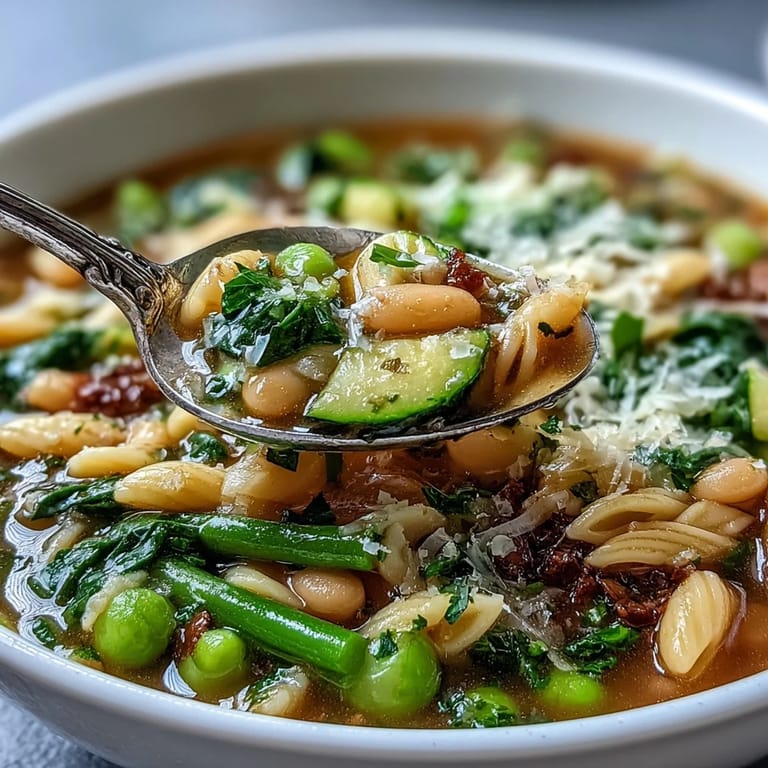
- Top with Parmesan, basil, and a little swirl of olive oil just before serving for a gorgeous, glossy finish.
 Pin It
 One rainy afternoon, my niece—apron askew and hair escaping her ponytail—asked if we could “make the green soup” because it made her feel like she was eating a garden. Watching her scoop up peas and pasta with the same giddy enthusiasm as ice cream, I realized this dish carries comfort and a bit of whimsy wherever it appears.
Herbs and Flavor Swaps I’ve Loved
I used to believe minestrone demanded only basil and parsley, but trying a scatter of chives or a touch of tarragon changed my mind. Even a dusting of lemon zest before serving will wake up the whole bowl. Don’t be afraid to experiment with dill or mint if you have them on hand; the possibilities are brighter than you’d expect.
Making This Soup Ahead (and Saving Leftovers)
I often make a big batch of Spring Minestrone early in the week, then stash the leftovers in the fridge (pasta and veggies separate if I remember). That keeps the soup tasting fresh and the noodles happily bouncy, even when reheated for lunch on a busy day. If you freeze the broth base before adding pasta, it’s practically a meal kit for rushed evenings.
Easy Kitchen Fixes and Personal Touches
One time I ran out of spinach, so kale slid in and held its own—don’t panic if ingredients run low, just use what you’ve got. When friends pop by, I leave out toppings so everyone can customize their bowl. This soup welcomes improvisation at every turn.
- If you’re craving something heartier, drop in cooked chickpeas or white beans near the end.
- Add a squeeze of lemon for extra brightness right before serving.
- Remember to salt generously only after tasting so you don’t overpower the delicate greens.
 Pin It
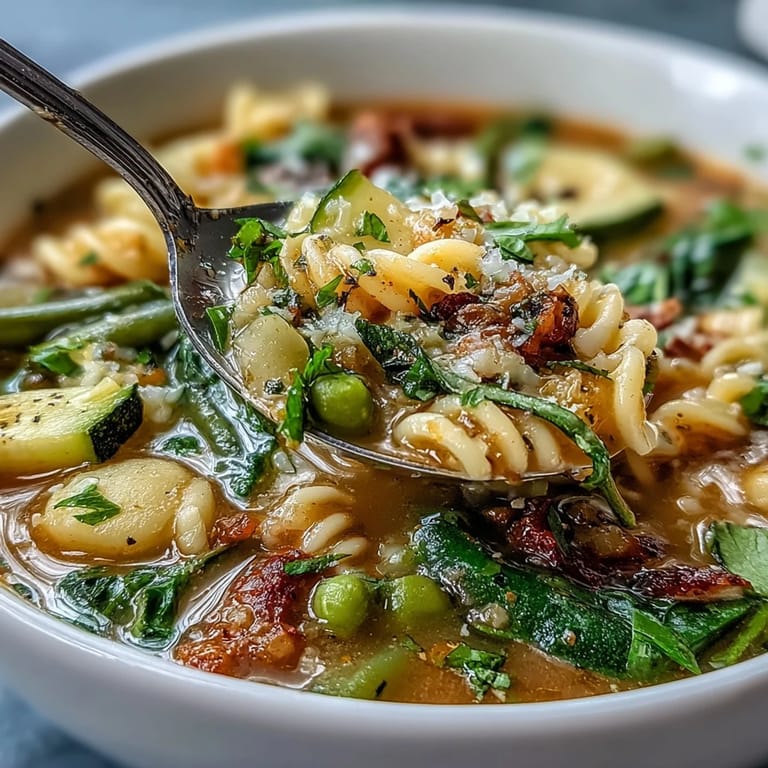
 No matter how you shape this minestrone, it has a way of bringing spring’s wildness right to your spoon. Here’s hoping the next batch is even brighter than the last.