 Pin It
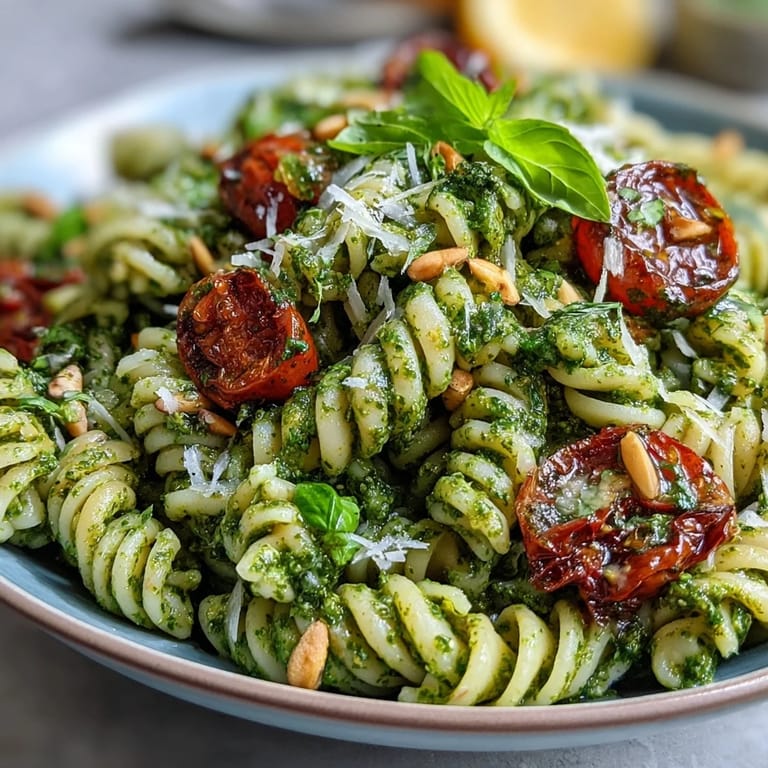
 My neighbor Marco showed up at my door one sweltering afternoon with a bundle of basil so fragrant it filled my entire kitchen. He'd grown far too much and insisted I make something with it before it wilted. That's when I threw together this pasta salad, and honestly, it became the dish I reach for whenever the heat makes cooking feel like too much effort. There's something magical about how fresh basil transforms cold pasta into something that tastes like summer itself.
I brought this to a potluck last Fourth of July, and it was gone within minutes while heavier casseroles sat untouched. Someone asked for the recipe right there on the patio, sauce still on their chin, and I realized this simple salad had become the thing people actually wanted to eat when it's too hot to think.
Ingredients
- Short pasta (fusilli, penne, or farfalle), 300 g: The shapes trap pesto in their crevices, so every bite tastes intentional rather than just pasta with sauce on top.
- Fresh basil leaves, 50 g: Pick them off the stem just before blending—bruised basil tastes bitter, and you want that bright, peppery green taste.
- Pine nuts, 40 g, lightly toasted: Toasting them yourself takes three minutes but delivers a nutty sweetness that makes the difference between fine and unforgettable.
- Garlic clove, 1: One clove is plenty; I learned this the hard way when a guest wrinkled their nose and asked if I'd made garlic soup.
- Parmesan cheese, grated, 50 g, plus 30 g shavings for garnish: Use a microplane to shave thin curls at the end—they're delicate enough to feel like a treat rather than just cheese.
- Extra virgin olive oil, 100 ml: Don't skimp here; this is the oil you actually enjoy tasting, not the one hiding in the back of the cabinet.
- Cherry tomatoes, 250 g, halved: Choose ones that are nearly bursting with juice—they're the bright spot that makes this salad sing.
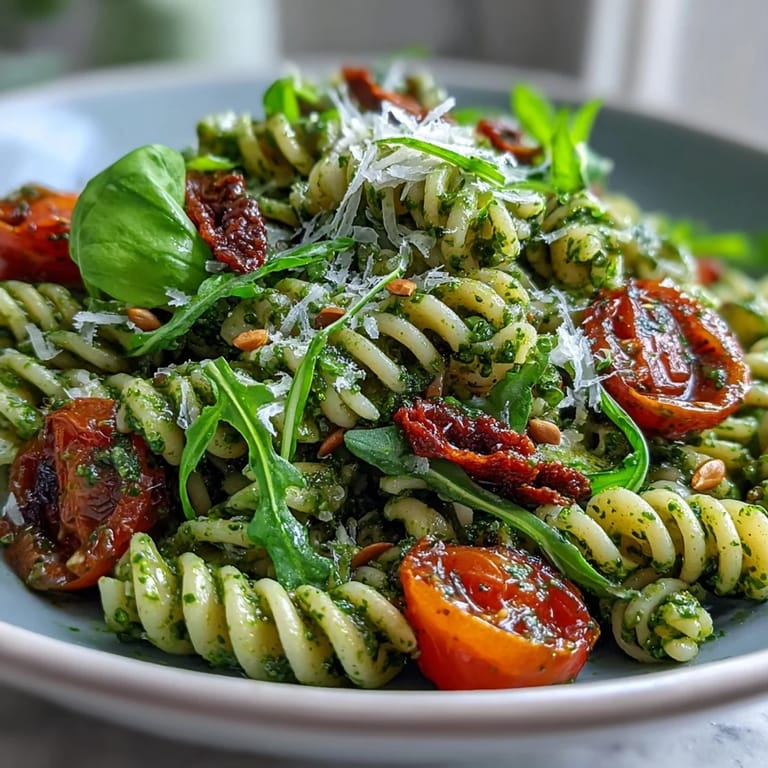
- Baby arugula, 50 g (optional): It adds a peppery bite that keeps things interesting, but the salad works just fine without it.
- Lemon zest, from 1 lemon: This tiny detail cuts through the richness and makes everything taste cleaner and more refined.
- Salt and freshly ground black pepper, to taste: Season boldly; cold food needs more seasoning than you'd think.
Tired of Takeout? 🥡
Get 10 meals you can make faster than delivery arrives. Seriously.
One email. No spam. Unsubscribe anytime.
Instructions
- Boil the pasta until it's just right:
- Fill a large pot with salted water and bring it to a rolling boil—the water should taste like the sea. Cook the pasta according to package instructions, but check it a minute early; al dente means it still has a slight resistance when you bite it. Drain it through a colander and run it under cold water while stirring gently, so each piece cools down and stops cooking.
- Make the pesto while pasta cooks:
- In a food processor, combine basil, toasted pine nuts, garlic, and grated parmesan. Pulse until everything is finely chopped but not yet a paste. Slowly drizzle in the olive oil while the processor runs, watching as it transforms into a smooth, bright green sauce. Taste it and adjust salt and pepper until it makes you want to eat it straight from the bowl.
- Combine everything in one big bowl:
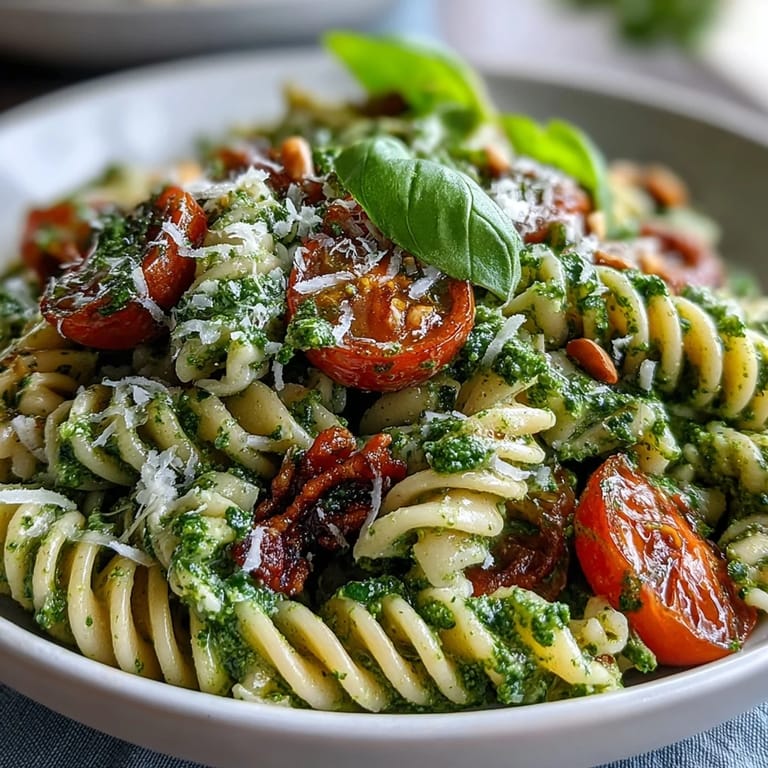
- Once the pasta is cool, add it to a large mixing bowl along with halved cherry tomatoes and arugula if you're using it. Pour the pesto over everything and toss with your hands or two spoons until every strand of pasta is coated and the tomatoes release their juices into the whole thing.
- Adjust the seasoning and serve:
- Taste it now; cold food often needs a pinch more salt than you'd guess. Transfer it to a serving platter and top with those thin parmesan shavings and lemon zest right before serving, so they stay delicate and distinct.
 Pin It
 My daughter asked to bring this to her school picnic, and I watched her face light up when everyone complimented it. She'd helped me chop basil, and suddenly she understood why I care about doing things from scratch. Food becomes more than nutrition when someone you love has put their hands in it.
The Magic of Fresh Pesto
Store-bought pesto is convenient, and I'll never judge anyone for using it, but there's a reason people notice the difference. Homemade pesto has a brightness that comes from blending everything together just moments before eating, when the basil hasn't oxidized and lost its green. The first time I made it myself and tasted that alive, peppery quality, I understood why my Italian relatives were so particular about their methods. It's not snobbery—it's the difference between tasting an ingredient and tasting a memory of it.
Why Cold Pasta Salad Is Your Summer Secret
During heat waves, the last thing anyone wants is a warm plate of food. This salad sits happily in the fridge and actually improves over a few hours as the pasta absorbs the pesto and tomato juices, creating this cohesive, flavorful whole. You can make it in the morning, chill it, and pull it out whenever hunger strikes without heating up your kitchen. It's the rare recipe that's better the next day, which means you're doing meal prep without it feeling like a chore.
Variations and Personal Touches
This salad is a canvas, not a rule. I've added grilled chicken when I wanted something more substantial, tossed in roasted zucchini when my garden was overflowing, and stirred in black olives when I found a good batch at the market. Some nights I'll crumble fresh mozzarella over the top, and other times I'll add roasted red peppers for a slightly sweeter note. The pesto and tomatoes are the foundation, but everything else is negotiable based on what you have and what you're craving.
- Substitute walnuts or almonds for pine nuts if you need to watch costs or have allergies, though toasting them makes all the difference.
- For nut allergies entirely, use toasted sunflower seeds instead—they provide that same textural contrast and nutty sweetness.
- Make extra pesto and freeze it in ice cube trays; you'll have the taste of summer ready whenever you need it.
 Pin It
 This salad has become the thing I make when I want to feel like I'm cooking with intention but without any of the stress. It reminds me that sometimes the simplest ingredients, treated with a little care, are enough to make everyone around the table feel fed and happy.
Recipe FAQs
- → How do I achieve al dente pasta for best texture?
Boil salted water and cook pasta just until firm to the bite, following package timings. Drain and rinse under cold water to stop cooking and maintain texture.
- → Can I substitute pine nuts in the pesto?
Yes, you can use toasted walnuts or almonds for a different nutty flavor; sunflower seeds work well for nut allergies.
- → Is it better to use homemade or store-bought pesto?
Homemade pesto offers a fresher, more vibrant flavor, but store-bought can be used for convenience without sacrificing too much taste.
- → How do I store leftovers safely?
Place the dish in an airtight container and refrigerate. It can be chilled for up to 2 hours before serving for best freshness.
- → What dishes pair well with this pasta preparation?
A crisp white wine like Pinot Grigio complements it nicely; adding grilled chicken or roasted vegetables can enhance the meal.