 Pin It
 Years ago, I was stuck in a rut of the same weeknight dinners—bland chicken breasts, overcooked rice, vegetables that tasted like punishment. Then a friend brought over homemade teriyaki chicken, and it was a revelation: the sauce was glossy and rich, the chicken impossibly tender, and somehow it all came together in less time than I'd waste scrolling through takeout menus. I've been making versions of it ever since, tweaking ratios and discovering that the secret isn't complexity—it's respecting each component enough to let it shine.
I made this for my sister during one of those chaotic family dinners where everyone's eating at different times, and suddenly it became the thing everyone wanted seconds of—even my nephew, who normally treats vegetables like they're radioactive. Watching her come back for more, not out of politeness but genuine hunger, made me realize this dish has that quiet power where simple and delicious feel like the same thing.
Ingredients
- Chicken thighs (600 g): They stay juicy where breasts dry out; the higher fat content is your insurance policy against tough, sad chicken.
- Low-sodium soy sauce (80 ml): Use low-sodium so you're actually controlling the salt instead of it controlling you.
- Mirin (60 ml): This is the ingredient that transforms the sauce from salty to complex—don't skip it for sugar, the flavor is completely different.
- Honey or maple syrup (2 tbsp): Adds depth and helps the sauce stick to the chicken like it means business.
- Rice vinegar (1 tbsp): Cuts through the richness and keeps everything from tasting one-note sweet.
- Cornstarch (1 tbsp): Mixed with water, it's what makes the sauce cling instead of just pooling at the bottom.
- Fresh ginger (1 tsp) and garlic (1 clove): Minced fresh, never powder—you want that little bite of flavor in every bite.
- Jasmine or short-grain rice (250 g): Jasmine absorbs the sauce beautifully; short-grain works too if that's what you have.
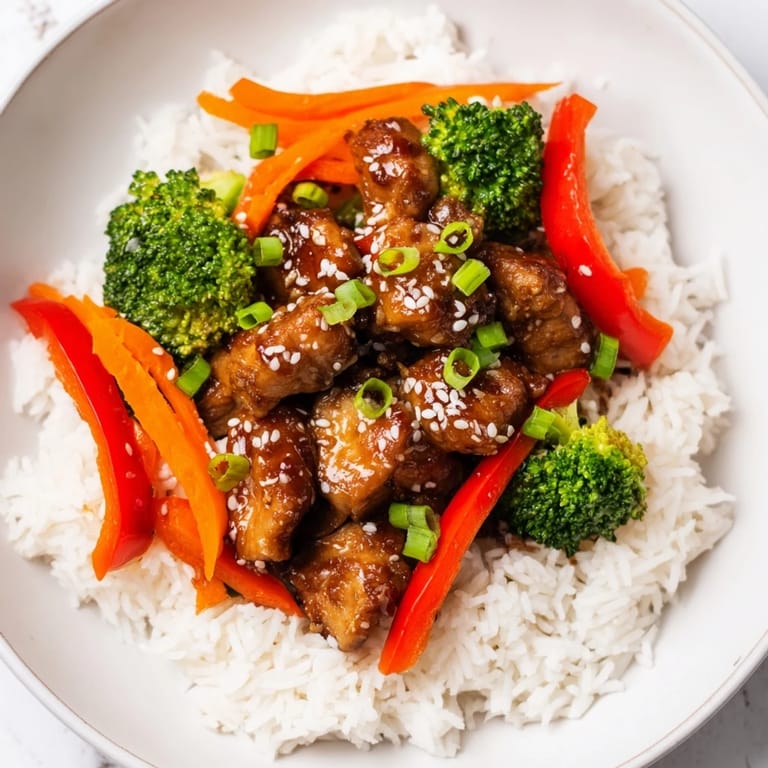
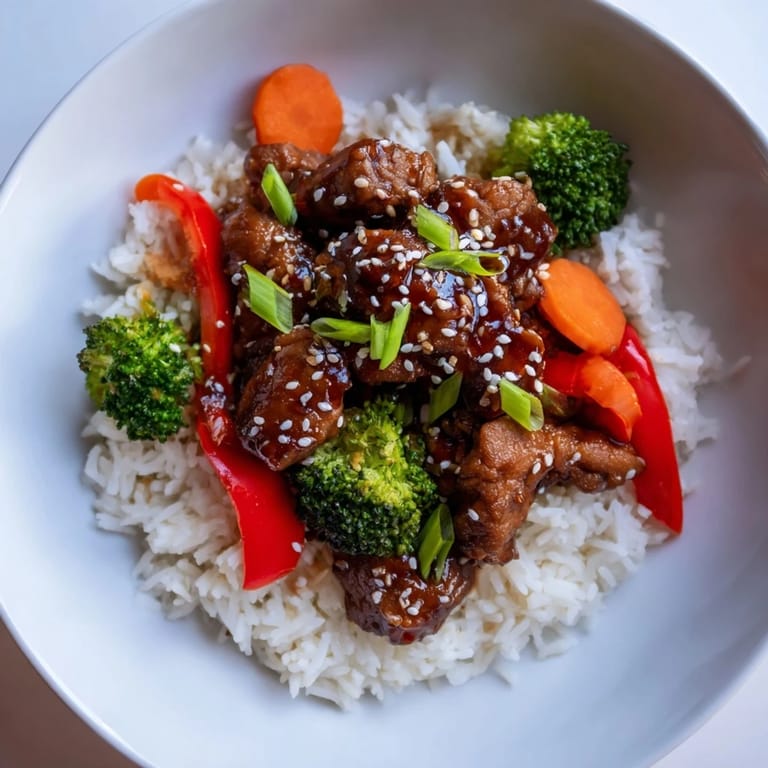
- Broccoli, carrots, and red bell pepper: Mix them up based on what's in your produce drawer—this is flexible.
- Sesame seeds and spring onions (optional): These aren't just garnish; they're the final thing that makes someone say "oh, this is actually good."
Tired of Takeout? 🥡
Get 10 meals you can make faster than delivery arrives. Seriously.
One email. No spam. Unsubscribe anytime.
Instructions
- Prepare the rice:
- Rinse the rice under cold water, watching it go from cloudy to clear—that starch leaving means fluffier rice later. Combine with water in a saucepan, bring to a boil, cover, and drop the heat to low for 12–15 minutes.
- Steam the vegetables:
- While rice does its thing, steam or blanch your broccoli, carrots, and bell pepper for about 3–4 minutes until they're tender but still have a little resistance when you bite them. You want them cooked, not defeated.
- Mix the teriyaki sauce:
- Whisk soy sauce, mirin, honey, rice vinegar, cornstarch slurry, garlic, and ginger in a small bowl until completely smooth. This is your liquid gold.
- Cook the chicken:
- Heat oil in a large skillet over medium-high heat, season chicken with salt and pepper, then add to the hot pan. You'll hear it sizzle—let it get golden for 5–6 minutes before stirring, which is how you get that caramelized edge.
- Add the sauce:
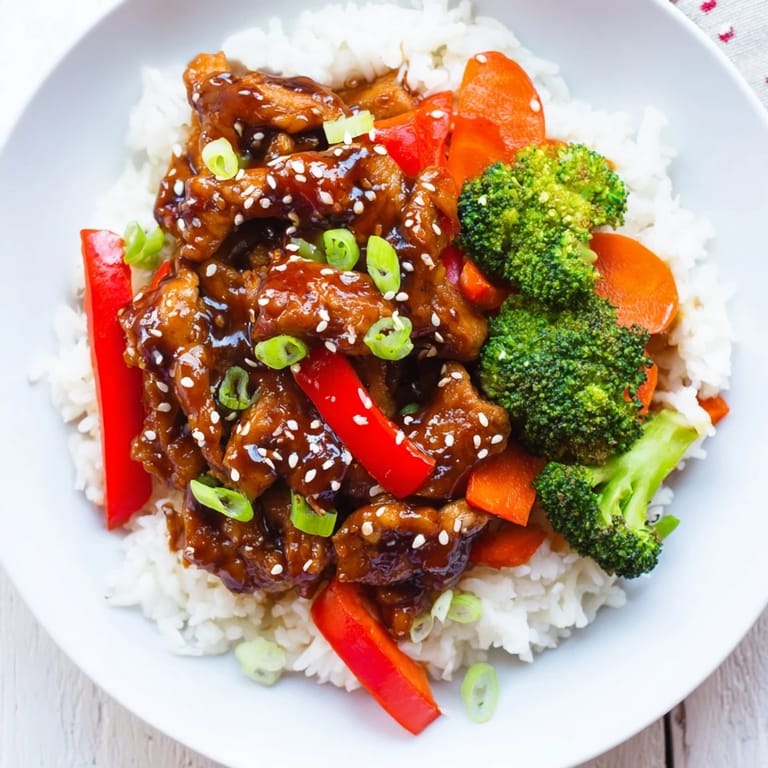
- Pour your teriyaki mixture over the chicken and stir constantly for 2–3 minutes while it thickens and gets glossy. You'll see it change texture right before your eyes.
- Assemble and store:
- Divide rice among containers, top with chicken, vegetables, sesame seeds, and spring onions. Let cool before sealing and refrigerate up to four days.
 Pin It
 I remember the first time I meal-prepped this, I was skeptical that four containers would actually make Monday night less of a question mark. By Wednesday I was genuinely grateful to my past self for already making dinner, and that's when I knew it had become a real part of my rotation—not because it's fancy, but because it actually works.
Why This Works as Meal Prep
The genius of this dish is that nothing gets soggy or weird after a day in the fridge—the rice absorbs the sauce slowly, the vegetables stay firm enough, and the chicken keeps its flavor. I've opened containers on day four and been genuinely surprised at how it tastes almost the same as day one, which is basically witchcraft in the world of meal prep.
Building Flavor Layers
Teriyaki isn't just sweetness or saltiness; it's both pulling in opposite directions until something rich emerges. The ginger and garlic push back against all that honey, the vinegar cuts through the mirin's smoothness, and the soy sauce anchors everything. This balance is why you taste it and want another bite instead of feeling like you've eaten straight sugar.
Customizing Without Losing the Plot
I've swapped chicken thighs for tofu, added edamame, used snap peas instead of broccoli, and every time it's still recognizably itself because the teriyaki sauce is doing the heavy lifting. The vegetables are just passengers at this point—choose whatever makes sense for your week and your taste.
- For gluten-free, swap regular soy sauce for tamari and everything tastes exactly the same.
- If you want more heat, sriracha alongside or mixed in changes the whole mood of the dish.
- Leftover sauce gets drizzled over eggs, roasted vegetables, or honestly anything that needs a flavor boost.
 Pin It
 This recipe isn't going to win awards for novelty, but it will quietly become the thing you make when you need to feel like an adult who has their life together. That's worth something.
Recipe FAQs
- → How do I make the teriyaki sauce?
Combine soy sauce, mirin, honey or maple syrup, rice vinegar, cornstarch, water, garlic, and grated ginger. Whisk together until smooth before simmering to thicken.
- → What’s the best rice type to use?
Jasmine or short-grain rice works best, as they absorb flavors well and yield a fluffy texture.
- → Can I substitute chicken thighs?
Yes, chicken breast or tofu are good alternatives depending on your preference for leaner or plant-based protein.
- → How should vegetables be cooked?
Steam or blanch broccoli, carrots, and bell peppers briefly until just tender to maintain color and crunch.
- → How long is this dish good for when stored?
Store in the refrigerator for up to 4 days, ensuring containers are sealed and cooled before refrigerating.
- → What are good garnish options?
Toasted sesame seeds and sliced spring onions add flavor, texture, and a fresh finish to the dish.