 Pin It
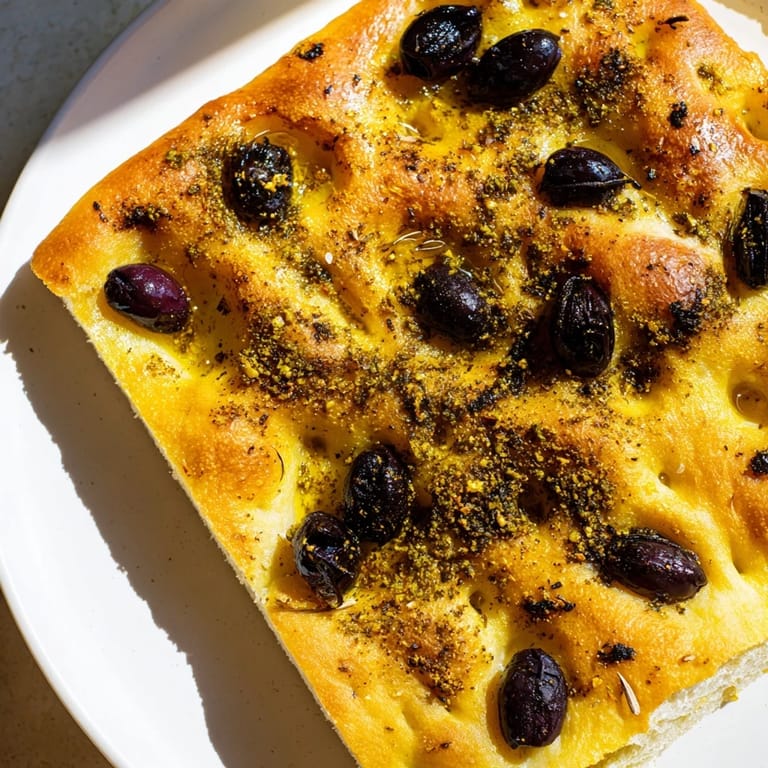
 There's something almost magical about the moment you first taste zaatar—that unexpected punch of sumac and sesame that makes you pause mid-bite and wonder where on earth this flavor has been hiding. I discovered this focaccia on a late afternoon when a friend returned from Istanbul with a small bag of zaatar and insisted we make something together, and we ended up creating something entirely our own: a bread that somehow felt both Mediterranean and Middle Eastern at once, with olives dotting the surface like little edible jewels.
I still remember bringing this to a casual dinner party where someone had just moved into the apartment downstairs, and within minutes the smell of it baking had drifted through the building—by the time we opened the oven, half the hallway was curious about what was cooking. That's when I realized this isn't just bread; it's an invitation.
Ingredients
- Bread flour (500 g / 4 cups): The protein content is your friend here—it gives the dough that gorgeous elasticity and helps create those wonderful irregular holes you see in good focaccia.
- Active dry yeast (7 g / 2¼ tsp): Make sure it's not ancient; yeast deserves respect and a cool, dry home in your pantry.
- Fine sea salt (1½ tsp): Mix this into the flour before the yeast arrives, so it doesn't accidentally kill the yeast or create salty pockets.
- Warm water (325 ml / 1⅓ cups at 40°C / 104°F): Too hot and you'll cook the yeast; too cold and it'll just sit there looking sad.
- Extra virgin olive oil (60 ml / ¼ cup for dough, plus 2 tbsp for topping): This is where you splurge a little—good olive oil is tasted here, not hidden.
- Zaatar spice blend (2 tbsp): This beautiful dusty purple-green mix of sumac, thyme, and sesame is the soul of this bread; if you can't find it, don't substitute with something generic.
- Kalamata olives (100 g / ⅔ cup, pitted and halved): These briny little gems are absolutely essential—they're salty, funky, and utterly delicious.
- Flaky sea salt (1 tsp): The finish matters; use something with actual texture and personality.
Tired of Takeout? 🥡
Get 10 meals you can make faster than delivery arrives. Seriously.
One email. No spam. Unsubscribe anytime.
Instructions
- Wake Up the Yeast:
- In one bowl, combine flour and fine sea salt. In another, dissolve yeast in warm water and let it sit for 5 minutes until it's visibly foamy—this is your sign that everything is alive and ready to go.
- Bring It Together:
- Pour the yeasty water and olive oil into the flour and mix until you have a shaggy, rough dough that looks a bit like it barely knows how to hold itself together.
- Knead Into Submission:
- On a lightly floured surface or in a stand mixer with the dough hook, knead for 8–10 minutes until the dough is smooth, elastic, and no longer sticking to your hands or the bowl. You'll feel the shift when it happens.
- Let Time Do Its Work:
- Place the dough in an oiled bowl, cover it with a kitchen towel, and leave it somewhere warm for 1 hour or until it's roughly doubled in size—a sunny windowsill is ideal.
- Shape and Second Rise:
- Oil a large baking sheet or 9x13 pan, punch down the dough (this is therapeutic), and press it out evenly. Cover again and let it rest for 30 minutes while you gather your toppings and turn the oven on.
- Dimple and Dress:
- Preheat the oven to 220°C (425°F). Using your fingertips, make deep dimples all over the dough surface—this isn't decoration, it's creating little pockets for the olive oil to pool. Drizzle with olive oil, scatter zaatar generously, add the olive halves, and finish with flaky salt.
- Bake Until Golden:
- Bake for 20–25 minutes until the edges are crispy and the top is deeply golden brown—you want a little char here and there.
- Cool and Enjoy:
- Let it cool for just a few minutes, then slice and serve warm or at room temperature.
 Pin It
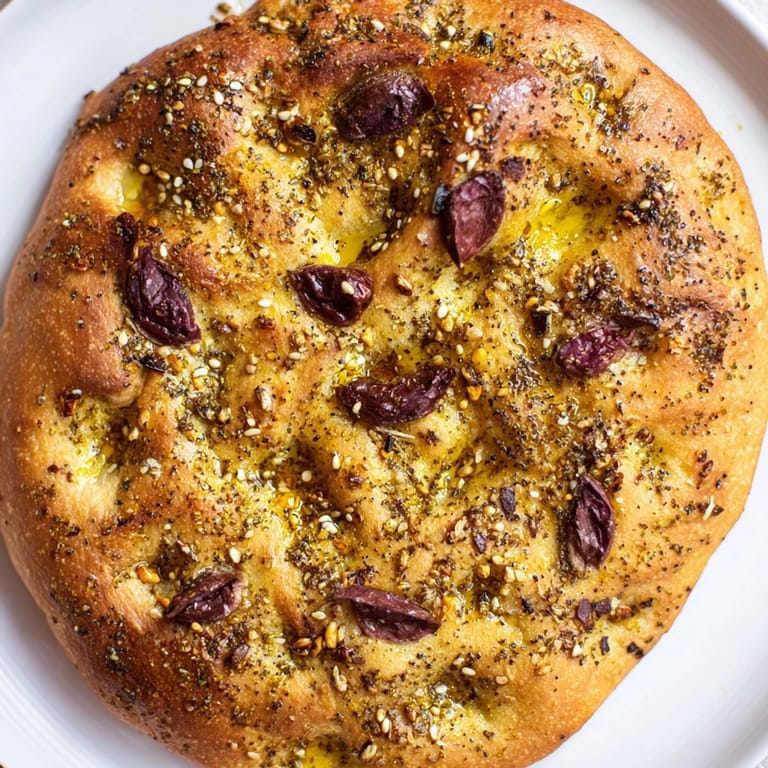
 There was this one morning I pulled this out of the oven and the kitchen was so fragrant with zaatar and olive oil that my roommate came out of their room thinking something incredible was happening—and when they tasted it, they actually sat down at the table without saying anything, just quietly slicing piece after piece. That's the moment you know you've made something special.
The Magic of Zaatar
Zaatar isn't just a topping; it's a flavor revelation that transforms bread from simple carbohydrate into something that makes people stop and pay attention. The sumac gives it brightness, the thyme adds earthiness, and the sesame brings a subtle nuttiness that deepens on the second or third bite. Once you taste zaatar on focaccia, you'll start sprinkling it on roasted vegetables, scrambled eggs, and anything else that needs a little personality.
Olive Oil Is Everything
Use good olive oil here—this is a bread where the oil isn't hiding under a sauce or soaked into vegetables, it's right there on the surface, visible and tasted with every bite. I've learned that the difference between a pretty good focaccia and an unforgettable one is often just the quality of the oil you use to finish it.
Serving and Storing
This focaccia is spectacular warm from the oven, but it's also wonderful at room temperature with dips like hummus or labneh, or even just dragged through good olive oil mixed with a tiny bit more zaatar. Eat it the day you make it if possible; the crust stays crisp and the interior stays soft. If you need to store it, wrap it in foil and reheat gently in a warm oven rather than letting it sit exposed, which will make it stale.
- Try adding sun-dried tomatoes or roasted garlic if you want to play with variations.
- Substitute green olives for a milder, less briny version if you prefer something gentler.
- A damp kitchen towel draped over cooling focaccia keeps the crust from becoming too hard while it cools.
 Pin It
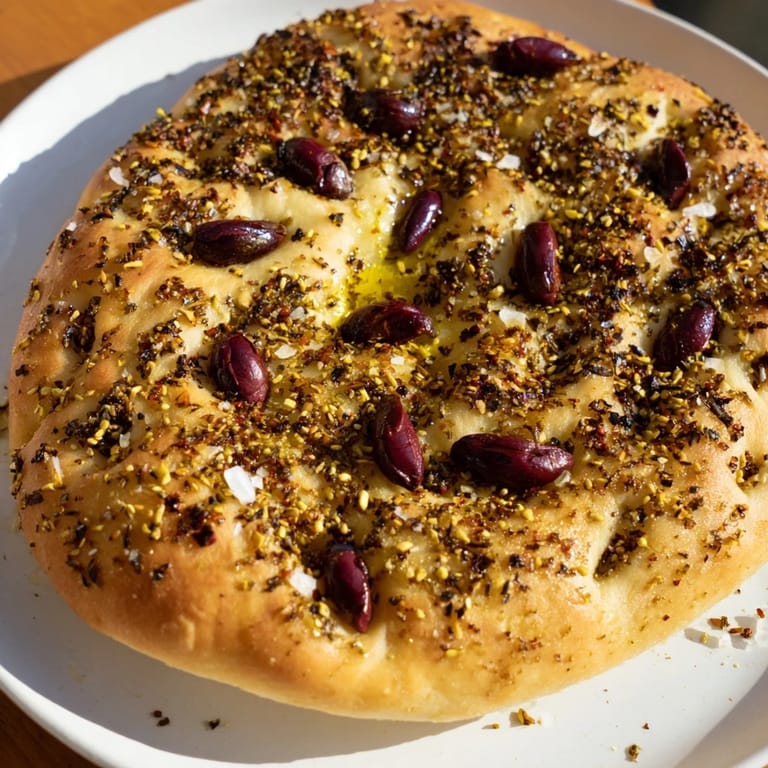
 There's something deeply satisfying about pulling a homemade focaccia from the oven—the sound of the crust crackle, the aroma that fills your entire home, the knowledge that you created this from flour, water, and time. This recipe will become one of those things you make again and again.
Recipe FAQs
- → What is the best flour for making this focaccia?
Bread flour is ideal as it has higher protein content, yielding a chewier and fluffier texture.
- → How long should the dough rise?
The dough needs about 1 hour for the first rise until doubled, then 30 minutes after shaping for optimal fluffiness.
- → Can I substitute Kalamata olives?
Yes, green olives can be used for a milder briny flavor, or other firm olives to suit your taste.
- → What role does zaatar play in this bread?
Zaatar adds a fragrant, earthy, and slightly tangy note that complements the richness of olive oil and olives.
- → How should I store leftovers?
Store cooled focaccia in an airtight container at room temperature and reheat gently in a warm oven before serving.