 Pin It
 There's something almost meditative about the cabbage core, that dense, pale heart everyone usually tosses. One afternoon, standing at the counter with a halved cabbage, I noticed how perfectly crisp and sweet the core tasted raw. That moment sparked an idea: what if I shredded it and built something around that often-discarded treasure? A slaw with toasted seeds and a whisper of sesame seemed right, turning an overlooked part into the whole point.
I made this slaw for a potluck where everyone brought their usual casseroles and pasta dishes. Setting down a bright, humble bowl of shredded cabbage felt bold, almost vulnerable, but watching people come back for thirds told me something was right about it. The crunch cut through the heaviness of everything else, and someone asked for the recipe before they'd even finished eating. That's when I knew this wasn't just a side dish.
Ingredients
- Cabbage cores: The whole reason this slaw exists, packed with fiber and surprisingly sweet when shredded fine. Cut your cabbage in half and scoop out the soft outer leaves first, then use that dense heart.
- Green cabbage leaves: These add color and a slightly different texture to keep things interesting, softening just enough to absorb the dressing without becoming limp.
- Carrot: Julienne it thin so the pieces stay delicate and don't overpower the cabbage's gentle earthiness.
- Green onions: A whisper of onion flavor that disappears into the background but would be strangely missed if it was gone.
- Toasted sesame oil: Buy the good stuff, the kind that smells like a warm hug, because three tablespoons is a lot and you want every drop to matter.
- Rice vinegar: Mild and slightly sweet, letting the sesame shine without sharp edges.
- Soy sauce or tamari: Use tamari if you need gluten-free, and yes, the difference in salt level is real, so taste as you go.
- Maple syrup or honey: Just enough sweetness to balance the vinegar and make everything feel intentional rather than just tangy.
- Fresh ginger and garlic: Minced small so they dissolve into the dressing and flavor everything evenly without any harsh pockets.
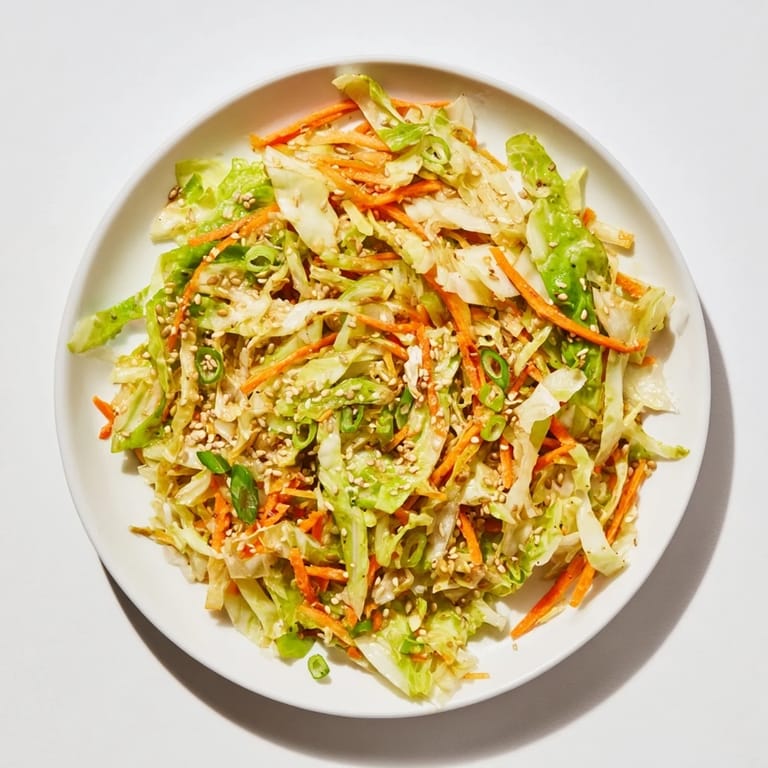
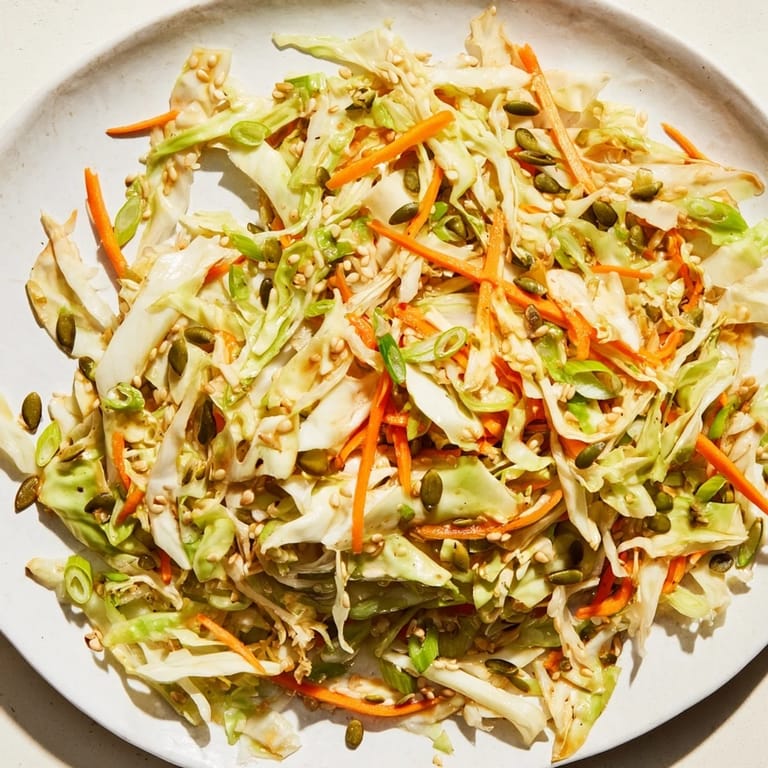
- Toasted sesame seeds: Toast them yourself if you can, even in a dry pan for two minutes, and the smell alone is worth it. Mixed black and white looks beautiful but use what you have.
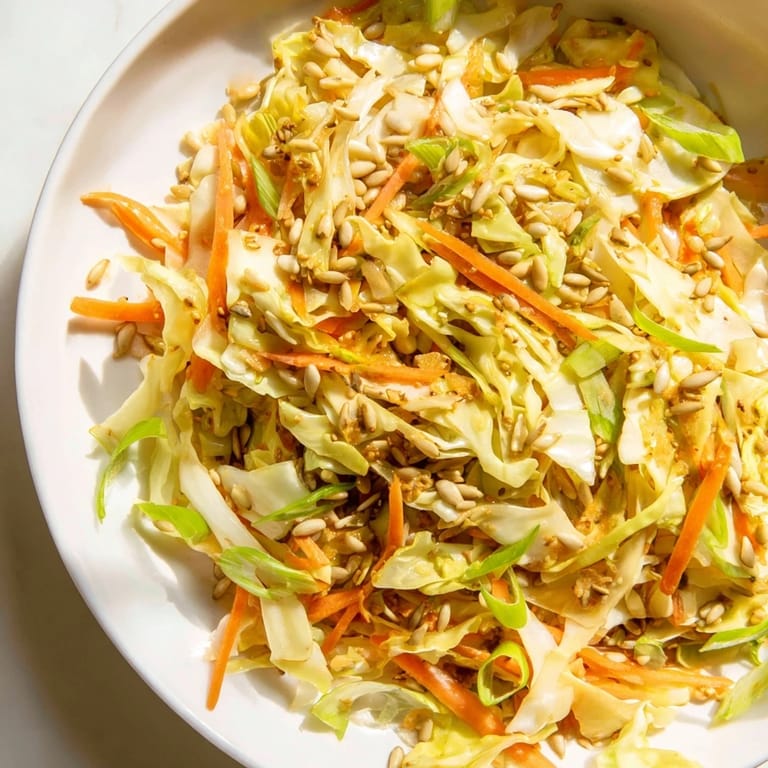
- Pumpkin seeds and sunflower seeds: Lightly toasting these at home brings out their subtle sweetness and keeps them from tasting like birdseed.
Tired of Takeout? 🥡
Get 10 meals you can make faster than delivery arrives. Seriously.
One email. No spam. Unsubscribe anytime.
Instructions
- Prep your vegetables with intention:
- Shred the cabbage core on a box grater or with a sharp knife, making pieces small and uniform so they soften evenly and catch the dressing. Julienne the carrot thin, slice the green onions at an angle, and keep everything in one large bowl so you're ready to dress.
- Build the dressing:
- Whisk sesame oil, rice vinegar, soy sauce, maple syrup, ginger, and garlic in a small bowl until the mixture looks emulsified and smells incredible. Taste it straight from the whisk to understand what you're working with, adjusting vinegar or soy sauce until it feels balanced.
- Bring it together:
- Pour the dressing over all those shredded vegetables and toss with your hands or two forks, getting into every corner so nothing stays dry. This is the meditative part, feeling the vegetables start to glisten and soften ever so slightly.
- Crown it with seeds:
- Sprinkle your toasted seeds over the top and toss gently, reserving some for the surface so there's visual appeal and that satisfying crunch when you dig in. If you're serving later, you can hold back some seeds and add them right before plating.
- Let it rest and taste:
- Give the salad ten minutes to sit so the flavors meld and the vegetables release their own liquid, then taste it and adjust salt or vinegar if needed. Serve chilled or at room temperature, depending on what you're hungry for.
 Pin It
 There's a quiet satisfaction in watching someone discover that something delicious came from a part of the vegetable they would've thrown away. It's the kind of moment that makes you think differently about waste, about looking closer at what you're already buying, about giving overlooked things a second chance.
Why Cabbage Cores Matter
Most people see the cabbage core as refuse, something tough and worthless, but it's actually where the plant stored most of its nutrients and sweetness. The fiber content is remarkable, denser than the leaves, and when shredded fine it has this pleasant mild flavor that doesn't compete with the dressing. Once you start looking at your cabbage this way, you'll never throw one away again, and you'll start noticing how many recipes waste this valuable part.
Sesame Oil Unlocks Everything
There's a reason this dressing tastes so complete with just a handful of ingredients: sesame oil carries flavors in a way neutral oils simply can't. It's not just fat; it's a flavor carrier with its own personality, warm and nutty and almost creamy. A little goes a long way, which is why three tablespoons feels like the right amount, enough to coat everything without making the slaw feel heavy or oily.
Building Flavor Without Heat
This slaw is inherently cooling and gentle, which is why it works alongside spicier dishes or as a palate cleanser. The sweetness from maple syrup softens the sharp edges of vinegar and soy sauce, creating something that tastes balanced and intentional. You can absolutely add chili oil or fresh chili if you want heat, but there's something nice about appreciating the recipe as written first, understanding what it's trying to do before you reshape it.
- Add a thin slice of fresh red chili or a drizzle of chili oil to the dressing if you want warmth without overwhelming the delicate flavors.
- Fresh cilantro or mint scattered over the top right before serving adds brightness and a different kind of freshness than the green onions provide.
- This slaw travels well in a container, though the dressing will keep the vegetables moist and they'll continue softening, so add reserved seeds just before serving if you're packing it ahead.
 Pin It
 This slaw taught me that the most interesting dishes sometimes come from refusing to waste, from looking at scraps and seeing potential instead of trash. There's something deeply satisfying about that.
Recipe FAQs
- → Can I substitute the soy sauce for a gluten-free option?
Yes, tamari or coconut aminos work well as gluten-free alternatives without compromising on flavor.
- → What seeds are used to enhance the texture?
Toasted sesame seeds, pumpkin seeds, and sunflower seeds are added to provide crunch and a nutty element.
- → Is it possible to add some heat to this dish?
Absolutely, incorporating sliced red chili or a dash of chili oil can bring a gentle spiciness.
- → How should the slaw be served for best flavor?
Letting it rest for about 10 minutes helps the flavors meld, and it can be enjoyed chilled or at room temperature.
- → Can I replace maple syrup with another sweetener?
Maple syrup can be swapped for honey if not adhering to a vegan preference, offering a similar sweetness.