 Pin It
 There's something magical about the moment when spring vegetables hit the market at exactly the right time. I was wandering through the farmers' market on a breezy April morning, basket in hand, when I spotted impossibly bright green courgettes next to baskets overflowing with fresh peas still in their pods. Something clicked that day—a simple soup came together in my head, one that would taste like the season itself. This courgette, pea and pesto soup became my answer to those days when you want something light but deeply satisfying, ready in under thirty minutes.
I made this soup for my sister when she was going through a phase of trying to eat more vegetables, and watching her face light up at that first spoonful was its own reward. She actually asked for the recipe, which rarely happens—she's more of a takeout person. Now she texts me photos of her versions, and there's something lovely about knowing a recipe has made that kind of difference in someone else's kitchen.
Ingredients
- Olive oil: This is your flavor foundation, so don't skip it or use something thin and flavorless—good olive oil makes a real difference in the final taste.
- Onion and garlic: These two work together to build the aromatic base that makes people ask what smells so good cooking in your kitchen.
- Courgettes: Choose medium ones that feel firm; larger courgettes can be watery and a bit bland, which dilutes the whole soup.
- Potato: This humble vegetable does the real work here, giving the soup body and creaminess without any actual cream.
- Fresh or frozen peas: Frozen peas are honestly just as good as fresh ones and sometimes better—they're picked and frozen at peak ripeness.
- Vegetable stock: Use something you'd actually drink on its own; weak stock makes weak soup.
- Salt and pepper: Taste as you go and season at the end when you can actually tell what's needed.
- Basil pesto: This is the flourish that turns soup into something memorable, so use the best quality you can find or make your own if you have fifteen minutes.
- Crème fraîche or Greek yogurt: Optional but recommended—it adds a cooling contrast that balances the brightness of the pesto.
Tired of Takeout? 🥡
Get 10 meals you can make faster than delivery arrives. Seriously.
One email. No spam. Unsubscribe anytime.
Instructions
- Start with the soffritto foundation:
- Heat your olive oil in a large saucepan over medium heat and add the chopped onion. Listen for a gentle sizzle; if it sounds angry and pops, your heat is too high. Cook for three to four minutes, stirring occasionally, until the onion turns translucent and smells sweet rather than sharp.
- Build the aromatic base:
- Stir in the minced garlic and let it cook for just one minute—you want it fragrant but not browned, which would make it bitter. The kitchen should smell incredible at this point.
- Add the main vegetables:
- Toss in your diced courgettes and potato. Stir them into the oil so they're coated, then let them cook for about five minutes, stirring occasionally, until they start to soften around the edges.
- Introduce the liquid:
- Pour in your vegetable stock and bring everything to a boil, then reduce the heat to a gentle simmer. This is the moment when the soup truly begins to come together.
- Cook the vegetables tender:
- Simmer for ten minutes, then add the peas and continue simmering for another five minutes until all the vegetables are completely tender. You should be able to easily pierce a courgette piece with a spoon.
- Blend to silky smoothness:
- Remove the saucepan from heat and use an immersion blender to purée the soup until completely smooth, working in batches if using a regular blender. The transformation from chunky vegetables to silky soup feels like magic every single time.
- Season and adjust:
- Taste the soup, then add salt and pepper gradually until it tastes right to you. Reheat gently if it's cooled while you were blending.
- Plate with the finishing touch:
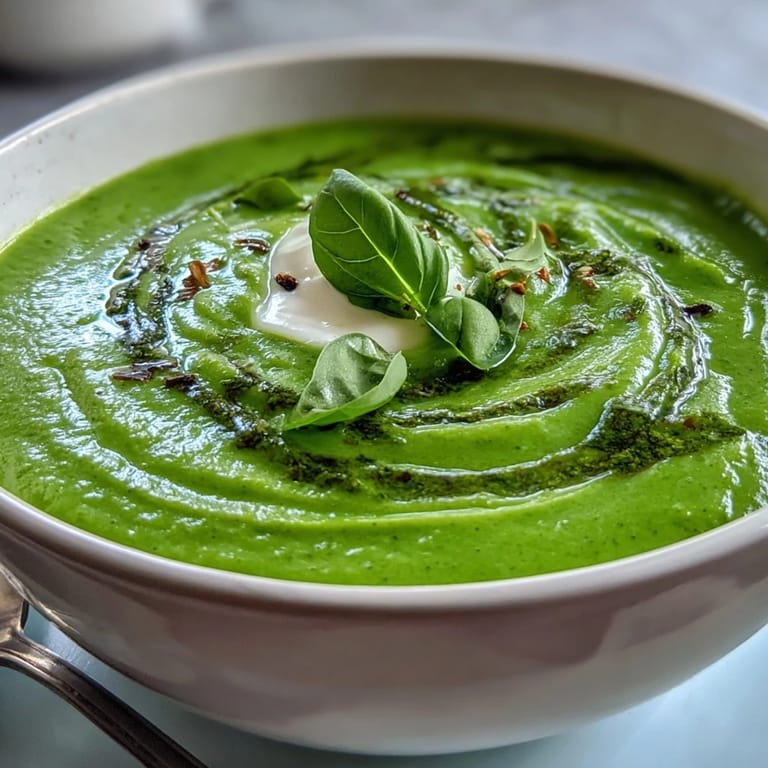
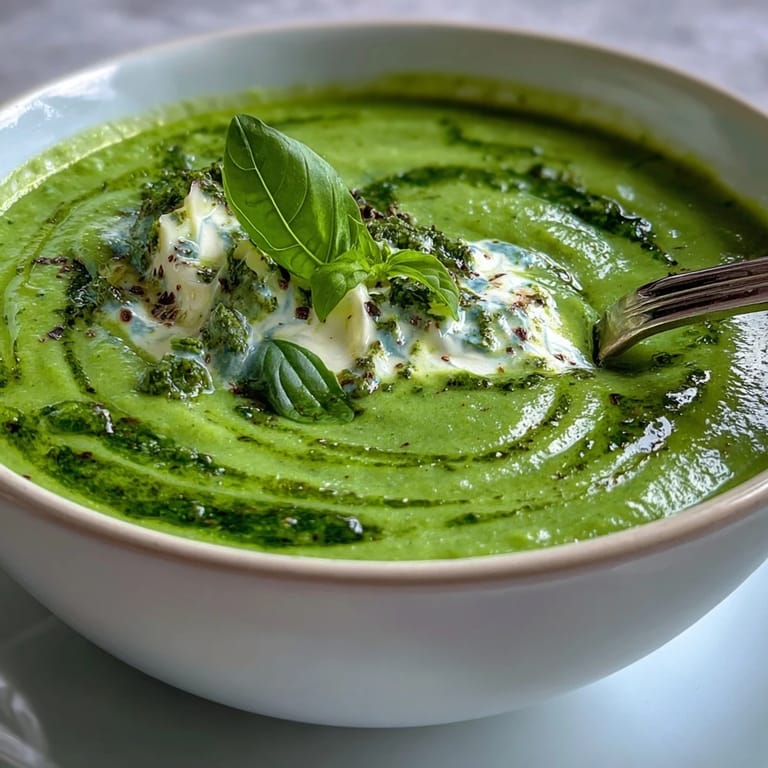
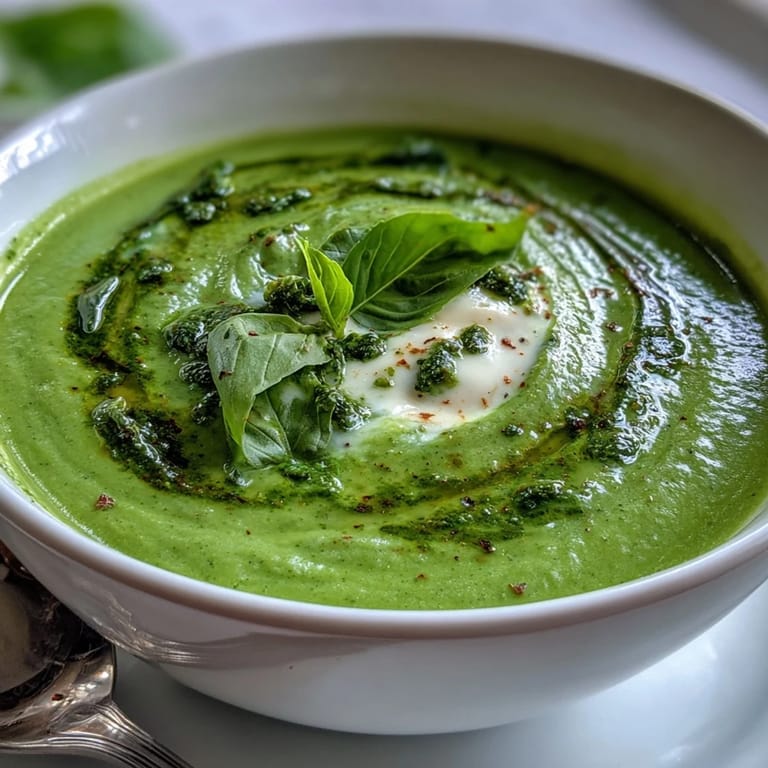
- Ladle the soup into bowls and swirl in a generous tablespoon of pesto into each one. Top with a dollop of crème fraîche or Greek yogurt if you're using it, and scatter fresh basil leaves over the top for color and aroma.
 Pin It
 There was an afternoon last spring when I made this soup on a whim for a friend who'd just had some difficult news. Watching her sit at my kitchen table with a warm bowl in her hands, slowly settling back into her body as she ate, reminded me that cooking for people is sometimes more important than the recipe itself. This soup, unpretentious and honest, became part of that moment.
Why This Soup Works as Spring Comfort Food
Spring cooking is about lightness without sacrificing satisfaction, and this soup hits that balance perfectly. The courgettes and peas are delicate and bright, but the potato makes everything creamy and filling, so you don't finish your bowl feeling like you've had something insubstantial. There's no cream needed, no complicated technique—just vegetables at their best, treated simply.
Making It Your Own
This recipe is genuinely flexible without becoming a different dish entirely. I've made it with asparagus when peas weren't available, and with spinach stirred in at the last moment for color and nutrition. The structure stays the same, which means you can trust the timing and technique while playing with what's actually in your market or your garden.
Storage and Serving Suggestions
This soup keeps beautifully in the refrigerator for up to three days, and it actually tastes better the next day when the flavors have had time to settle and deepen. The pesto swirl should always be added fresh just before serving, though—it's what makes each bowl feel special rather than just reheated soup. You can also freeze this soup (without the pesto) for up to three months, which makes it perfect for batch cooking on a relaxed weekend.
- Serve it alongside crusty bread for soaking up every last bit of flavor.
- A simple green salad on the side turns this into a complete, light meal.
- Drizzle with good olive oil and fresh basil if you skip the pesto swirl, and it's still absolutely delicious.
 Pin It
 This soup has become one of those recipes I return to again and again, not because it's complicated or impressive, but because it's honest and comforting in the best way. There's real pleasure in a bowl of something this good made with nothing more than vegetables, time, and attention.
Recipe FAQs
- → Can I make this soup in advance?
Absolutely. This soup actually tastes better the next day as flavors have time to meld together. Store in an airtight container in the refrigerator for up to 3 days. Reheat gently over medium-low heat, stirring occasionally, and add a splash of stock if it has thickened too much.
- → Can I freeze this soup?
Yes, you can freeze it for up to 3 months. Allow the soup to cool completely before transferring to freezer-safe containers. Leave about an inch of space at the top as liquids expand when frozen. Thaw overnight in the refrigerator before reheating.
- → What can I substitute for the potato?
You can replace the potato with an equal amount of butternut squash for a slightly sweeter flavor, or use cannellini beans for extra protein. The potato provides creaminess and body, so these alternatives help maintain that texture.
- → Is this suitable for vegans?
Yes, with simple modifications. Use dairy-free pesto (check labels or make your own without Parmesan), and omit the crème fraîche or Greek yogurt garnish. The soup itself is naturally plant-based and full of flavor.
- → Can I use fresh peas instead of frozen?
Certainly. Fresh peas work beautifully and add even more sweetness. Shell about 500g of peas to get 250g shelled. Add them during the last 5 minutes of simmering just as you would with frozen peas.
- → How do I prevent the soup from being too watery?
The potato helps thicken the soup naturally. If you prefer a thicker consistency, you can reduce the vegetable stock slightly by 1/2 cup, or let it simmer for a few extra minutes to evaporate some liquid. Avoid over-blending which can make the texture too thin.