 Pin It
 I discovered dandelion honey at a farmer's market last spring, tucked between jars of wildflower and clover varieties, and the vendor's description—floral, delicate, with a hint of green—made me curious enough to buy a small bottle. Weeks later, while cleaning out my pantry, I found it again and thought about how honey often gets lost in baking, drowned out by vanilla and sugar. That's when I decided to build an entire cake around it, letting the honey sing without apology, balanced by bright lemon and a silky glaze that catches the light.
I made this for my neighbor's birthday tea one April afternoon, and watching her face when she tasted it—that quiet moment of genuine surprise—reminded me why I love baking in the first place. She asked for the recipe before she'd even finished her first slice, and now she makes it for every spring gathering she hosts.
Ingredients
- All-purpose flour (2 cups/250 g): The structure of the whole thing; make sure it's fresh and not clumpy from humidity.
- Baking powder and baking soda (1 1/2 tsp and 1/2 tsp): These two together give the cake lift without making it too airy or dense.
- Fine sea salt (1/2 tsp): Never skip salt in sweet baking; it amplifies every other flavor and keeps things balanced.
- Unsalted butter (1/2 cup/115 g), room temperature: Cold butter won't cream properly, so take it out of the fridge 20 minutes before you start.
- Dandelion honey (1/2 cup/120 ml): This is the star; if you can't find dandelion honey, use any raw or unfiltered honey with character, not pasteurized supermarket brands.
- Granulated sugar (1/2 cup/100 g): The honey provides sweetness, so the sugar here is modest, letting the honey flavor breathe.
- Large eggs (3), room temperature: Room temperature eggs emulsify better and create a silkier crumb structure.
- Pure vanilla extract (1 tsp): Use real vanilla; imitation has a harsh edge that clashes with the delicate floral notes.
- Whole milk (1/2 cup/120 ml), room temperature: Whole milk adds richness; skim won't give you the same tender texture.
- Lemon zest (2 tbsp): Zest the lemons before juicing them, and don't dig into the white pith or your cake will taste bitter.
- Freshly squeezed lemon juice (2 tbsp): Bottled lemon juice tastes flat and metallic in delicate cakes like this one.
- Powdered sugar (1 cup/120 g), sifted: Sift it, even if it feels like an extra step; lumps in the glaze ruin the smooth finish.
- Dandelion honey for glaze (1 tbsp): A small drizzle in the glaze adds depth and keeps the floral theme going.
Tired of Takeout? 🥡
Get 10 meals you can make faster than delivery arrives. Seriously.
One email. No spam. Unsubscribe anytime.
Instructions
- Set up your workspace:
- Preheat the oven to 350°F (175°C) and prepare a 9-inch round cake pan by greasing it well and dusting with flour, or lining the bottom with parchment paper. Having everything ready before you start mixing means you won't rush the batter into the oven.
- Combine your dry ingredients:
- In a medium bowl, whisk together the flour, baking powder, baking soda, and salt until evenly distributed. Set this mixture aside.
- Cream the butter and honey:
- In a large bowl, beat the softened butter, dandelion honey, and granulated sugar together for about 3 minutes until the mixture is pale, fluffy, and noticeably lighter in color. This step is where you're incorporating air into the batter, which gives the cake its tender crumb.
- Integrate the eggs:
- Add the eggs one at a time, beating well after each addition so they fully blend with the butter mixture. Once all eggs are in, stir in the vanilla extract, lemon zest, and lemon juice.
- Alternate flour and milk:
- Add the flour mixture in three separate additions, alternating with the milk, and always begin and end with flour. Stir after each addition just until combined; overmixing develops gluten and makes the cake tough instead of tender.
- Bake the cake:
- Pour the batter into the prepared pan and smooth the top gently. Bake for 35–40 minutes until a toothpick inserted into the center comes out clean or with just a few moist crumbs clinging to it.
- Cool with patience:
- Let the cake rest in the pan for 10 minutes, then turn it out onto a wire rack and let it cool completely. Icing a warm cake will make the glaze melt and slide off.
- Make the glaze:
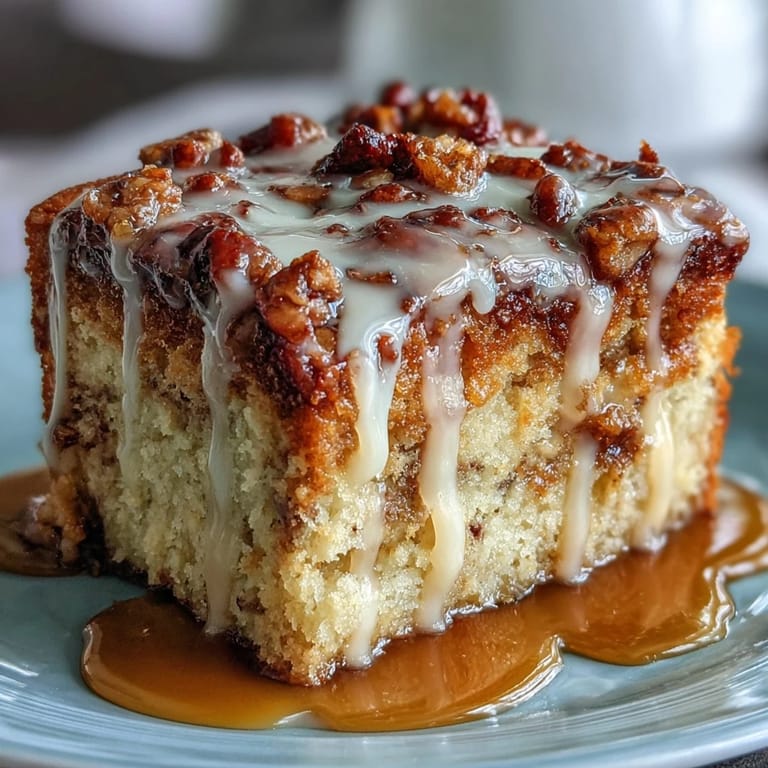
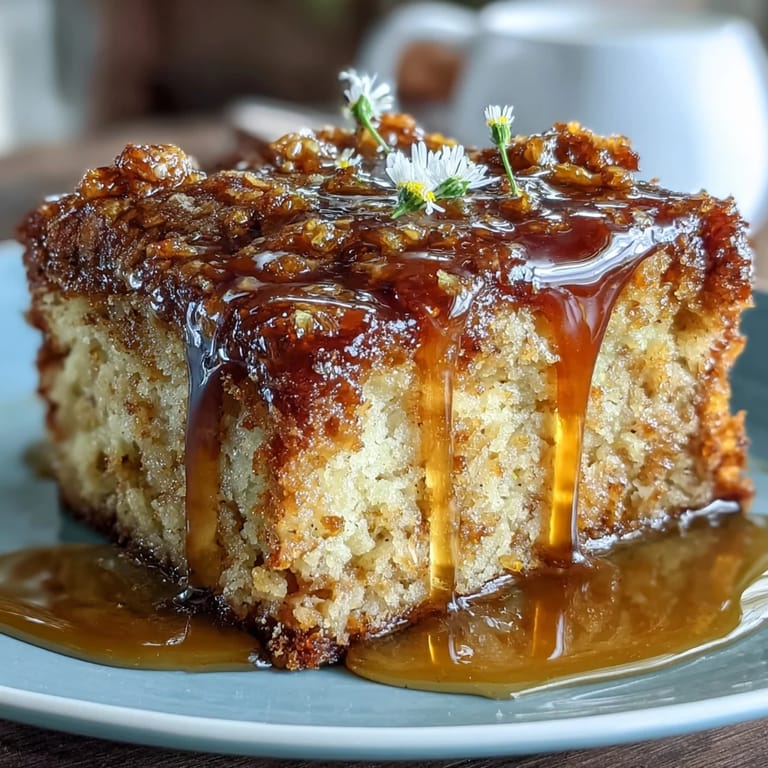
- While the cake cools, whisk together the sifted powdered sugar, dandelion honey, and lemon juice in a small bowl, adding the juice gradually until you reach a consistency that's drizzleable but not runny. It should fall off the spoon in a thick stream, not a flood.
- Finish and serve:
- Drizzle the glaze over the cooled cake in whatever pattern feels right, then let it set for 10–15 minutes. Slice and enjoy it while the glaze is still slightly sticky but no longer wet.
 Pin It
 There's something almost meditative about making this cake on a quiet morning, watching the kitchen fill with the scent of lemon zest and warm honey, knowing that in an hour you'll have something beautiful enough to gift to someone. That small moment of creation—before anyone tastes it, before you know if it turned out—is its own kind of joy.
Why Dandelion Honey Matters
Most dandelion honey carries a subtle floral note that feels more sophisticated than clover or wildflower honey, almost like you're tasting a meadow after rain. When you cream it with butter and sugar, it doesn't dissolve into the background; instead, it adds depth and a gentle complexity that makes people pause and ask what's different about this cake. If you can't find dandelion honey specifically, look for raw, unfiltered honey at a farmer's market or specialty store, something with actual personality.
The Lemon Balance
Lemon is the counterpoint that keeps the honey from feeling cloying or one-dimensional, and the combination of zest, juice, and more juice in the glaze creates layers of flavor. The zest brings brightness while the juice adds tartness, and together they keep the cake tasting fresh and spring-like rather than heavy or sweet. I learned this lesson the hard way when I made a version with only zest and no juice, and it tasted flat and one-note.
Serving and Storage Wisdom
This cake tastes best the day after you make it, when the flavors have settled and deepened, and the crumb has softened slightly as it absorbs the moisture from the glaze. Store it in an airtight container at room temperature for up to three days, and it stays moist and tender the entire time, which is rare for most cakes.
- Pair slices with herbal tea—chamomile or lavender work beautifully—or a light floral white wine like Moscato for an afternoon treat.
- If you want an extra floral dimension, add 2 tablespoons of finely chopped unsprayed dandelion petals directly into the batter before baking.
- The glaze can be made up to an hour ahead and stored in a small bowl covered with plastic wrap, so don't feel rushed on timing.
 Pin It
 There's a reason this cake has become my go-to for spring celebrations—it's elegant without being fussy, and it tastes like you spent hours on it when you really only spent an afternoon. Make it, serve it warm with good tea, and let the honey and lemon do what they do best.
Recipe FAQs
- → What gives the cake its unique flavor?
The floral notes of dandelion honey combined with fresh lemon zest and juice create the cake's distinctive taste.
- → How should the batter be mixed?
Mix the dry ingredients separately and alternate adding them with milk to the creamed sugar and butter, mixing until just combined to keep the texture tender.
- → Can regular honey be used instead of dandelion honey?
Yes, regular honey can substitute dandelion honey if unavailable, though the floral nuance will differ slightly.
- → What is the best way to apply the lemon glaze?
Whisk powdered sugar, lemon juice, and honey until smooth, then drizzle over the cooled cake and allow it to set before serving.
- → How long does the cake stay fresh?
Store the cake in an airtight container at room temperature for up to three days to maintain freshness.
- → Are there any suggested pairings with this cake?
It pairs wonderfully with herbal teas or a light floral white wine, enhancing its delicate flavors.