 Pin It
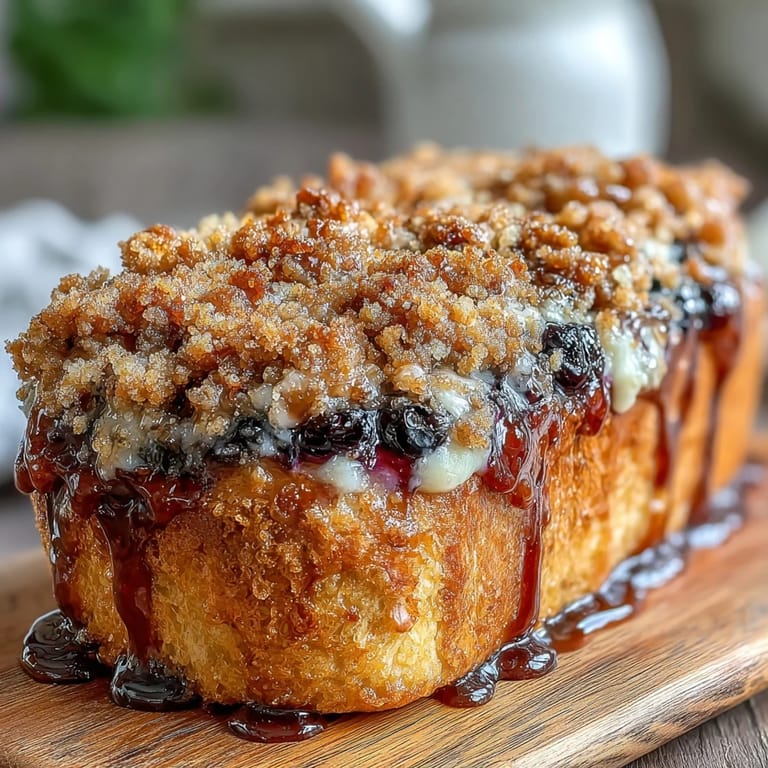
 My kitchen was filling with that unmistakable sourdough tang one Saturday morning when I decided to stop fighting my starter and actually use it for something sweet. I'd been feeding it dutifully for weeks, watching it bubble away in the back of my fridge, and suddenly I wanted to capture that subtle sourness in something brighter—something with blueberries and lemon that felt like an answer to a question I didn't know I was asking. The result was this loaf, which somehow tastes like breakfast and dessert had a civilized conversation over coffee.
I brought a warm loaf to my neighbor last week, still steaming slightly through the paper towel I'd wrapped it in, and watched her face change the moment she bit through the crumble into the tender crumb beneath. She asked if I'd been holding out on her, and I realized this was exactly the kind of bread that makes people feel seen—it's not trying to be fancy, just genuinely thoughtful.
Ingredients
- Bread flour (350 g): This gives your loaf structure and helps it rise confidently without becoming dense or gummy.
- Active sourdough starter (75 g): Use one that's been fed and is bubbly and alive—this is where the magic and personality come from.
- Granulated sugar (60 g for dough): Just enough to wake up the yeast without overwhelming the tangy notes you're after.
- Whole milk (120 ml), lukewarm: Cold milk will stall your mixer, so take 30 seconds to warm it gently.
- Unsalted butter (60 g), softened: This needs to be soft enough to incorporate smoothly without chunks, which sounds obvious until you've forgotten to plan ahead.
- Large egg: One egg adds richness and helps with browning—it's not required but makes a visible difference.
- Fine sea salt (1 tsp): Don't skip this; salt deepens flavor in ways people can't identify but absolutely notice.
- Lemon zest (from 1 large lemon): Fresh zest matters here—bottled zest tastes like it's been thinking about lemons rather than being one.
- Fresh or frozen blueberries (200 g): Frozen works perfectly well and sometimes has better flavor because they're picked at peak ripeness.
- Blueberry swirl sugar (50 g) and lemon juice (1 tbsp): This combination cooks the berries into something almost jammy while cornstarch keeps things from becoming soupy.
- Cornstarch (1 tbsp): The small amount prevents your swirl from pooling at the bottom of the pan during baking.
- Crumble topping flour (50 g) and cold butter (30 g): Cold butter is essential—warm butter won't create that sandy, crumbly texture.
- Light brown sugar (30 g): Adds a subtle molasses depth that plays nicely with the lemon.
Tired of Takeout? 🥡
Get 10 meals you can make faster than delivery arrives. Seriously.
One email. No spam. Unsubscribe anytime.
Instructions
- Combine your dry ingredients with the lemon zest:
- In your mixer bowl, whisk together bread flour, sugar, salt, and that bright lemon zest—you'll see little specks throughout, which is exactly right. This step takes maybe a minute but sets you up for success.
- Bring the wet ingredients together:
- Add your sourdough starter, egg, and lukewarm milk to the dry mix, stirring until you have a shaggy dough that looks like it's barely holding itself together. Don't worry; it's supposed to look rough at this stage.
- Let the butter do its work:
- With the mixer on low speed, add your softened butter a few pieces at a time, waiting for each addition to disappear into the dough before adding more. This takes 8 to 10 minutes, and you'll watch it transform from lumpy to glossy and smooth.
- Give it time to rise:
- Transfer your dough to a lightly greased bowl, cover it with a damp cloth or plastic wrap, and let it sit in a warm corner of your kitchen for about 2 hours until it's roughly doubled. Warm spots exist everywhere—near a window, on top of the fridge, or even in an oven with just the light on.
- Prepare your blueberry swirl while waiting:
- Combine fresh or frozen blueberries with sugar and lemon juice in a saucepan over medium heat, stirring occasionally until the berries burst and release their juice, roughly 5 minutes. Sprinkle cornstarch over the mixture, stir well, and let it bubble gently for 2 to 3 minutes until it thickens slightly, then set it aside to cool completely.
- Make your crumble topping:
- In a small bowl, mix flour, brown sugar, and salt together, then add your cold cubed butter and use your fingertips to rub everything together until it resembles coarse breadcrumbs. Pop this in the fridge until you need it.
- Shape your swirled loaf:
- On a floured surface, gently punch down your risen dough and roll it out into a rectangle about 10 by 14 inches, working deliberately so you don't deflate all that air. Spread your cooled blueberry mixture evenly across the dough, leaving a 1-inch border around the edges.
- Roll it into a log:
- Starting from one short side, roll the dough tightly toward you, creating a long log that you'll then place seam-side down into your greased 9 by 5-inch loaf pan. A tight roll prevents the swirl from unraveling during baking.
- Let it puff one more time:
- Cover the pan with a damp cloth and let the shaped dough rise for about an hour until it looks puffy and soft and the dough has crept up the sides of the pan noticeably. This second rise is crucial for that tender, open crumb.
- Ready the oven and top the loaf:
- Preheat your oven to 350°F, then brush the top of your loaf with a little milk or beaten egg if you want extra shine, and sprinkle your chilled crumble topping evenly across the entire surface. The crumble will toast golden and buttery during baking.
- Bake with attention:
- Bake for 50 to 55 minutes, keeping an eye on the top after 30 minutes—if it's browning faster than you'd like, loosely tent it with foil to slow things down. You're looking for deep golden-brown color and a toothpick inserted into the center coming out clean.
- Cool with patience:
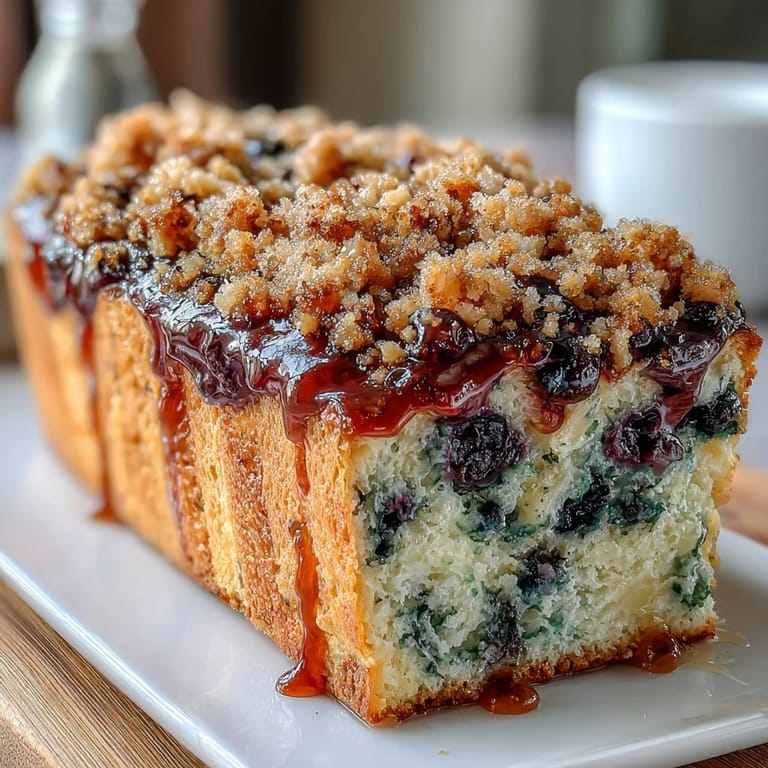
- Let the loaf rest in the pan for 15 minutes so it firms up enough to handle, then turn it out onto a wire rack to cool completely before slicing. This prevents the interior from becoming dense and allows the crumb structure to set properly.
 Pin It
 There's a moment when you pull this loaf from the oven and the kitchen fills with that combination of toasted butter, tart berries, and sourness that somehow smells like morning and comfort at the same time. That's when you know it's worked.
The Sourdough Advantage
Using sourdough starter instead of commercial yeast gives this bread a complexity that plain yeast can't match. The fermentation creates organic acids that make the crumb more digestible and add subtle tang that balances the sweetness beautifully. If you don't have a starter, this isn't the moment to build one from scratch, but it might be time to ask a friend who does.
Blueberries and Lemon: A Matter of Balance
This pairing works because lemon cuts through blueberry's sweetness and adds brightness that prevents the loaf from tasting heavy or one-dimensional. The zest in the dough and the juice in the filling create a lemon presence that's felt throughout without being harsh. It's the kind of balance that takes a regular bread and makes it memorable.
Making It Your Own
Once you've made this loaf once and understand how it comes together, you can start playing with it in small ways. Some mornings I add a touch of vanilla to the dough, and other times I swap the lemon for orange zest when the season changes. The structure stays reliable while the flavors stay interesting.
- A simple lemon glaze drizzled over the cooled loaf adds extra brightness if you're in the mood for something sweeter.
- Fresh blueberries cost more but taste slightly better, though frozen ones honestly produce equally delicious results.
- This loaf keeps beautifully wrapped in paper for 3 days and slices even cleaner on day two when the crumb has set fully.
 Pin It
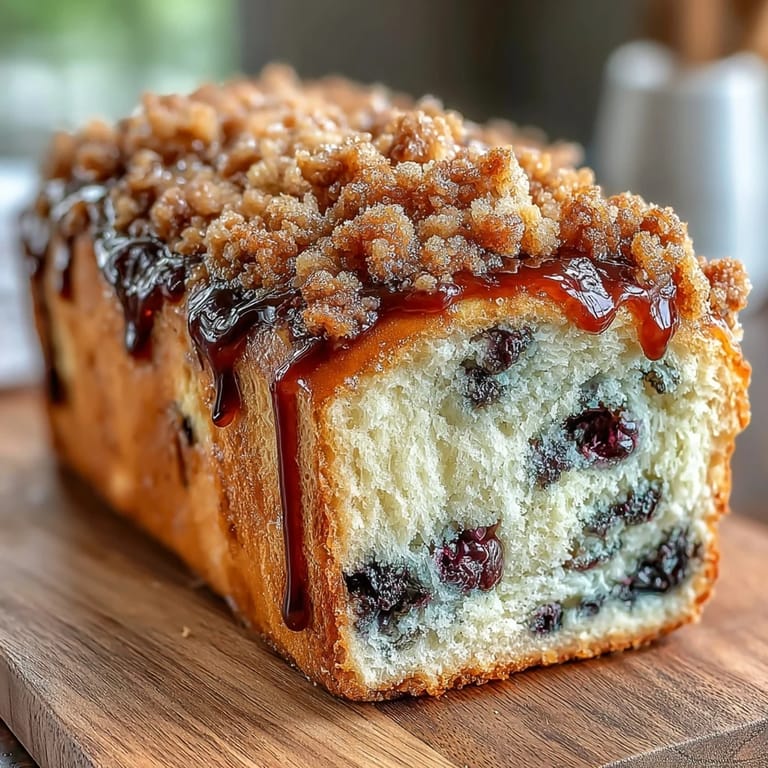
 This loaf sits somewhere between breakfast bread and dessert, which is exactly where I wanted it to live. Make it once, and you'll find yourself reaching for it again on quiet mornings and thoughtful afternoons.
Recipe FAQs
- → What type of flour is best for this loaf?
Bread flour is recommended to achieve the ideal structure and chewiness in the sourdough loaf.
- → Can frozen blueberries be used?
Yes, frozen blueberries can be used directly without thawing, maintaining good flavor and texture.
- → How do I make the crumble topping crispier?
Ensure the butter is cold while mixing with flour and sugar. Baking with this cold mixture creates a crisp, golden crumble.
- → What is the purpose of the lemon zest?
Lemon zest adds a fresh, citrus aroma and brightens the buttery, sweet profile of the loaf.
- → How long should the dough proof before baking?
The dough should rise until doubled, about 2 hours initially, then proof again for about 1 hour after shaping.
- → Is it necessary to tent the loaf with foil during baking?
Tenting with foil after 30 minutes prevents over-browning while allowing the loaf to cook through evenly.