 Pin It
 My cousin Marco arrived from Italy with a bottle of homemade limoncello, the kind that glows golden in afternoon light, and insisted I had to taste it in cake form. I'd made plenty of pound cakes before, but something about that particular bottle—the way it smelled like someone's sun-soaked kitchen in Amalfi—made me want to create something special. That evening, I pulled together this recipe as an experiment, mostly improvising, and by the time the cake emerged from the oven with its tender crumb and that unmistakable citrus perfume, I knew I'd stumbled onto something my friends would demand again and again.
I brought this cake to a book club meeting last spring, and someone asked if I'd bought it from a bakery—the compliment stung a little, but in the best way. Watching people's faces light up when they bit into that first slice, tasting the liqueur before the sweetness, made me realize this wasn't just a dessert. It became the cake I'd make whenever I wanted to say something without words, whether that was celebrating a friend's good news or apologizing for being distant.
Ingredients
- All-purpose flour (2 1/2 cups): Measure by spooning into the cup and leveling off—scooping directly can pack the flour and make your cake dense, a mistake I learned early.
- Baking powder (1/2 tsp): This isn't about leavening so much as tender structure; any less and the cake feels heavy, any more and it rises too fast and cracks.
- Fine sea salt (1/2 tsp): Don't skip this—salt amplifies the lemon and keeps the sweetness from becoming cloying, which is a game-changer.
- Unsalted butter (1 cup, softened): Room temperature is non-negotiable here; cold butter won't cream properly and your cake will be tough instead of tender.
- Granulated sugar (2 cups): The sugar creams with the butter to incorporate air, which is what gives pound cake its characteristic fine crumb.
- Large eggs (4, room temperature): Temperature matters more than you'd think—cold eggs break the emulsion and can make the batter look curdled, even if it's fine.
- Limoncello liqueur (1/3 cup): This is the soul of the cake; use the good stuff if you can, because cheap limoncello tastes thin and spiritless by comparison.
- Whole milk (1/4 cup, room temperature): The milk keeps the crumb moist without making the cake heavy, and it carries the lemon flavor through beautifully.
- Fresh lemon juice (1/4 cup): Fresh only—bottled juice tastes flat and metallic, which will throw off the entire balance.
- Lemon zest (from 2 lemons): Zest delivers the bright, volatile oils that bottled juice can't; it's where so much of the personality lives.
- Pure vanilla extract (1 tsp): Use real vanilla, not imitation; it adds depth that rounds out all that citrus.
- Powdered sugar (1 cup, sifted): Sifting prevents lumps in your glaze, and the glaze is what catches the light and makes people stop mid-conversation to ask for a bite.
- Fresh lemon juice for glaze (2-3 tbsp): Adjust this based on how thick you like your glaze; I prefer it to drip slightly down the sides.
Tired of Takeout? 🥡
Get 10 meals you can make faster than delivery arrives. Seriously.
One email. No spam. Unsubscribe anytime.
Instructions
- Set your mise en place:
- Preheat the oven to 350°F and prepare your pan with butter and a light coating of flour—this takes two minutes but saves you from scraping batter off a stuck cake. Pull the butter, eggs, and milk out of the fridge and let them sit on the counter while you measure everything else, because temperature consistency is what separates good pound cake from exceptional.
- Create your dry foundation:
- Whisk the flour, baking powder, and salt together in a bowl and set it aside—this aeration helps distribute the leavening evenly throughout the batter. I like to whisk for about thirty seconds longer than seems necessary, just to make sure everything is integrated.
- Cream the butter and sugar:
- Beat the softened butter and sugar together for three to four minutes until it's pale, fluffy, and noticeably lighter in color—this is where you're incorporating air that will keep the cake tender. You'll know it's ready when it looks almost mousse-like and the mixture barely holds a peak when you lift the beaters.
- Incorporate the eggs one at a time:
- Add each egg individually and beat until it completely disappears into the butter mixture before adding the next—rushing this step is where curdled-looking batters come from. Each egg takes about a minute to fully incorporate; I know it seems slow, but patience here makes a difference you can taste.
- Add the liquid flavor components:
- Mix in the limoncello, milk, lemon juice, zest, and vanilla extract until you don't see streaks anymore—don't overmix, because you're about to fold in flour and the less you handle the batter now, the better. The batter might look slightly curdled at this point, which is normal and not a sign anything went wrong.
- Fold in the dry ingredients:
- Add the flour mixture in three additions, mixing on low speed just until incorporated after each addition—this is where overmixing happens and ruins the tender crumb you've been working toward. If you see a few streaks of flour, that's okay; stop mixing and trust the batter.
- Get the batter into the pan:
- Pour the batter into your prepared pan and smooth the top with a spatula, tapping the pan gently against the counter a few times to release any large air pockets. Make sure the batter is level so it bakes evenly.
- Bake with attention:
- Bake for fifty to sixty minutes until a toothpick inserted in the center comes out clean with just a few moist crumbs clinging to it—if the top is browning too quickly, tent it loosely with foil after forty minutes. Every oven is different, so start checking at fifty minutes.
- Cool with patience:
- Let the cake sit in the pan for fifteen minutes—this cooling time allows the structure to set so it won't fall apart when you turn it out. Then invert it onto a cooling rack and let it come to complete room temperature before glazing, which takes about an hour.
- Make the glaze:
- Whisk the sifted powdered sugar with two tablespoons of fresh lemon juice and the optional limoncello, adjusting the consistency with additional lemon juice until it's pourable but not runny. I like mine thick enough to coat a spoon but thin enough to drip slightly.
- Finish with style:
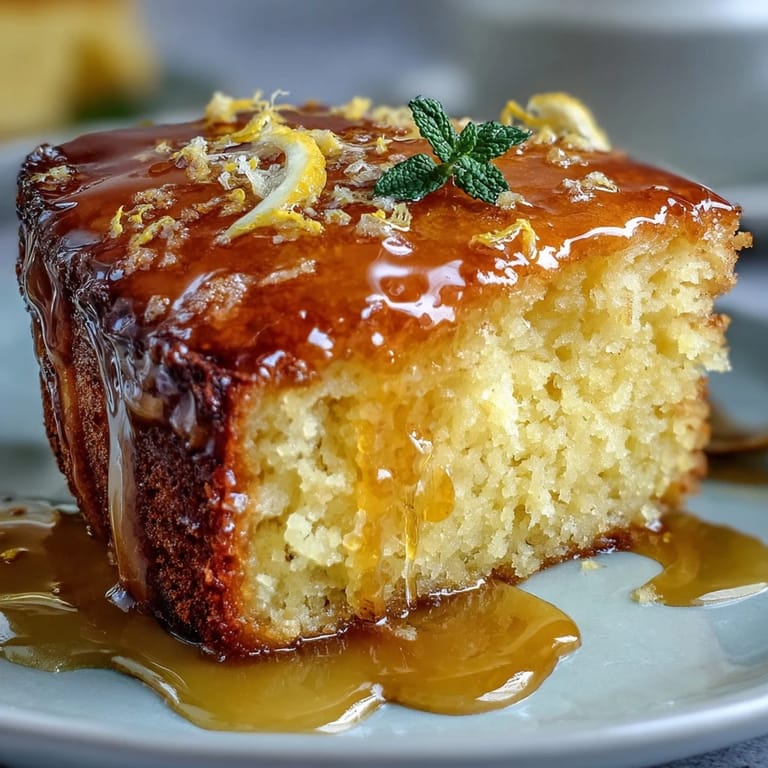
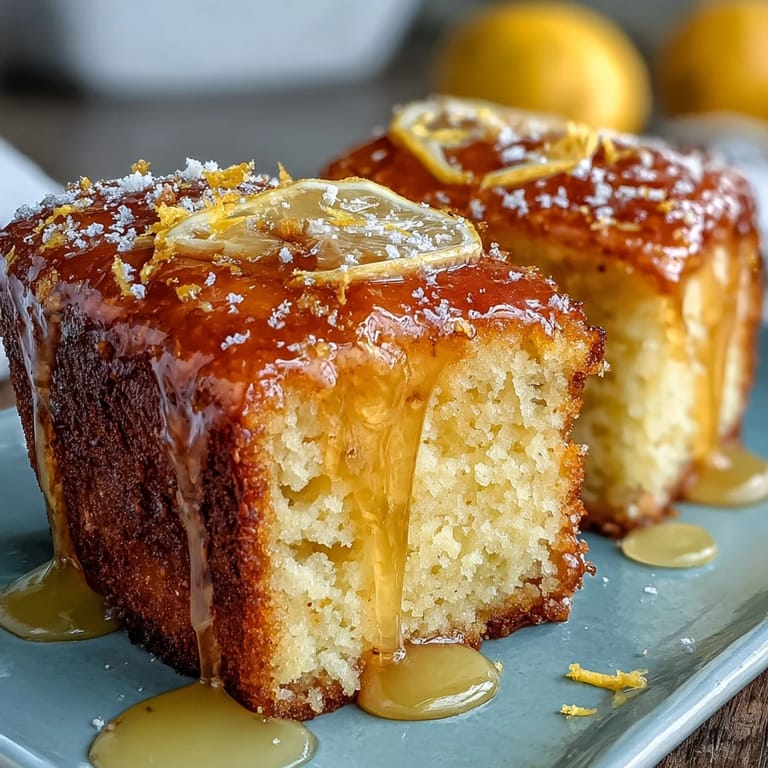
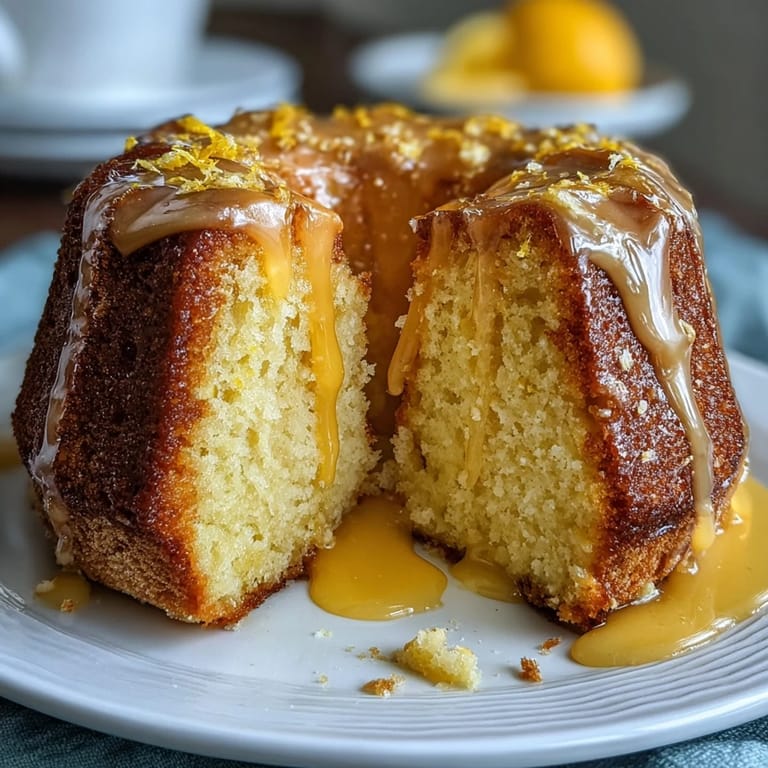
- Drizzle the glaze over the cooled cake in whatever pattern feels right—messy is more beautiful than perfect—and scatter lemon zest over the top while the glaze is still wet. Let the glaze set for twenty minutes before slicing so it firms up slightly.
 Pin It
 One afternoon, my neighbor knocked on the door with a plate of store-bought lemon bars, sweet of her, but they tasted like nothing compared to a slice of this cake. I sliced her a piece right then and there, and watching her realize the difference between cake perfume and actual flavor was quietly vindictive in the best way.
Serving This Cake with Intention
This cake is stunning on its own, but it also plays beautifully with fresh berries—raspberries and blueberries especially, their tartness cutting through the sweetness. A dollop of whipped cream turns a simple slice into something elegant enough for company, and the cake's moisture means it won't dry out even if you make it a day ahead.
Storing and Making Ahead
Wrapped tightly, this cake keeps for three days at room temperature, and honestly, it tastes even better on day two when the flavors have had time to settle and meld together. You can also freeze the unglazed cake for up to a month; thaw it completely before glazing so condensation doesn't dilute your glaze.
Variations Worth Trying
Once you understand how this cake works, it becomes a canvas for experimentation—I've made it with orange liqueur and candied orange peel, with blood orange juice for a deeper color, even with a splash of elderflower liqueur mixed into the glaze. The structure stays the same; only the flavor profile shifts, which is oddly liberating when you want to surprise people or use what's in your pantry.
- Try brushing the baked cake with two tablespoons of limoncello before glazing if you want an even more intense flavor, though this risks making it boozy rather than sophisticated.
- A tiny pinch of ground cardamom mixed into the batter adds an unexpected warmth that makes people pause and wonder what they're tasting.
- Don't skip the lemon zest garnish on top—it's not decoration, it's the final whisper of bright flavor that brings everything into focus.
 Pin It
 This cake became the one I make when I want to feel capable and generous at the same time, when I want someone to taste something that took thought and care. It's limoncello's best argument for why it belongs in the kitchen, not just in a cordial glass.
Recipe FAQs
- → How does limoncello affect the cake's flavor?
Limoncello adds a subtle, sweet citrus aroma that enhances the lemon notes and deepens the overall flavor profile.
- → What is the best way to achieve a moist cake texture?
Beating the butter and sugar until fluffy and careful folding of ingredients ensures a tender, moist crumb.
- → Can I use a different citrus liqueur?
Yes, substituting orange liqueur and zest offers a pleasant twist with warm, fruity undertones.
- → How should the lemon glaze be applied?
Drizzle the glaze over the cooled cake and allow it to set before slicing for a glossy, tangy finish.
- → What tools are recommended for this preparation?
An electric mixer, mixing bowls, loaf or bundt pan, and a whisk help streamline the process and ensure consistent results.