 Pin It
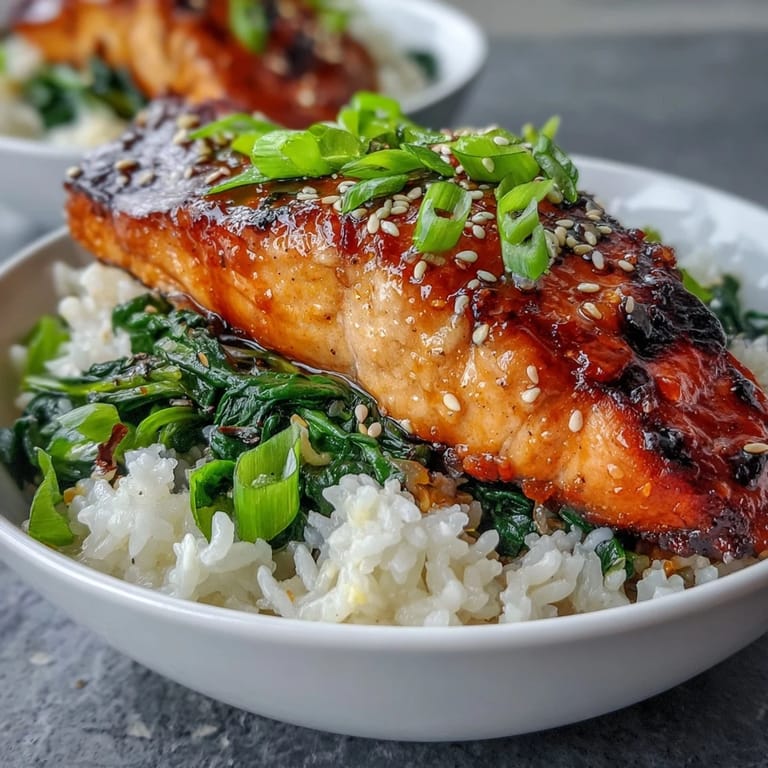
 My kitchen smelled like a Japanese restaurant the first time I nailed this miso glazed salmon bowl, and honestly, it felt like a small victory. There's something about the way miso caramelizes under the broiler that makes you feel like you're cooking something special, even on a random Tuesday night. That umami-rich glaze transforms simple salmon into something restaurant-worthy, and the whole bowl comes together faster than you'd expect. I started making this when I wanted healthier meals that didn't taste like deprivation, and it stuck around because everyone who tries it asks for the recipe.
I made this for my sister when she was going through a phase of wanting to eat better but not wanting to sacrifice flavor, and watching her face light up when she tasted it was genuinely satisfying. She's not one to hold back compliments, but the fact that she went quiet for a moment and then asked if I'd made it at home told me everything. Now it's become our standard bowl when she visits, and we've turned it into this little tradition where we customize everyone's toppings.
Ingredients
- Salmon fillets (4, about 150g each, skinless): Choose ones with consistent thickness so they cook evenly, and ask your fishmonger to remove the pin bones because it makes eating so much more pleasant.
- White miso paste (3 tbsp): This is the flavor backbone here; it adds that savory depth that makes people wonder what the secret ingredient is, and quality matters more than quantity.
- Mirin (2 tbsp): This sweet rice wine mellows the miso's saltiness and helps create that glossy glaze, though you can substitute with a touch more honey if you're in a pinch.
- Soy sauce (2 tbsp): Use the regular kind for this marinade; save the fancy stuff for dipping.
- Honey (1 tbsp): This rounds out the sweetness and helps the glaze caramelize beautifully under the broiler.
- Rice vinegar (1 tbsp): A tiny bit of acidity keeps the glaze from being one-note sweet.
- Toasted sesame oil (1 tsp): Don't skip this; it adds an aromatic dimension that makes the whole marinade sing.
- Fresh ginger (1 tsp grated, plus 1 tsp for the spinach): I always grate it fresh because the heat does something to pre-grated that never quite recovers.
- Garlic (1 clove minced, plus 1 for spinach): Fresh garlic is non-negotiable here; the raw version in the marinade mellows during cooking.
- Jasmine rice (1 1/2 cups): Its subtle floral notes complement the umami glaze without competing, and it soaks up the juices beautifully.
- Fresh spinach (300g): Baby spinach wilts faster and tastes less bitter, though mature spinach works if that's what you have.
- Vegetable oil (2 tbsp total): Use something neutral so it doesn't interfere with the other flavors.
- Green onions (2, thinly sliced): These add a brightness at the end that cuts through the richness.
- Toasted sesame seeds (1 tbsp): Toast them yourself if possible; store-bought are fine but homemade sesame seeds take two minutes and taste noticeably nuttier.
- Nori strips (optional): These add visual appeal and a subtle seaweed flavor, but they're truly optional if you don't have them.
- Lime wedges (optional): A squeeze brightens everything just before you eat.
Tired of Takeout? 🥡
Get 10 meals you can make faster than delivery arrives. Seriously.
One email. No spam. Unsubscribe anytime.
Instructions
- Whisk together your marinade:
- Combine the miso, mirin, soy sauce, honey, rice vinegar, sesame oil, ginger, and garlic in a small bowl and whisk until smooth and emulsified. You want this to feel like a cohesive sauce, not a grainy mixture, and the whisking really does make a difference in how evenly it coats the salmon.
- Let the salmon soak:
- Place your salmon fillets skin-side down in a shallow dish or zip-top bag and pour the marinade over them, making sure each piece gets coated. Slide this into the fridge for 15 to 30 minutes while everything else happens around it.
- Get your rice going:
- Rinse your jasmine rice under cold water to remove excess starch, then combine it with 3 cups of water and a pinch of salt in a saucepan. Bring it to a boil, then reduce the heat to low, cover it, and let it simmer gently for 12 to 15 minutes until the water absorbs and the rice is tender. Remove it from heat and let it sit covered for 5 minutes; this resting time matters more than people realize.
- Wilt the spinach quickly:
- Heat your vegetable oil in a large skillet over medium heat and add the ginger and garlic, letting them toast for about 30 seconds until your kitchen smells incredible. Toss in all your spinach with a pinch of salt and stir it constantly for 1 to 2 minutes until it's just wilted but still bright green. Finish with a teaspoon of soy sauce and set it aside.
- Broil the glazed salmon:
- Preheat your broiler or oven to 220°C (425°F) and line a baking sheet with foil, giving it a light oil. Arrange your marinated salmon fillets on the tray skin-side down and slide them under the broiler for 8 to 10 minutes, watching until the glaze starts to caramelize at the edges and the fish flakes easily with a fork. The glaze should go from shiny to slightly charred in spots, which is when you know it's perfect.
- Assemble your bowls:
- Divide the fluffy rice among four bowls, then top each portion with a nest of sautéed spinach and one glazed salmon fillet. Sprinkle generously with green onions and sesame seeds, then add nori strips and a lime wedge if you're using them.
 Pin It
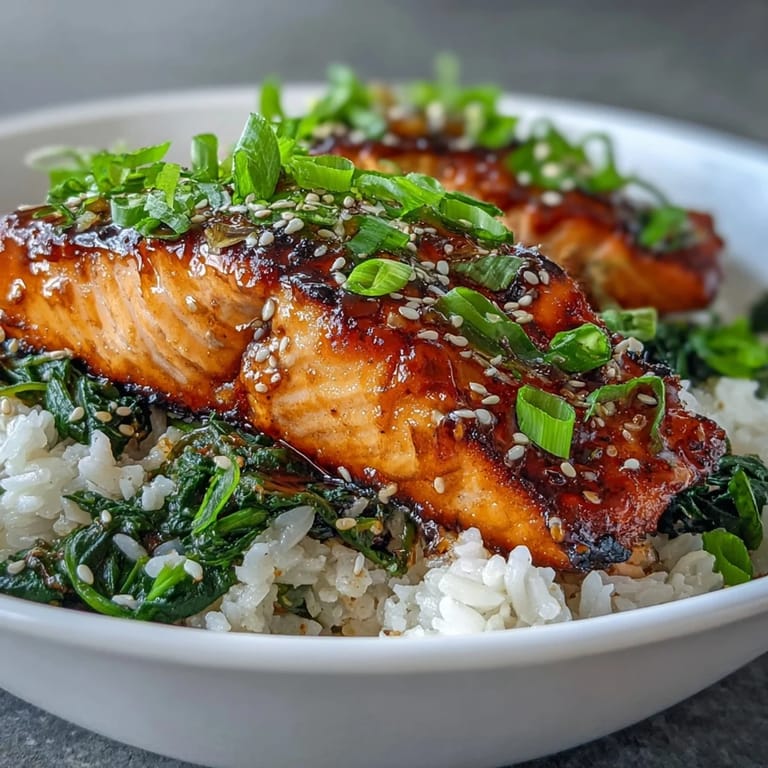
 There was this moment last summer when I was eating this bowl at my kitchen counter on a weekend morning, and the light coming through the window hit the salmon glaze just right, and I genuinely paused to appreciate how something so nourishing could also be so visually gorgeous. It felt like proof that taking care of yourself doesn't have to mean suffering through boring food.
Why the Miso Glaze Does So Much Heavy Lifting
Miso is this incredible ingredient that layers umami on top of umami, and when you combine it with mirin and honey, you get a glaze that tastes like it took hours to develop but really just needed you to whisk five things together. The fermentation in miso adds depth that you simply can't replicate with salt alone, and the heat from broiling caramelizes the sugars just enough to create that glossy, slightly charred exterior. I learned this by accident when I once made the glaze with regular white sauce and wondered why it tasted one-dimensional compared to the miso version.
How to Make This Feel Different Every Time
One of the reasons this bowl never gets boring in rotation is because the base stays consistent but the toppings and variations keep it fresh in your mind. I've added sliced avocado on days when I needed extra richness, swapped the spinach for bok choy when I found a gorgeous bunch at the market, and even stirred pickled ginger into the rice once when I had some leftover. The bowl is flexible enough to accommodate whatever vegetables are good that week, but structured enough that it never feels chaotic.
Timing and Make-Ahead Wisdom
The whole process takes about 35 minutes from start to eating, but you can actually do the rice and spinach completely ahead of time and reheat them gently when you're ready to serve, which makes this a genuinely practical weeknight dinner. The marinade can even be made the morning of and stored in a container, so when you come home from work, all you're really doing is putting things on a baking sheet and sliding it under the broiler. I've found that the rice stays fresher and fluffier if you don't cover it until just before serving, and the spinach reheats perfectly in a hot skillet for 30 seconds with a splash of water.
- Make the marinade up to 8 hours ahead and store it in a sealed container in the fridge.
- Cook your rice and spinach up to 2 hours early; reheat gently just before assembling.
- Don't marinate the salmon for longer than 30 minutes, because the acid in the vinegar will start to cure it and change the texture.
 Pin It
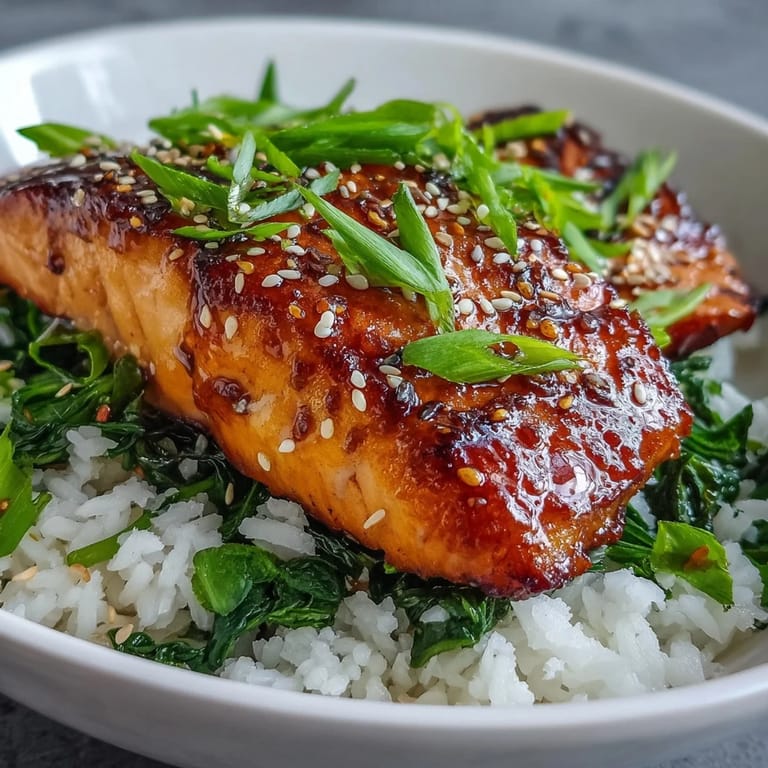
 This bowl has become my go-to when I want to feel like I'm taking care of myself without any of the martyrdom, and honestly, that's the whole point of cooking something this good at home. Every time I make it, I'm reminded that simple ingredients handled with intention create meals that matter.
Recipe FAQs
- → How long should I marinate the salmon?
Marinate the salmon for 15–30 minutes in the refrigerator. This allows the miso glaze to penetrate the fish while the mirin and honey create a beautiful caramelized finish when cooked.
- → Can I use brown rice instead of jasmine rice?
Absolutely. Brown rice adds nutty flavor and extra fiber, though it may require 40–45 minutes to cook rather than 12–15 minutes for jasmine rice.
- → What can I substitute for mirin?
You can replace mirin with equal parts rice vinegar mixed with a pinch of sugar, or use dry sherry with a small amount of honey for similar sweetness.
- → Is this dish gluten-free?
It can be. Use tamari instead of soy sauce and verify your miso paste is certified gluten-free, as some traditional varieties contain barley or wheat.
- → How do I store leftovers?
Store components separately in airtight containers. The salmon and rice keep for 2–3 days in the refrigerator. Reheat gently to avoid drying out the fish.
- → What other vegetables work well in this bowl?
Bok choy, shiitake mushrooms, steamed broccoli, or roasted snap peas all complement the miso-glazed salmon beautifully while maintaining the Japanese-inspired profile.