 Pin It
 I discovered tabbouleh on a sun-drenched afternoon in my friend's kitchen, watching her whisk together a lemon dressing while fresh herbs perfumed the air. She'd just returned from a trip to Lebanon and was determined to recreate what she'd eaten there—simple, bright, nothing fussy. The first forkful was electric: cool bulgur, bursts of tomato, that clean herbal punch of parsley that made everything feel alive. I've made it countless times since, especially on days when I need something that tastes like summer, no matter the season.
My partner once ate three bowls of this straight from the fridge on a Tuesday night, standing at the counter in silence, and when I asked if something was wrong, he just shook his head—it was the opposite problem. That's when I knew I'd nailed it, not because the recipe was complicated, but because it tasted honest and tasted like care.
Ingredients
- Fine bulgur wheat: The smaller grains absorb water evenly and stay tender, not mushy—this is your foundation.
- Boiling water: It's the only heat this salad needs, and it steams the grains perfectly in just 10 minutes.
- Ripe tomatoes: Choose ones that smell sweet and feel slightly soft; pale supermarket tomatoes will disappoint you here.
- Fresh flat-leaf parsley: Not the curly kind—this one tastes cleaner and brighter, and it's why the dish sings.
- Fresh mint: It's essential, not optional; the cooling quality balances the richness of the olive oil.
- Extra virgin olive oil: A good one matters because it's not cooking away—taste it if you're unsure whether yours is worth using.
- Lemon juice: Freshly squeezed changes everything; bottled juice tastes hollow by comparison.
- Scallions: A whisper of sharpness that keeps things from feeling heavy.
Tired of Takeout? 🥡
Get 10 meals you can make faster than delivery arrives. Seriously.
One email. No spam. Unsubscribe anytime.
Instructions
- Hydrate the bulgur:
- Pour boiling water over the wheat and salt, then cover the bowl—steam rises and gently cooks each grain. In 10 minutes, you'll hear it before you see it: all the water absorbed, the grains tender and waiting.
- Build the dressing:
- Whisk olive oil with fresh lemon juice, garlic, and pepper in a small bowl. Taste it straight—this is your seasoning base, and it should make your mouth water.
- Combine with care:
- Once the bulgur cools, add the vegetables and herbs gently, letting them nestle in without crushing anything. The mixture should look vibrant and loose.
- Dress and marry:
- Pour the dressing over everything and mix thoroughly so every grain gets coated. This is where the magic happens—flavors start to know each other.
- Taste and adjust:
- A pinch more salt, another squeeze of lemon—trust your palate, not the recipe.
- Chill and serve:
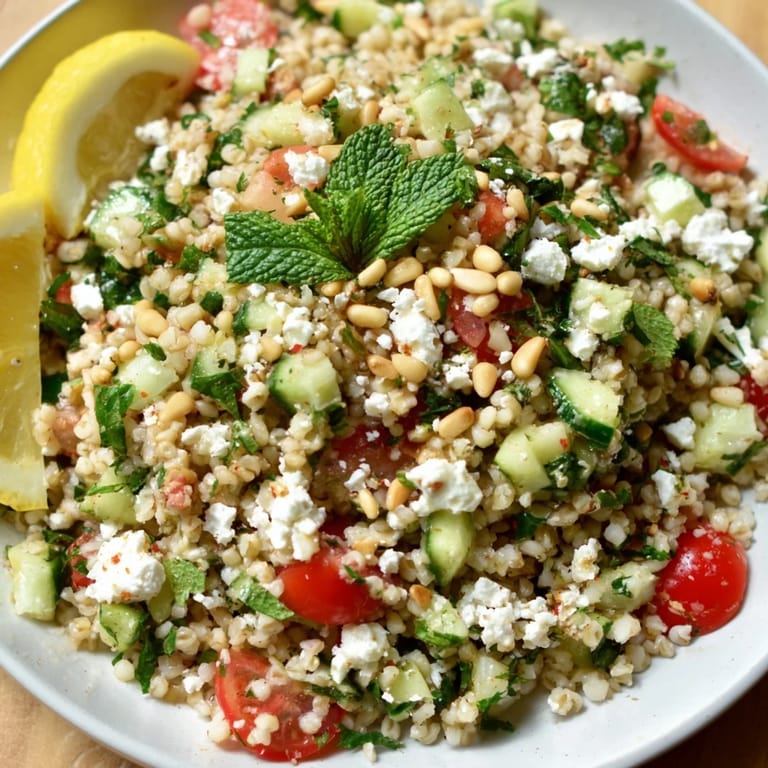
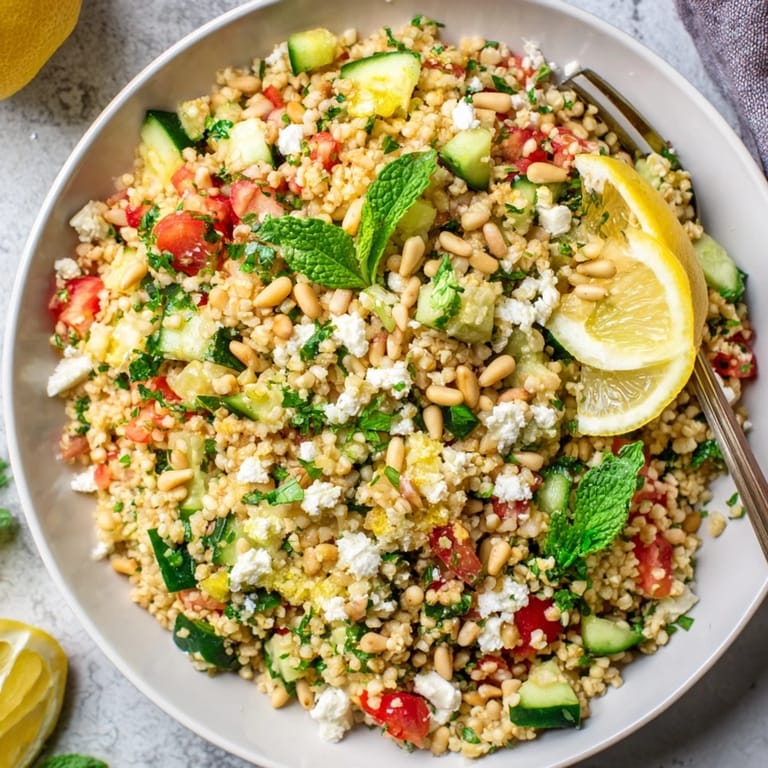
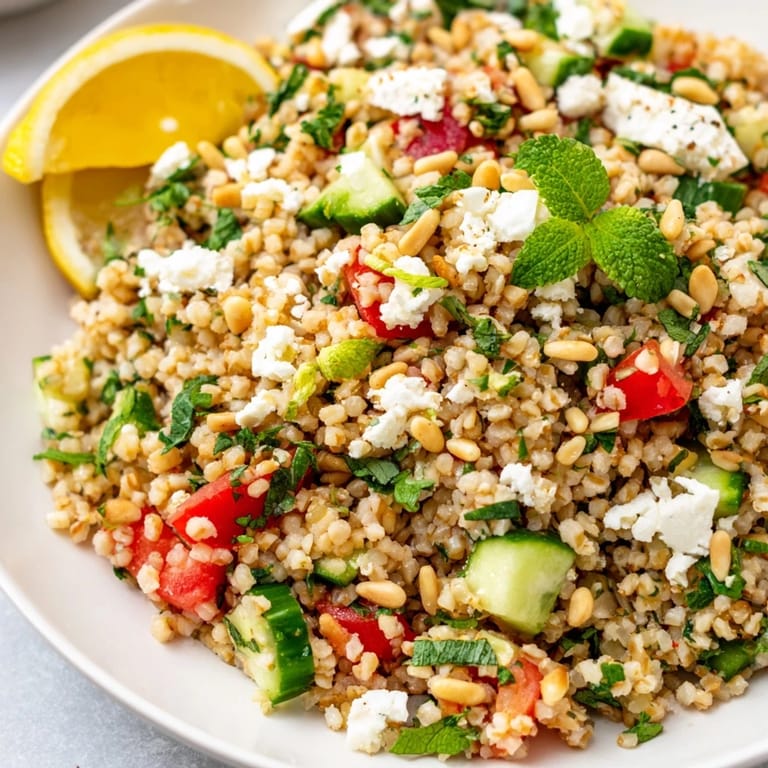
- Ten minutes in the fridge lets the flavors settle and deepen. Serve in bowls with optional toppings: crumbled feta, toasted pine nuts, a wedge of lemon.
 Pin It
 There was an evening when a guest brought this salad to dinner as a potluck contribution, and it disappeared before anything else—even the expensive dessert. I asked her recipe, she shrugged and said she followed something online, but I suspected it was really the fact that she'd made it with intention and served it with quiet confidence.
Why This Salad Works
Tabbouleh isn't about fancy technique or rare ingredients; it's about balance. The cool crunch of cucumber and tomato plays against soft bulgur. Lemon brightness cuts through olive oil richness. Parsley and mint remind you that herbs can be the main character, not just a garnish. Everything is in proportion, and nothing bullies anything else.
Making It Your Own
This recipe is forgiving. Swap the bulgur for cooked quinoa if you're avoiding gluten, or add chickpeas and feta for a more substantial meal. Some people add pomegranate seeds for tartness and visual drama, others stir in grilled chicken for protein. The skeleton stays the same, and the soul survives these changes. The only non-negotiable elements are fresh lemon juice and generous amounts of parsley and mint.
Storage and Timing
Make this in the morning and eat it for lunch, or prepare it the night before and store it in an airtight container in the fridge. It keeps for two days, maybe three, though the herbs gradually soften and the flavors merge into something almost like a different dish—still delicious, just quieter. I often make a double batch and nibble from the bowl all day.
- If serving the next day, wait to add the dressing until a few hours before eating so the salad doesn't get waterlogged.
- Always taste before serving; flavors flatten in the cold, so a squeeze of fresh lemon and a pinch of salt at the end brighten everything back up.
- Bring it to room temperature for 15 minutes before eating if you want the full flavor experience—cold dulls things.
 Pin It
 This is the kind of dish that quietly becomes part of your rotation and then part of how you think about food: clean, simple, alive. Make it once and you'll understand why it endures.
Recipe FAQs
- → What grain is used as the base in this dish?
Fine bulgur wheat is soaked until tender, providing a light and nutty base for the fresh ingredients.
- → How is the dressing prepared?
A simple dressing is made by whisking together extra virgin olive oil, freshly squeezed lemon juice, minced garlic, and ground black pepper.
- → Can this bowl be made gluten-free?
Yes, substituting cooked quinoa for bulgur wheat creates a gluten-free alternative without sacrificing texture.
- → What herbs enhance the flavor in this bowl?
Fresh flat-leaf parsley and mint leaves add a bright, aromatic freshness to the grain and vegetable mixture.
- → Are there any suggested toppings?
Optional toppings include crumbled feta cheese, toasted pine nuts, and lemon wedges for extra flavor and texture.
- → How long does it take to prepare and assemble this dish?
Preparation takes about 20 minutes, with an additional 10 minutes to soak the bulgur, totaling roughly 30 minutes from start to finish.