 Pin It
 My neighbor knocked on the kitchen door one evening with a handful of shiitake mushrooms from his farmer's market haul, insisting I had to try them with steak. I was skeptical at first—mushrooms on beef felt like overkill—but the moment that garlic butter melted into a golden crust over the seared meat, I understood. The earthy, umami-rich mushrooms didn't compete with the steak; they amplified it, creating something that tasted like it came from a kitchen with way more skill than mine actually possessed.
I made this for my sister's birthday dinner, and watching her cut into that butter-crusted steak with a slightly skeptical expression that turned into pure joy was worth every minute of prep. She asked for the recipe before dessert even arrived, which for her was basically a marriage proposal to the dish.
Ingredients
- Boneless ribeye or sirloin steaks (4 steaks, 8 oz each, 1 inch thick): The thickness matters here—anything thinner cooks too fast and won't develop that perfect crust, while thicker cuts demand longer cooking and more attention.
- Salt and freshly ground black pepper: Don't cheap out on the pepper; freshly ground makes an actual difference in how it tastes against the meat.
- Olive oil (2 tbsp total): Use a standard olive oil, not extra virgin, since we're cooking at high heat and extra virgin smokes.
- Mixed wild mushrooms (1 cup, cleaned and chopped): Cremini, shiitake, and oyster mushrooms work beautifully together, but whatever you find will work—just avoid the tiny button mushrooms that release too much water.
- Unsalted butter (4 tbsp, softened): Softened means slightly warm and easy to mix, not melted or cold and stubborn.
- Fresh parsley (2 tbsp, finely chopped): This brightens everything, so don't skip it or substitute dried herbs here.
- Garlic cloves (2, finely minced): Mince small enough that it distributes throughout the butter without creating garlicky chunks.
- Fresh thyme leaves (1 tsp): Fresh thyme tastes herbaceous and alive; dried thyme tastes like dust by comparison.
- Lemon juice (1 tsp): A small squeeze cuts through the richness and keeps the butter from feeling heavy.
Tired of Takeout? 🥡
Get 10 meals you can make faster than delivery arrives. Seriously.
One email. No spam. Unsubscribe anytime.
Instructions
- Let your steaks come to life:
- Pull steaks from the fridge 30 minutes before you start cooking—this sounds fussy, but cold meat won't sear properly and you'll end up with a gray exterior before the inside cooks through. Pat them completely dry with paper towels, season generously on both sides with salt and pepper, and let them sit at room temperature while you prep everything else.
- Build the mushroom magic:
- Heat a skillet over medium-high heat and add 1 tablespoon of olive oil. Toss in your chopped mushrooms with a tiny pinch of salt and let them cook undisturbed for a few minutes—they'll release their water, which will evaporate, and they'll turn golden and concentrated. This takes about 5–7 minutes total, and you'll know they're ready when they smell intensely earthy and have shrunk down.
- Create your compound butter:
- While the mushrooms cool slightly, combine your softened butter with the cooked mushrooms, minced garlic, chopped parsley, fresh thyme, and a squeeze of lemon juice in a bowl. Mix until everything is evenly distributed, then season carefully with salt and pepper—remember, your steaks are already seasoned, so go easy here.
- Get your pan screaming hot:
- This is the moment that determines everything. Use a heavy skillet or cast-iron pan and heat it over high heat until it's genuinely hot—you want a tiny drop of water to dance across the surface and disappear instantly. Add the remaining tablespoon of oil, and let it heat for another 30 seconds until it shimmers.
- Sear your steaks with confidence:
- Carefully place each steak in the hot pan—you'll hear a satisfying sizzle—and leave it alone for 2–3 minutes. Don't move it, don't flip it early, just let the heat do the work and develop that beautiful crust. Flip once and cook for another 2–3 minutes for medium-rare, adjusting based on thickness and your preference for doneness.
- Top with butter in the final moments:
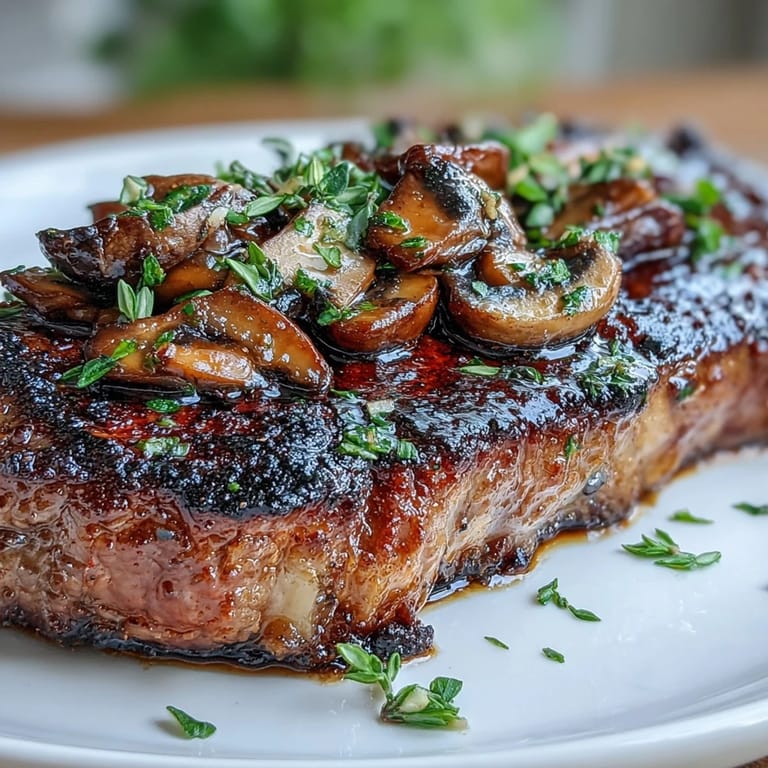
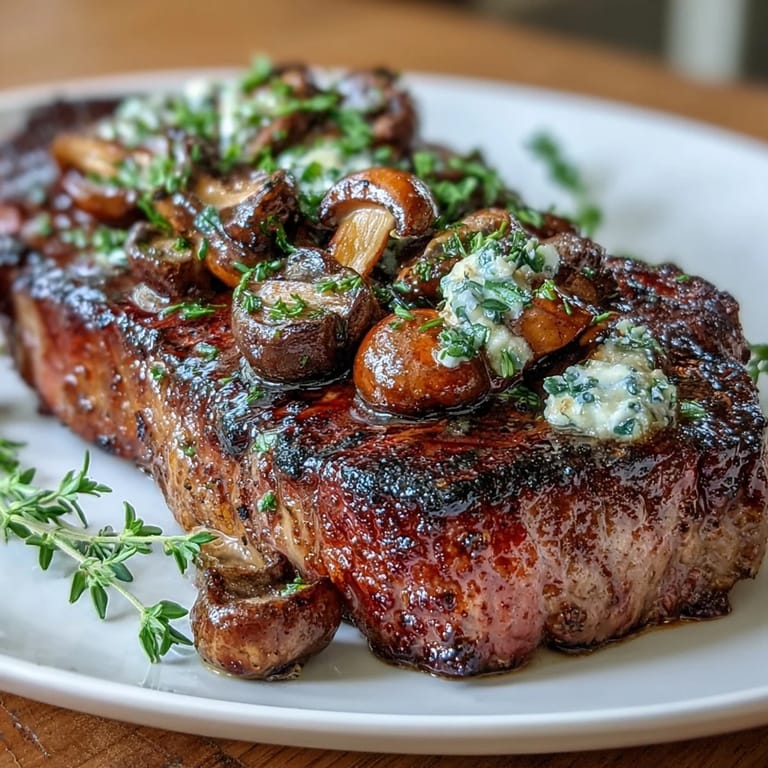
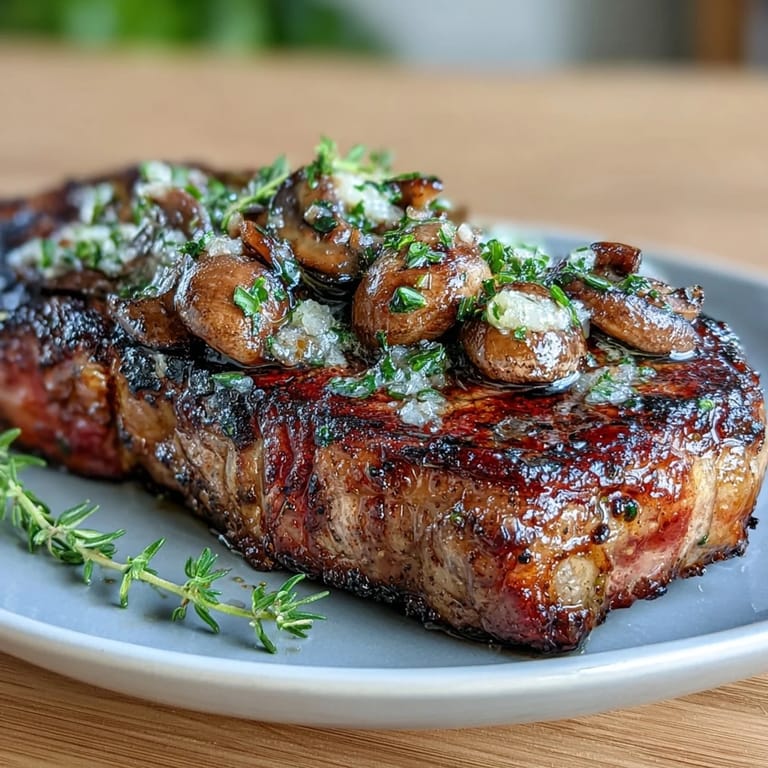
- In that last minute of cooking, top each steak with a generous spoonful of your mushroom and garlic butter. Watch it melt and pool slightly around the meat, creating a rich, savory crust that glistens in the heat.
- Rest your steaks with purpose:
- Transfer the steaks to a plate and tent loosely with foil. This 5-minute rest redistributes the juices so they don't run all over your plate when you cut into them, keeping the steak moist and tender instead of dry.
- Plate and finish:
- Transfer each steak to a serving plate, spoon any remaining butter from the pan over the top, and garnish with extra fresh parsley and lemon wedges if you like. The lemon is optional, but a squeeze brightens everything at the last second.
 Pin It
 There's a moment when you pull a perfectly seared steak from a cast-iron pan and that butter is still bubbling slightly, the garlic has turned golden, and the kitchen smells like something expensive happened—that's the moment this dish stops being dinner and becomes an actual experience. My teenage daughter, who normally eats in her room, sat at the table for this one.
Choosing the Right Mushrooms
Not all mushrooms taste the same, and this is where I learned to stop treating the produce section like a vending machine. Cremini mushrooms are mild and earthy, shiitake brings a deeper, almost meaty flavor, and oyster mushrooms have a tender, delicate quality that adds complexity without overwhelming the beef. I once used only buttons because they were on sale, and the butter was fine but forgettable—mixing varieties is where the magic lives.
The Importance of Resting
I used to skip the resting step, convinced that getting the steak to the plate faster meant hotter food. What actually happened was juices everywhere and disappointed bites at the edge of the steak. Those five minutes let the muscle fibers relax and reabsorb the moisture, turning what could have been a tough, dry steak into something genuinely tender. The foil tent keeps it warm without steaming away that crust you worked so hard to build.
Timing and Temperature Control
The thickness of your steak changes everything about timing, and I've burned butter waiting for a thin steak to finish and underdone a thick one by working too fast. For 1-inch steaks, 2–3 minutes per side gives you medium-rare if your pan is actually hot; anything thicker needs more time and a slightly lower heat so the inside catches up to the crust. The compound butter goes on in that final minute specifically so it melts and clings to the meat but doesn't burn.
- Use an instant-read thermometer if you're nervous—medium-rare is around 130–135°F, medium is 135–145°F.
- Remember that carryover cooking continues after you remove the steak, so pull it slightly before your target temperature.
- Let the pan cool between batches if you're cooking multiple steaks, or your butter will burn on the second round.
 Pin It
 This steak has become my answer when someone asks what I actually cook when I'm showing off—it looks harder than it is, tastes like something only professionals should make, and honestly makes you feel like a better cook just for pulling it off. That's the kind of recipe worth keeping.
Recipe FAQs
- → How do I prepare the wild mushroom garlic butter?
Sauté chopped mixed wild mushrooms in olive oil until golden and moisture evaporates, then combine with softened butter, minced garlic, parsley, thyme, lemon juice, salt, and pepper.
- → What cut of steak works best for this dish?
Boneless ribeye or sirloin steaks about 1 inch thick are ideal for their tenderness and flavor when seared.
- → How long should I cook the steaks for medium-rare?
Sear steaks for 2 to 3 minutes per side over high heat, adjusting time based on thickness.
- → Can I prepare the compound butter in advance?
Yes, the mushroom garlic butter can be made ahead and refrigerated for up to three days.
- → What sides complement this steak dish?
Roasted potatoes or a crisp green salad pair well, providing balance to the rich and earthy flavors.